Ganzhousaurus
"Ganzhou lizard"
- Lived
- 72 to 66 million years ago, Late Cretaceous
- Diet
- Omnivore
- Group
- Theropods, Oviraptoridae
- Found in
- China
- Named by
- Wang et al. 2013
Where its fossils were found
The evidence
Today

70 million years ago
Habitat
Rivers and lakes occupied the region in southern China. Other dinosaurs from these rocks include Banji, Nankangia and Jiangxisaurus.
Field notes
About Ganzhousaurus
What it was like
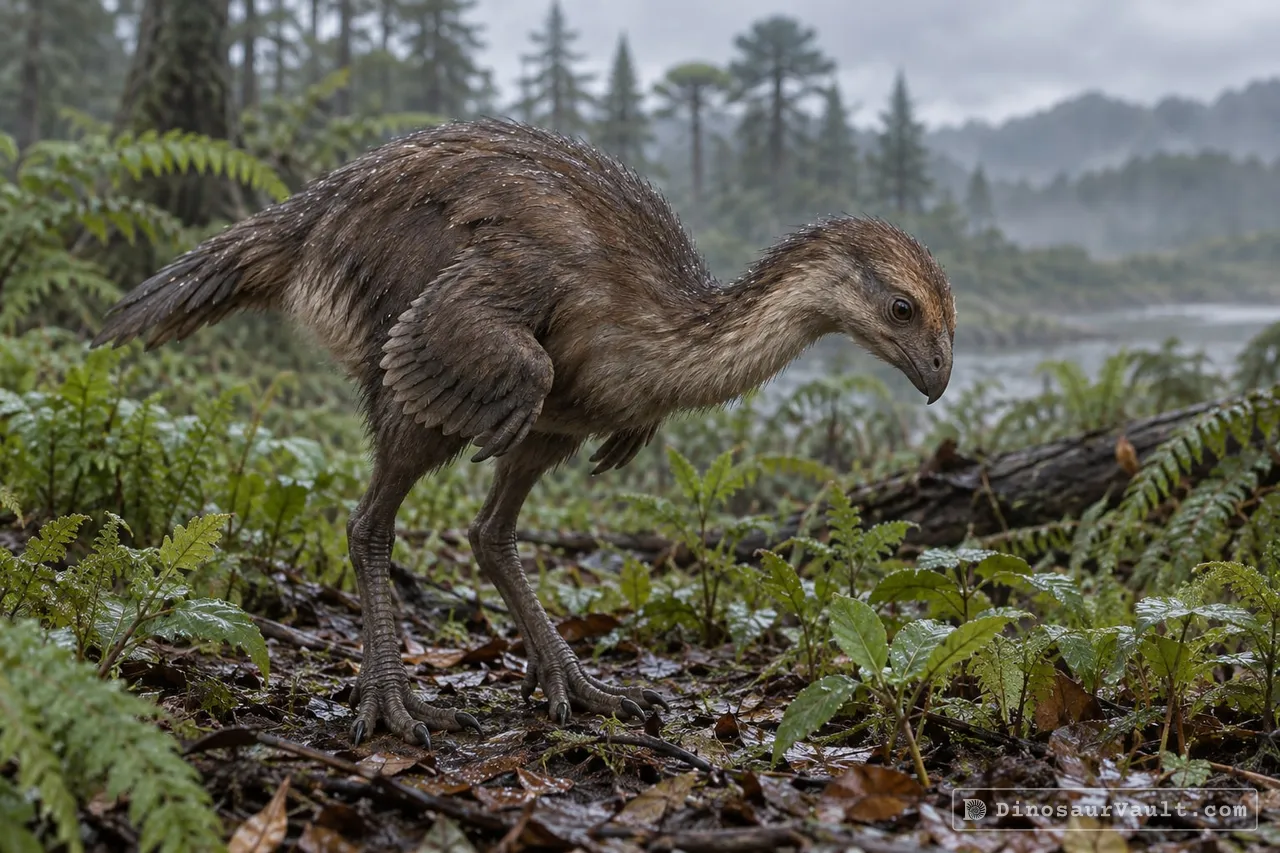
Ganzhousaurus was an oviraptorid, a toothless, feathered theropod. It is known from a lower jaw and parts of the skeleton.
Its world
It lived about 72 to 66 million years ago, at the end of the Late Cretaceous, in what is now southern China, a region rich in oviraptorids.
How it was found
Wang and colleagues named it in 2013. It is named after the city near where it was found.
Field gallery
More views of Ganzhousaurus
Scenes reconstructed from the available fossil evidence.
The evidence
The science behind Ganzhousaurus
Which parts of the picture come from its own bones, and which come from its relatives.
From its own fossils
- The partial skeleton preserves a lower jaw, tail vertebrae, part of the hip and shin, and much of a foot.
- Its toothless lower jaw has a gently downturned tip and a large opening in its side.
Borrowed from relatives
- The missing upper skull and arms are restored by comparison with oviraptorids such as Citipati and Khaan.
- Feathers probably covered the body, as in other oviraptorosaurs.
Still unknown
- The shape of its upper skull and whether it had a crest.
- Its feather colors.
- Exactly what it ate.
Discovery timeline
- 2013Named itWANG et al.
- 2013Same rocksLü et al.
- 2015Family treeLü et al.
Key papers
The research behind what we know of Ganzhousaurus
Named it
Described a toothless lower jaw and partial skeleton with a distinctive combination of jaw and foot features.
A new oviraptorid (Dinosauria: Theropoda) from the Upper Cretaceous of southern China. Zootaxa 3640
Read the paper : A new oviraptorid (Dinosauria: Theropoda) from the Upper Cretaceous of southern China (opens in a new tab)Same rocks
Compared Nankangia with neighboring oviraptorosaurs, including Ganzhousaurus, and suggested differences in their diets.
A New Oviraptorosaur (Dinosauria: Oviraptorosauria) from the Late Cretaceous of Southern China and Its Paleoecological Implications. PLoS ONE 8: e80557
Read the paper : A New Oviraptorosaur (Dinosauria: Oviraptorosauria) from the Late Cretaceous of Southern China and Its Paleoecological Implications (opens in a new tab)Family tree
Added Huanansaurus and placed Ganzhousaurus among oviraptorids related to Khaan and Nemegtomaia.
A New Oviraptorid Dinosaur (Dinosauria: Oviraptorosauria) from the Late Cretaceous of Southern China and Its Paleobiogeographical Implications. Scientific Reports 5
Read the paper : A New Oviraptorid Dinosaur (Dinosauria: Oviraptorosauria) from the Late Cretaceous of Southern China and Its Paleobiogeographical Implications (opens in a new tab)
Close relatives
Other members of Oviraptoridae


Sources: Wikidata