Fosterovenator
"Foster's hunter"
Type species Fosterovenator churei
- Lived
- 155 to 143 million years ago, Late Jurassic
- Diet
- Carnivore
- Group
- Theropods, Ceratosauridae
- Found in
- United States
- Named by
- Dalman 2014
Where its fossils were found
The evidence
Today

150 million years ago
Habitat
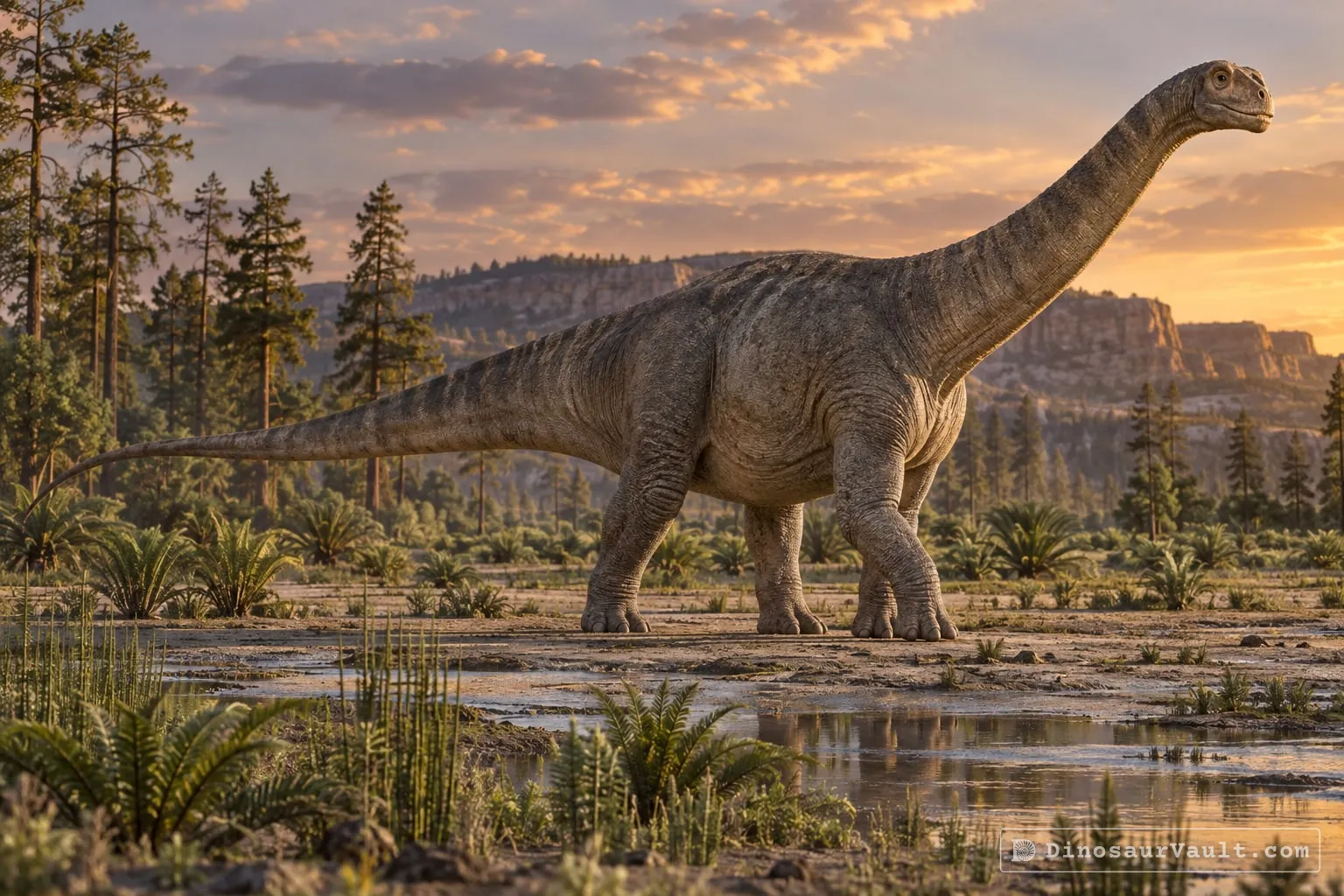
Rivers crossed the Morrison Formation landscape, with conifers, ferns and horsetails growing nearby. Allosaurus, Ceratosaurus and Brontosaurus lived in this region.
Field notes
About Fosterovenator
What it was like
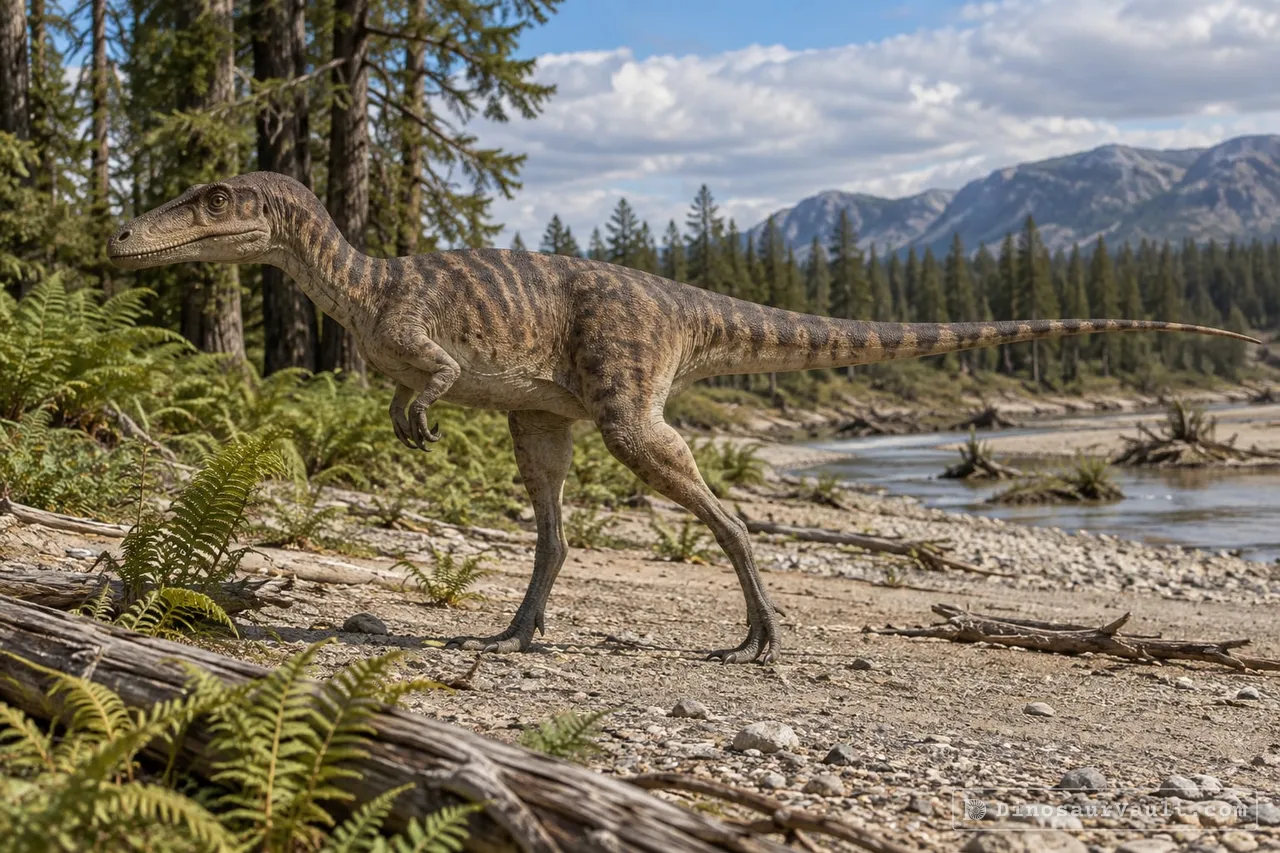
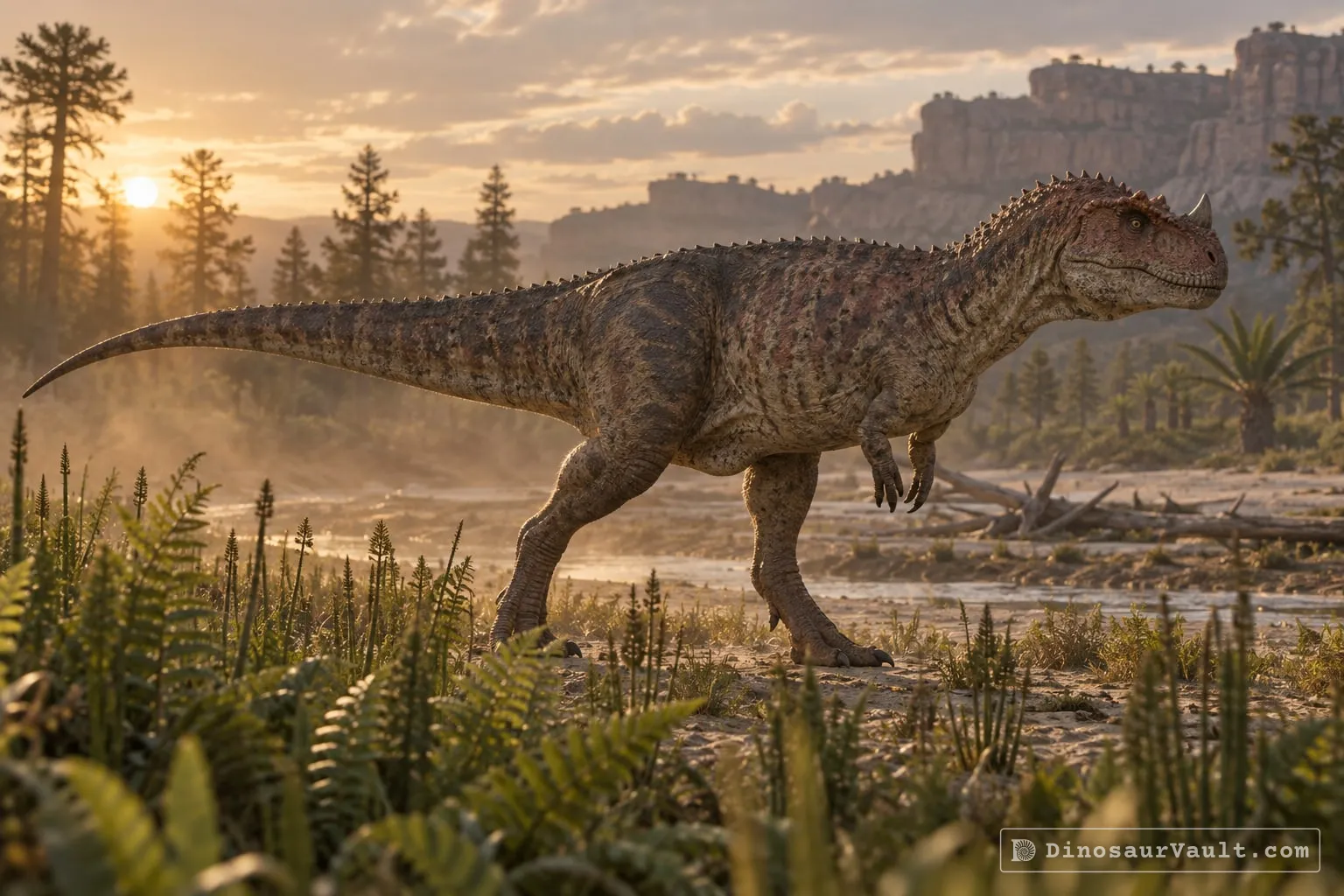
Fosterovenator was a small two-legged predator known from a shin bone and ankle. It seems to be related to Ceratosaurus.
Its world
It lived in the Late Jurassic in what is now Wyoming. Its bones come from the Morrison Formation, where it lived alongside larger predators such as Allosaurus and Ceratosaurus and giant sauropods such as Brontosaurus.
How it was found
The bones were dug up long ago but not named until Dalman studied them in 2014. The type species is Fosterovenator churei.
Field gallery
More views of Fosterovenator
Scenes reconstructed from the available fossil evidence.
1 of 3
Lived alongside
Found in the same rock formations
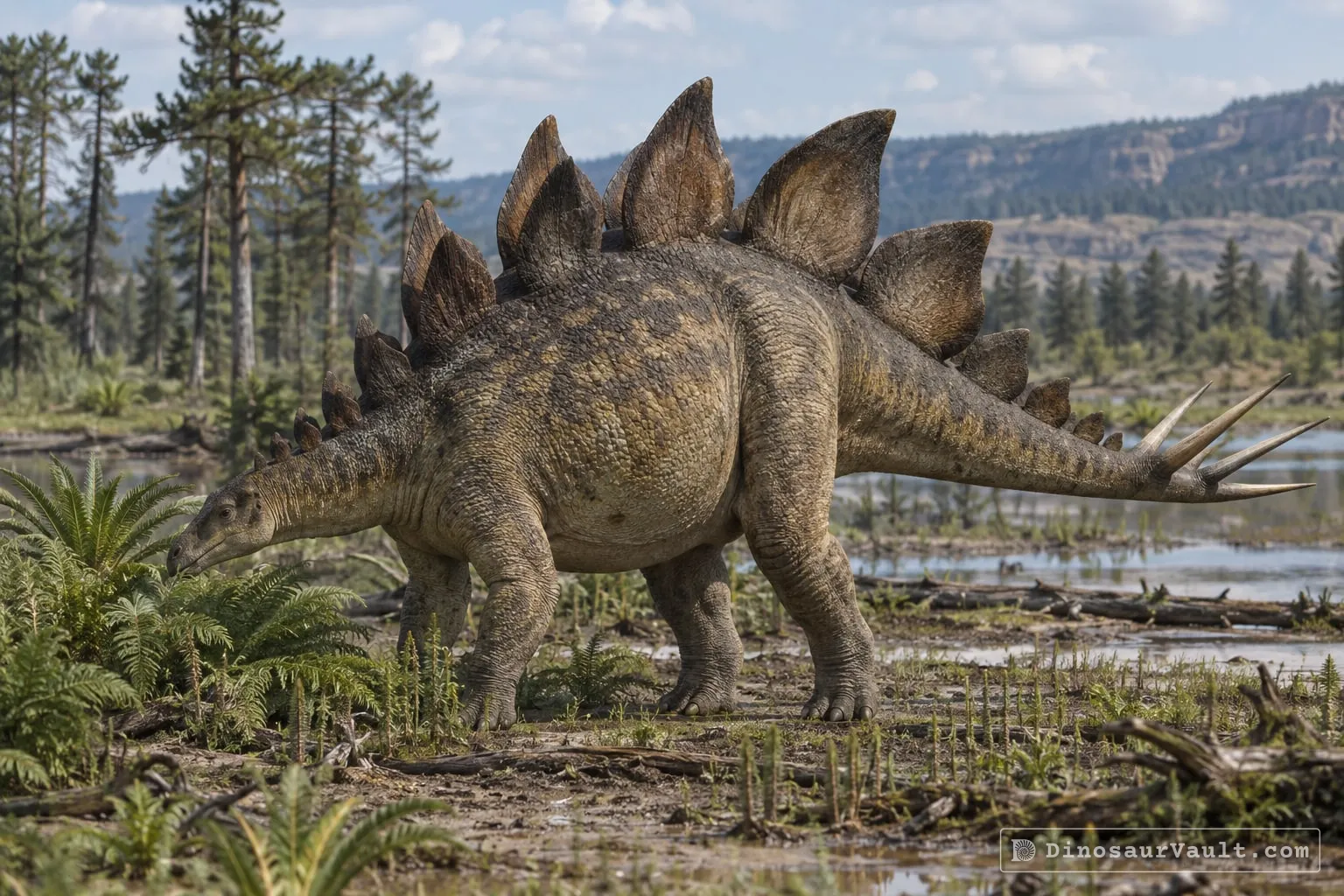
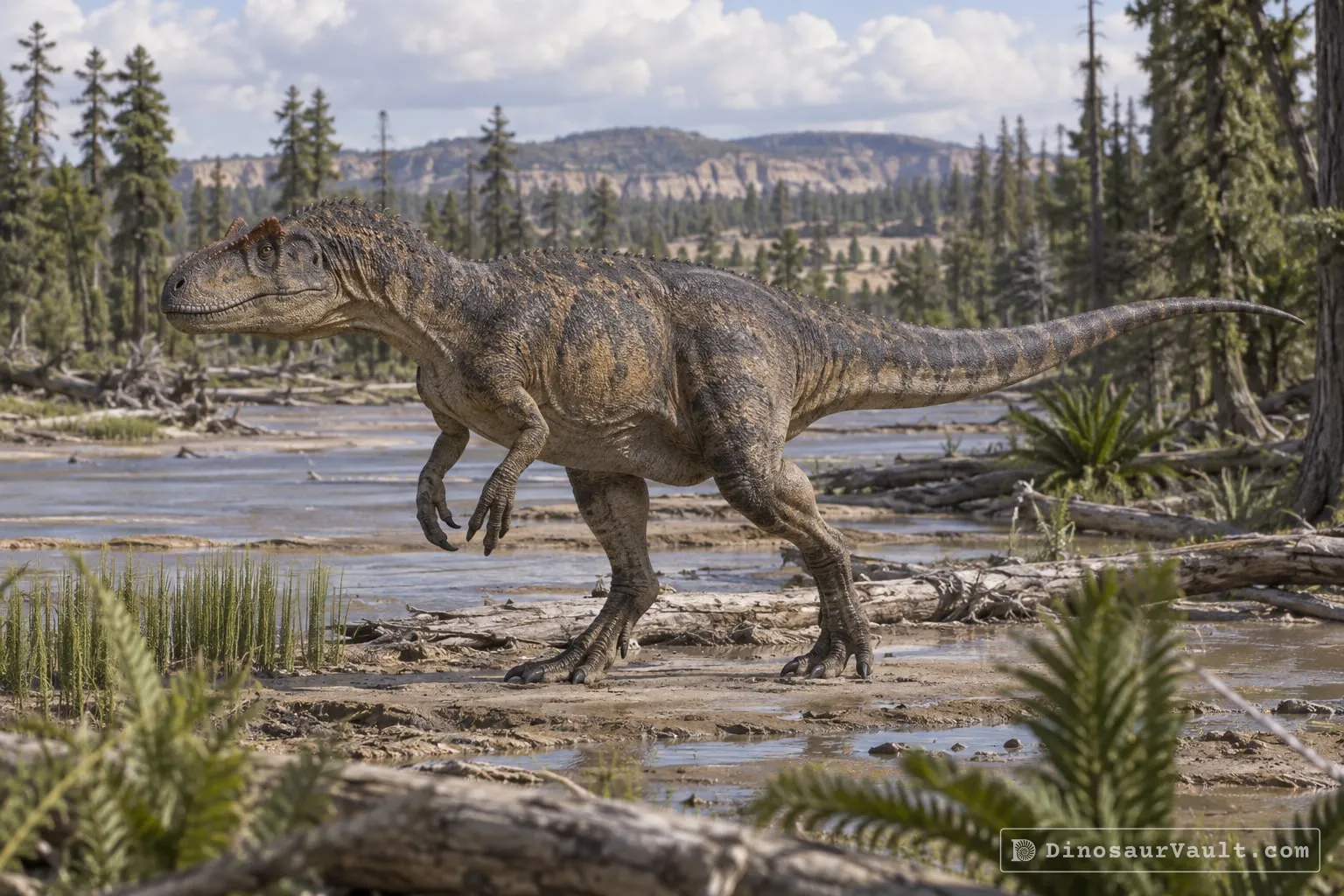
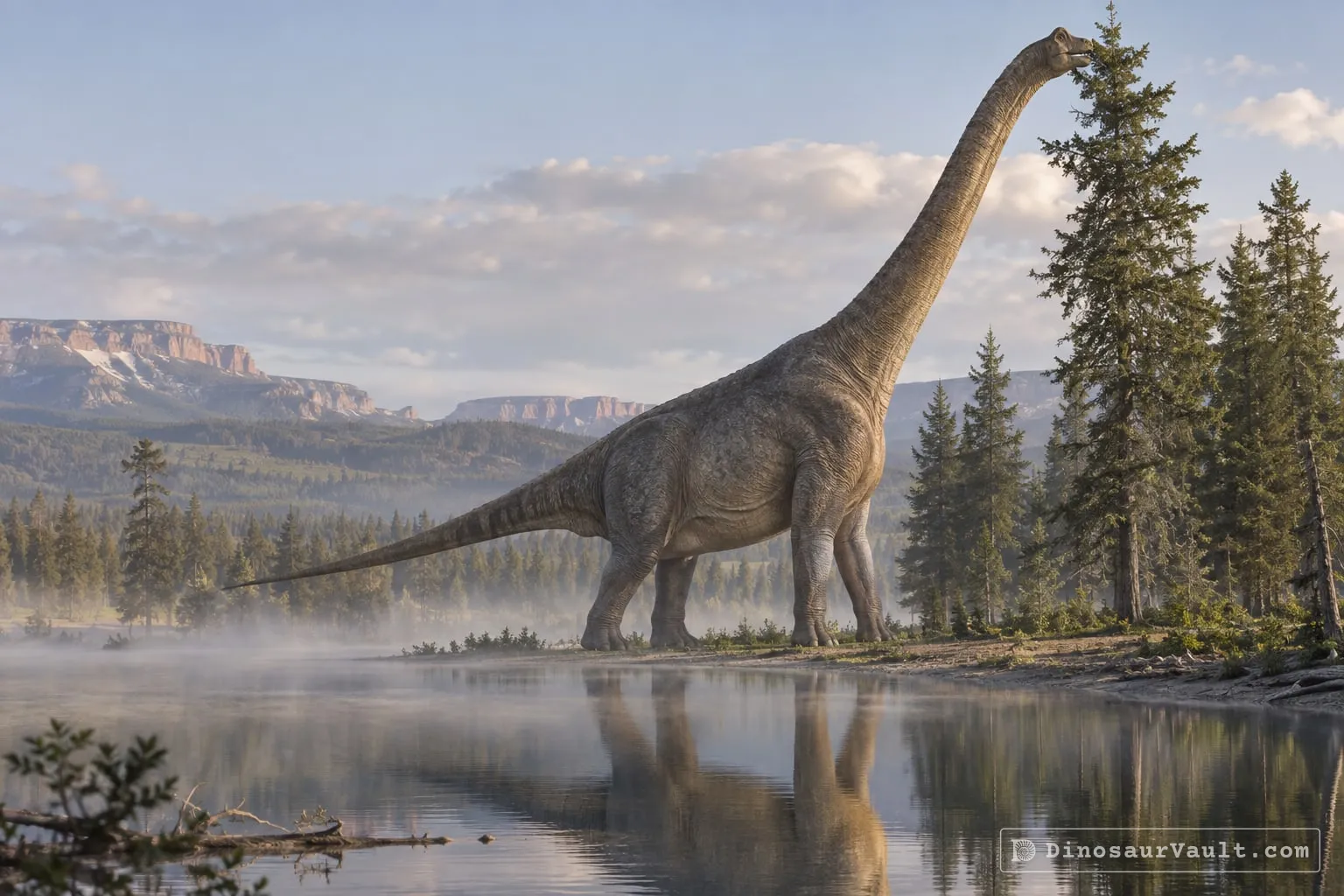
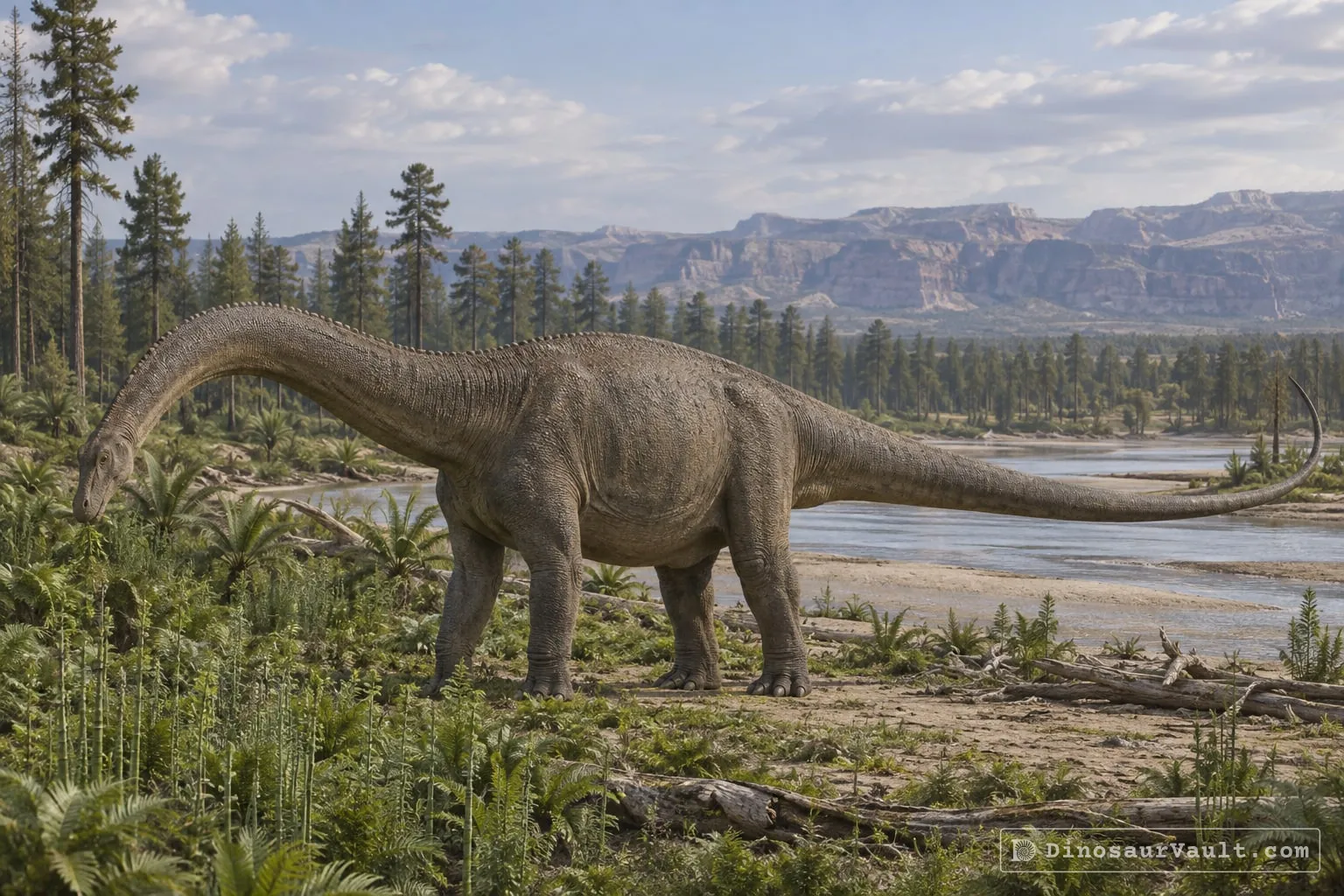
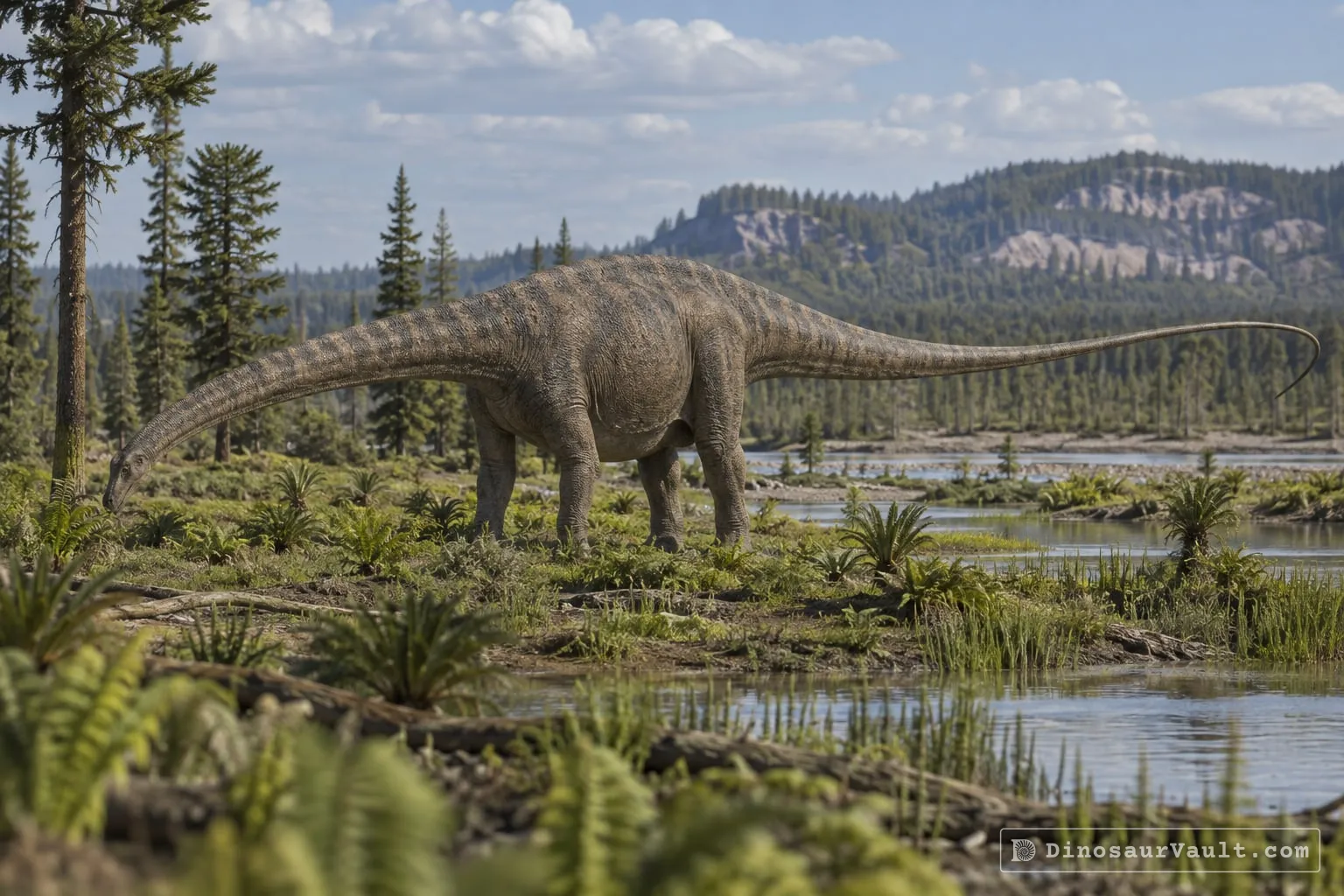
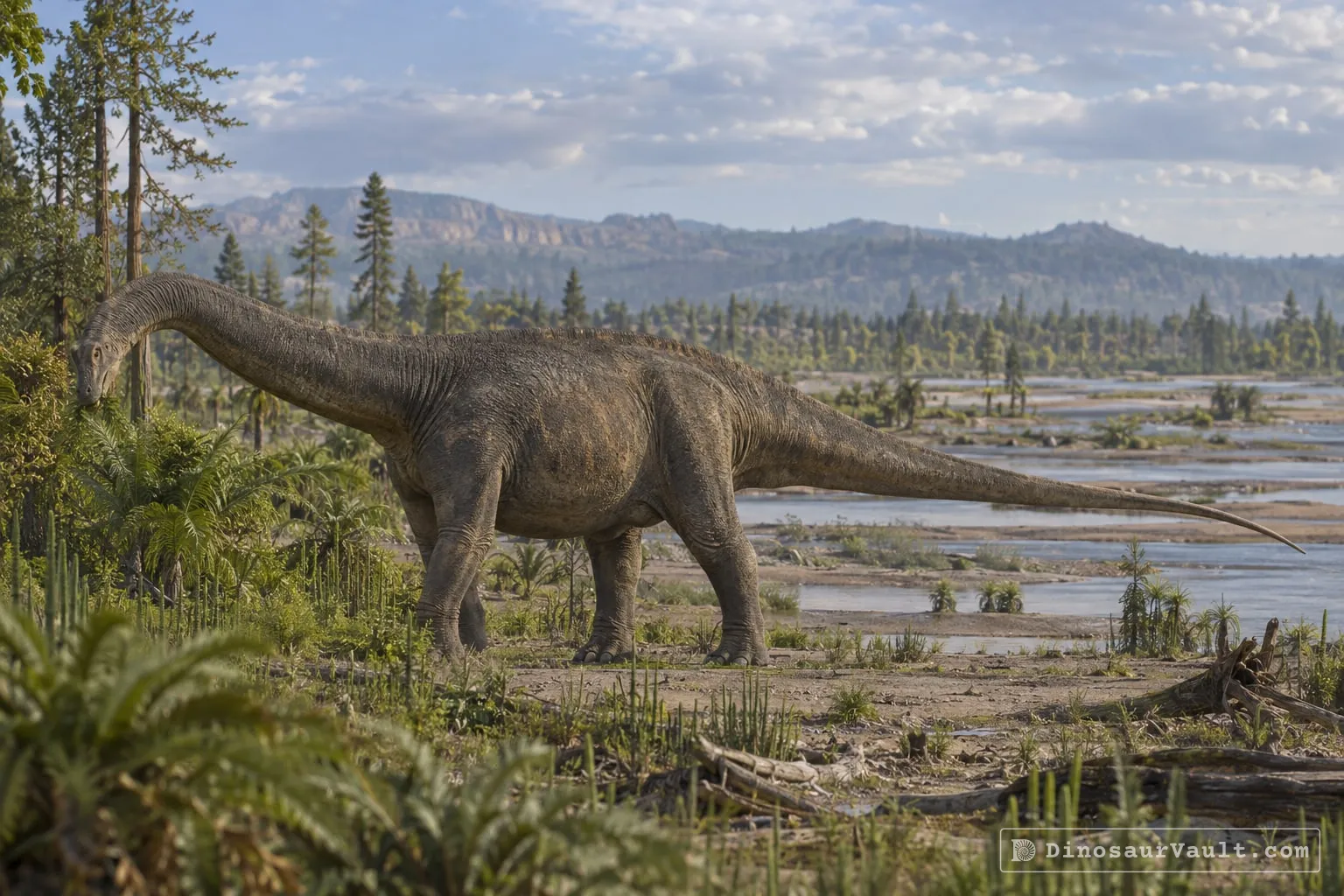


A rock formation can hold fossils laid down millions of years apart, so not every animal here met Fosterovenator.
The evidence
The science behind Fosterovenator
Which parts of the picture come from its own bones, and which come from its relatives.
From its own fossils
- The main specimen preserves a right shin bone fused to an ankle bone.
- The top of the shin bone has rounded, unequal joint surfaces separated by a deep notch.
Borrowed from relatives
- Sinraptor provides a broad comparison for the missing head and body.
- Dilophosaurus provides a broader comparison for the missing hands and feet.
Still unknown
- Its complete head, body proportions and skin covering.
- Its exact place in the theropod family tree.
- Whether the larger isolated calf bone assigned to it belongs to the same genus.
Discovery timeline
- 2014Named itDalman
- 2020Close relativeHendrickx et al.
- 2020Close relativeMarsh & Rowe
Key papers
The research behind what we know of Fosterovenator
Named it
Named a theropod from shin and ankle bones and a separately assigned calf bone.
New data on small theropod dinosaurs from the Upper Jurassic Morrison Formation of Como Bluff, Wyoming, USA. Volumina Jurassica 12: 181-196
No link available
Close relative
Described the teeth of Sinraptor, a broad anatomical comparison for the missing head of Fosterovenator.
Dental anatomy of the apex predator Sinraptor dongi (Theropoda: Allosauroidea) from the Late Jurassic of China. Canadian Journal of Earth Sciences 57: 1127-1147
Read the paper : Dental anatomy of the apex predator Sinraptor dongi (Theropoda: Allosauroidea) from the Late Jurassic of China (opens in a new tab)Close relative
Described the skeleton of Dilophosaurus, providing a broad early-theropod comparison for missing hands and feet.
A comprehensive anatomical and phylogenetic evaluation of Dilophosaurus wetherilli (Dinosauria, Theropoda) with descriptions of new specimens from the Kayenta Formation of northern Arizona. Journal of Paleontology 94: 1-103
Read the paper : A comprehensive anatomical and phylogenetic evaluation of Dilophosaurus wetherilli (Dinosauria, Theropoda) with descriptions of new specimens from the Kayenta Formation of northern Arizona (opens in a new tab)
Close relatives
Other members of Ceratosauridae

Sources: Wikidata