Outline: a typical ankylosaur
Europelta
"Europe shield"
- Lived
- 113 to 110 million years ago, Early Cretaceous
- Diet
- Herbivore
- Group
- Ankylosaurs, Nodosauridae
- Found in
- Spain
- Named by
- Kirkland et al. 2013
Where its fossils were found
The evidence
Today
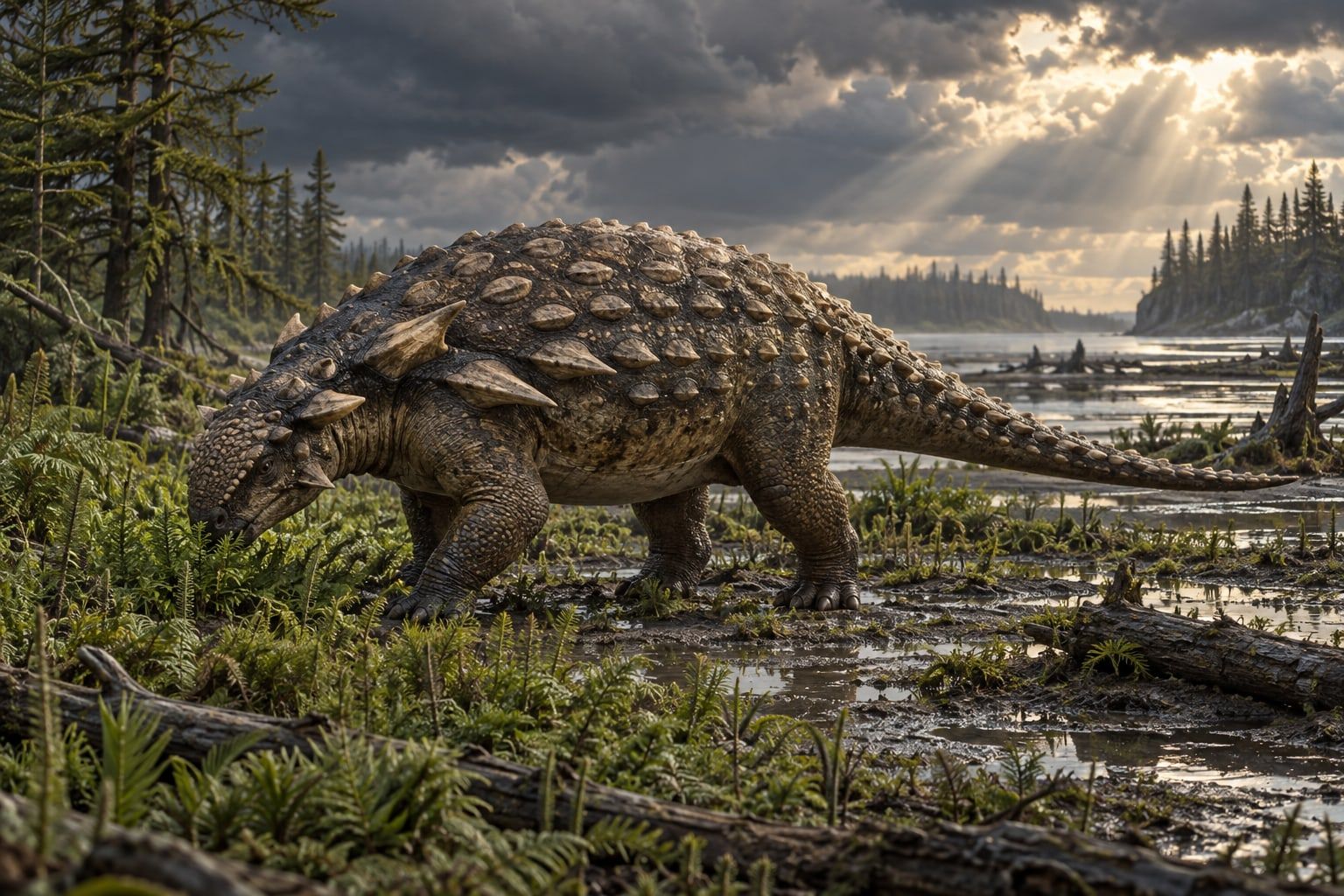
110 million years ago
Field notes
About Europelta
What it was like
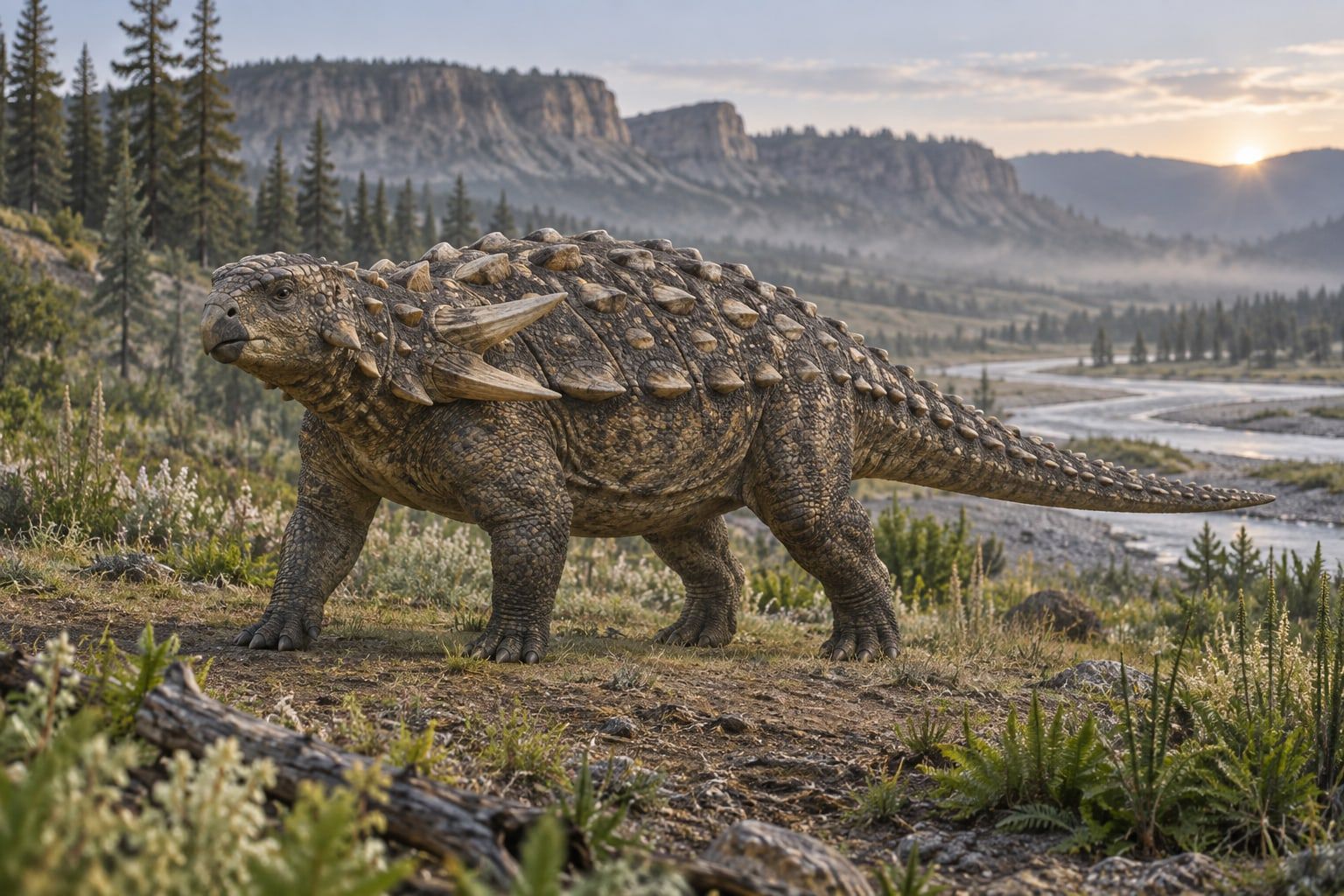
Europelta was a nodosaur, an armored plant eater with rows of bony plates on its back and no tail club. It is known from two partial skeletons.
It belongs to the struthiosaurines, a branch of nodosaurs that lived only in Europe.
Its world
It lived about 113 to 110 million years ago, in the Early Cretaceous, in what is now northeastern Spain. Its bones come from the Escucha Formation, where it shared the land with the plant eater Proa.
How it was found
Kirkland and colleagues named Europelta in 2013. It was found in a coal mine.
Lived alongside
Found in the same rock formations
Close relatives
Other members of Nodosauridae
Sources: WikidataNamed in: J. I. Kirkland, L. Alcalá, and M. A. Loewen, Espílez, L. Mampei, J. P. Wiersma. 2013. The basal nodosaurid Europelta carbonensis n. gen., n. sp. from the Lower Cretaceous (Lower Albian) Escucha Formation of northeastern Spain. PLoS One 8(12):e80405:1-40