Outline: a typical theropod
Dineobellator
"Navajo warrior"
Type species Dineobellator notohesperus
- Lived
- 72 to 66 million years ago, Late Cretaceous
- Diet
- Carnivore
- Group
- Theropods, Dromaeosauridae
- Found in
- United States
- Named by
- Jasinski et al. 2020
Where its fossils were found
The evidence
Today

70 million years ago
Field notes
About Dineobellator
What it was like
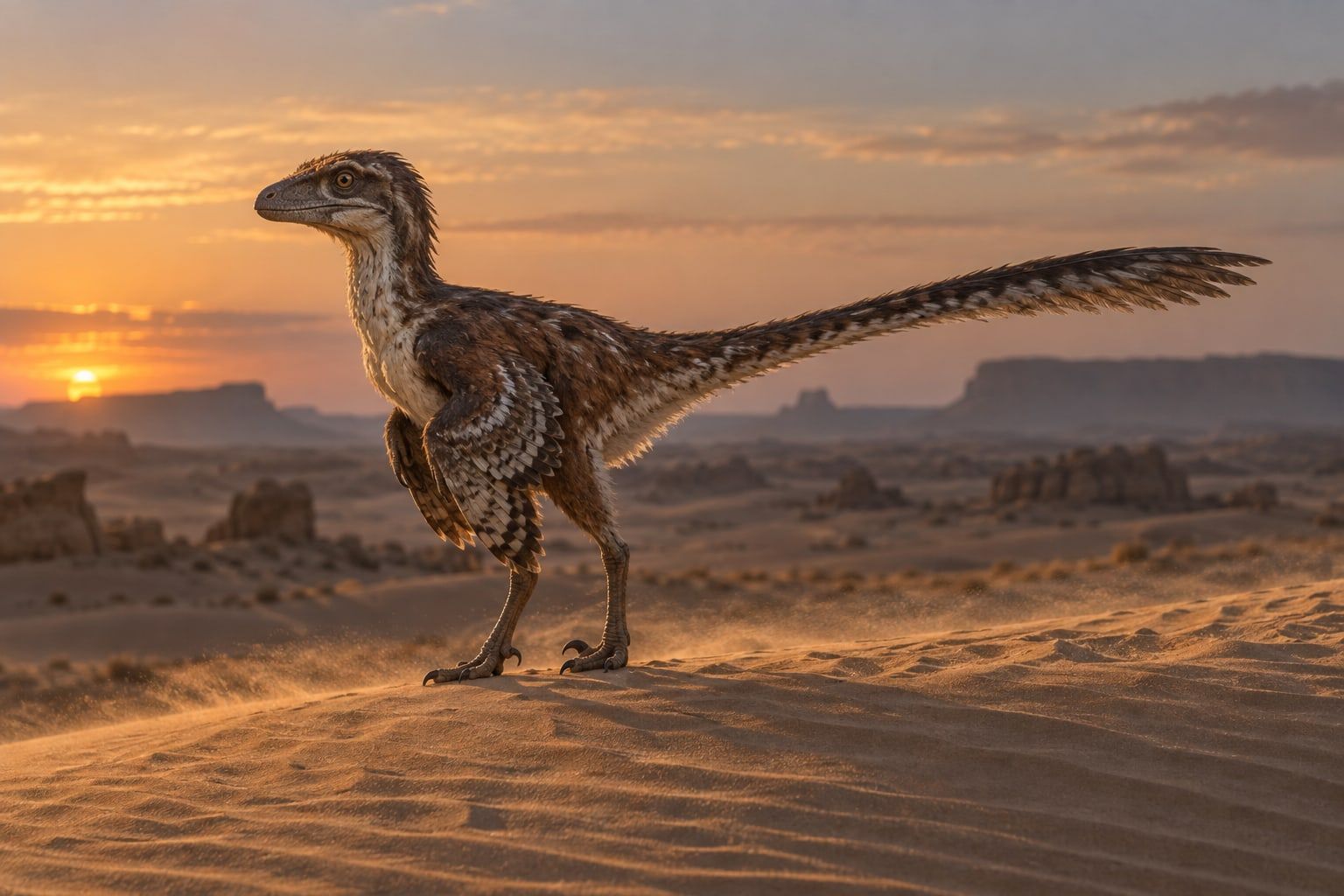
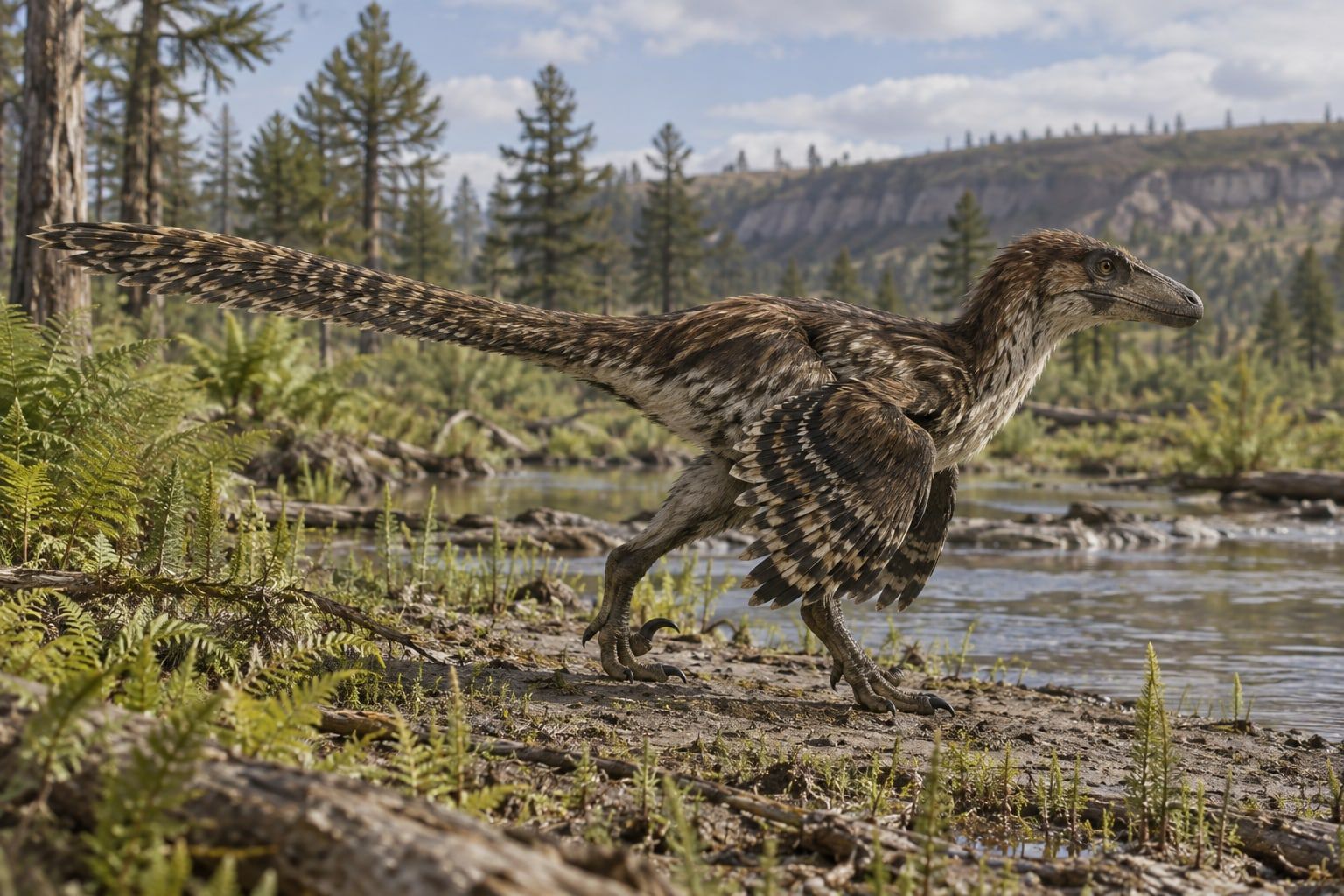
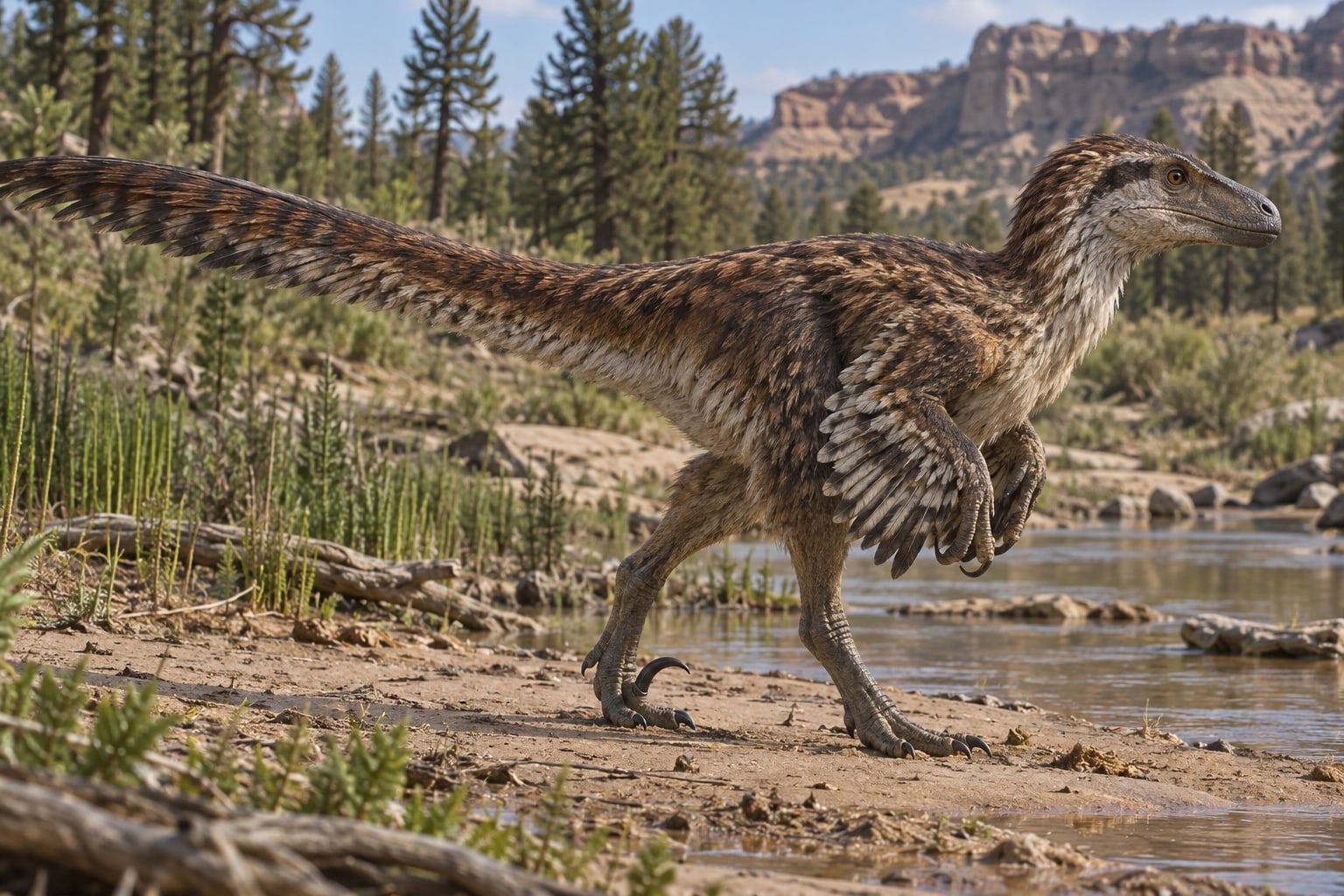
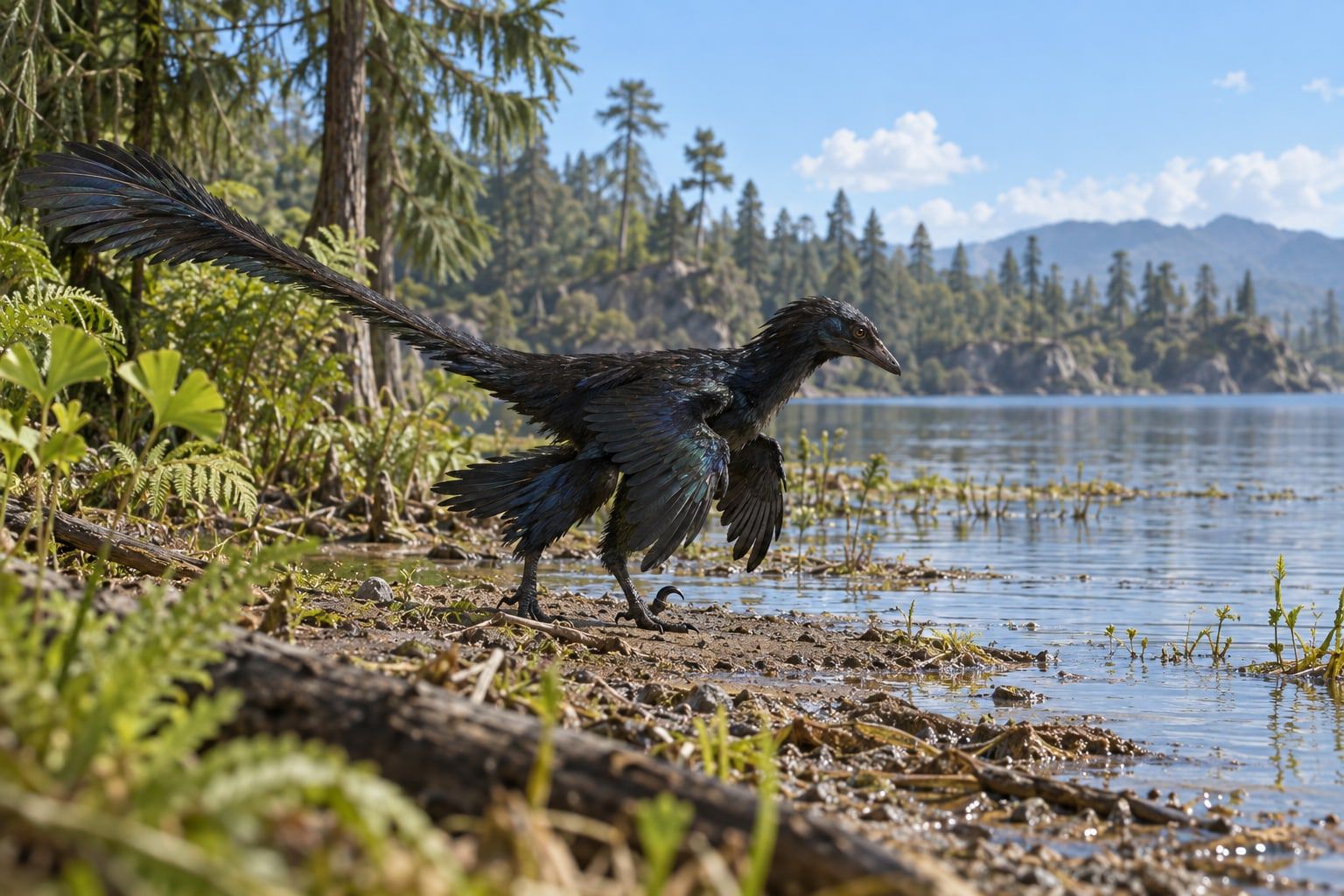
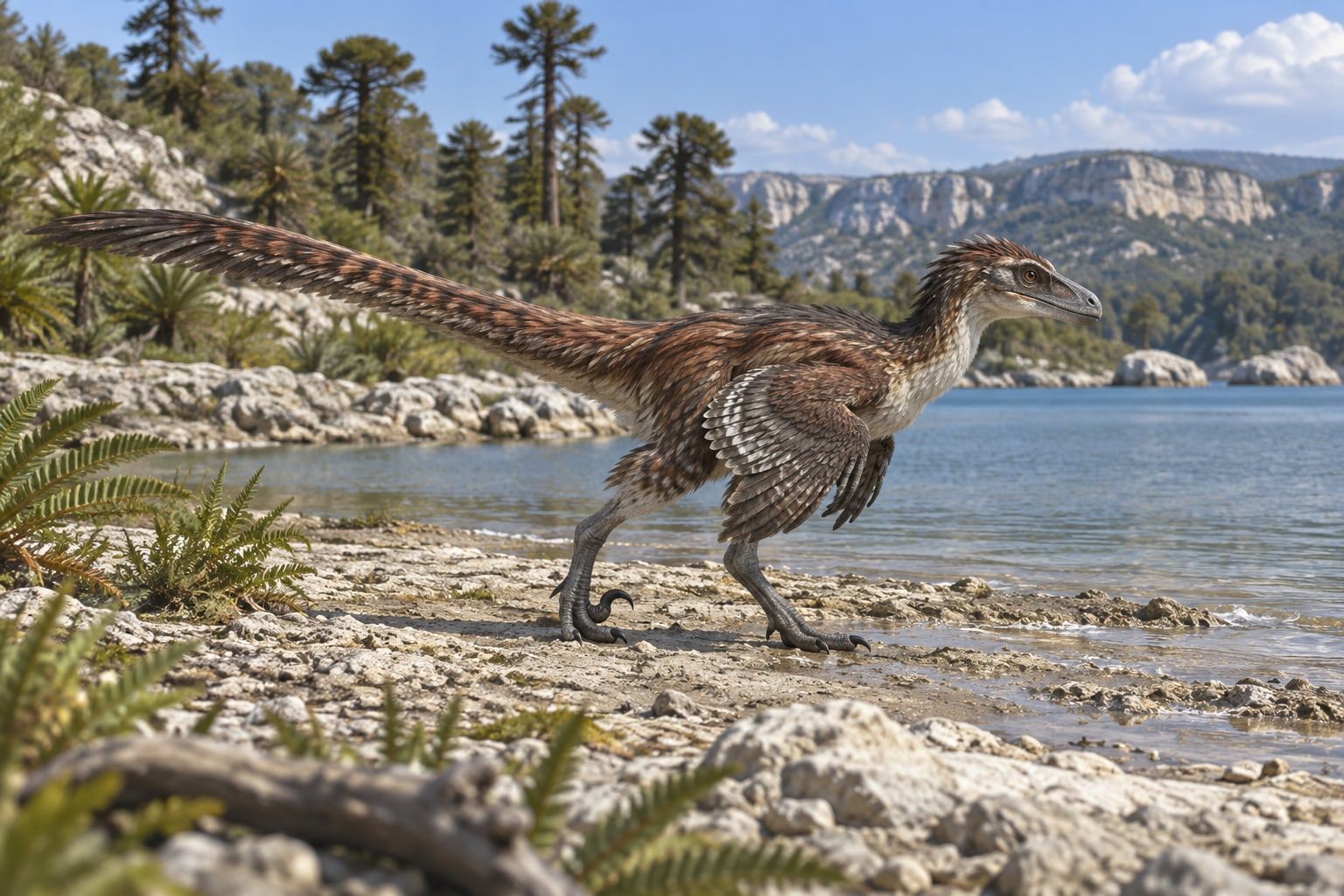
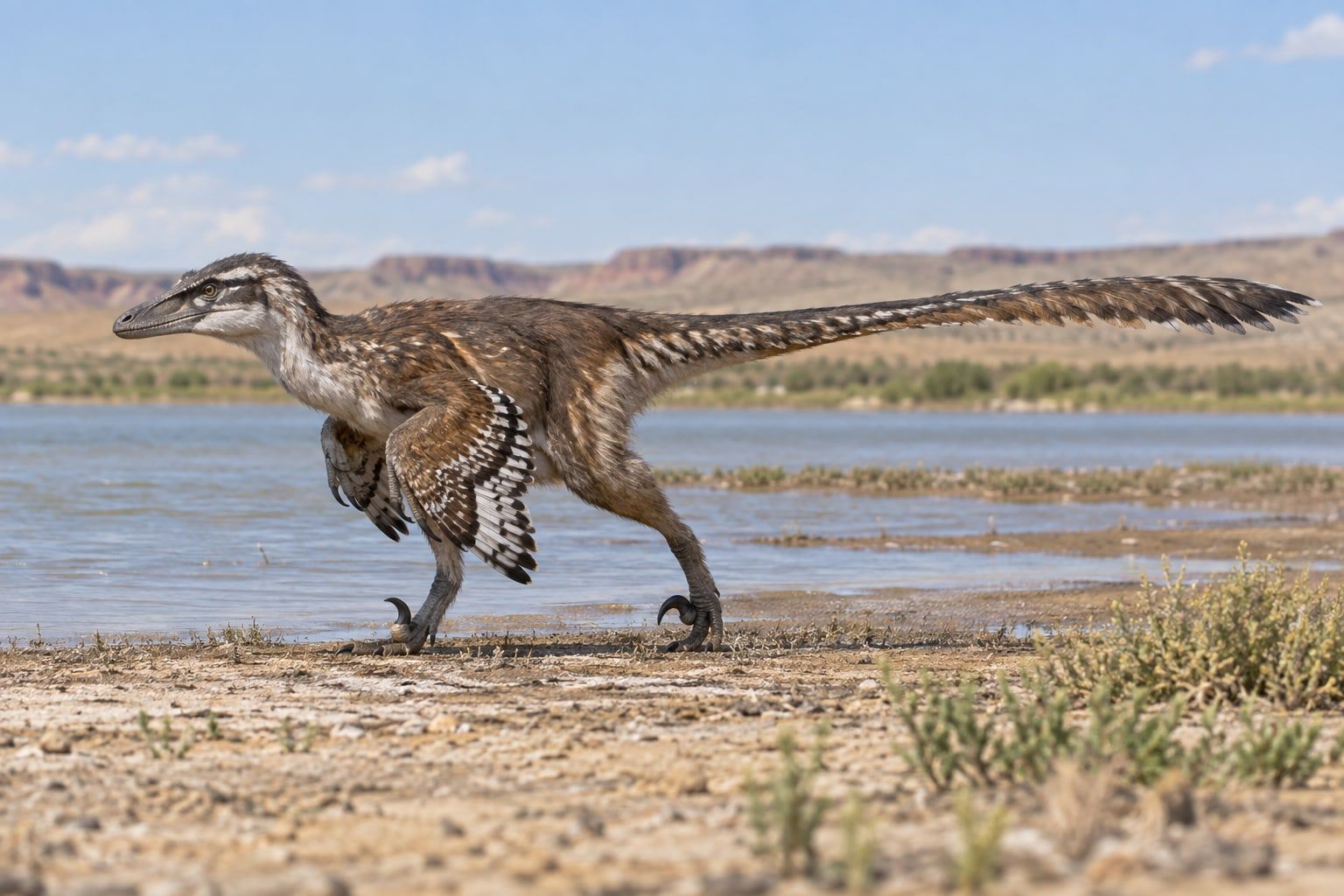
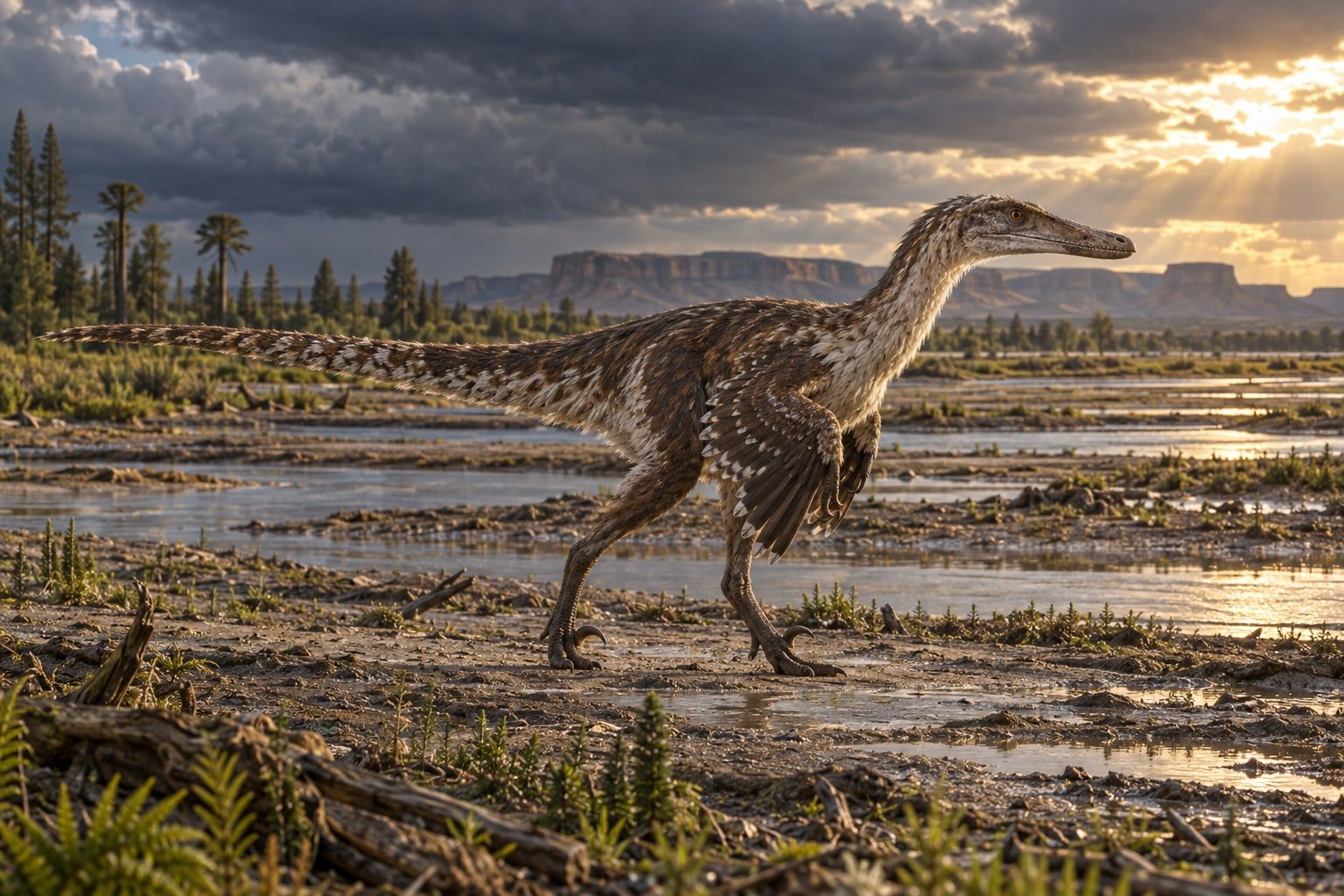
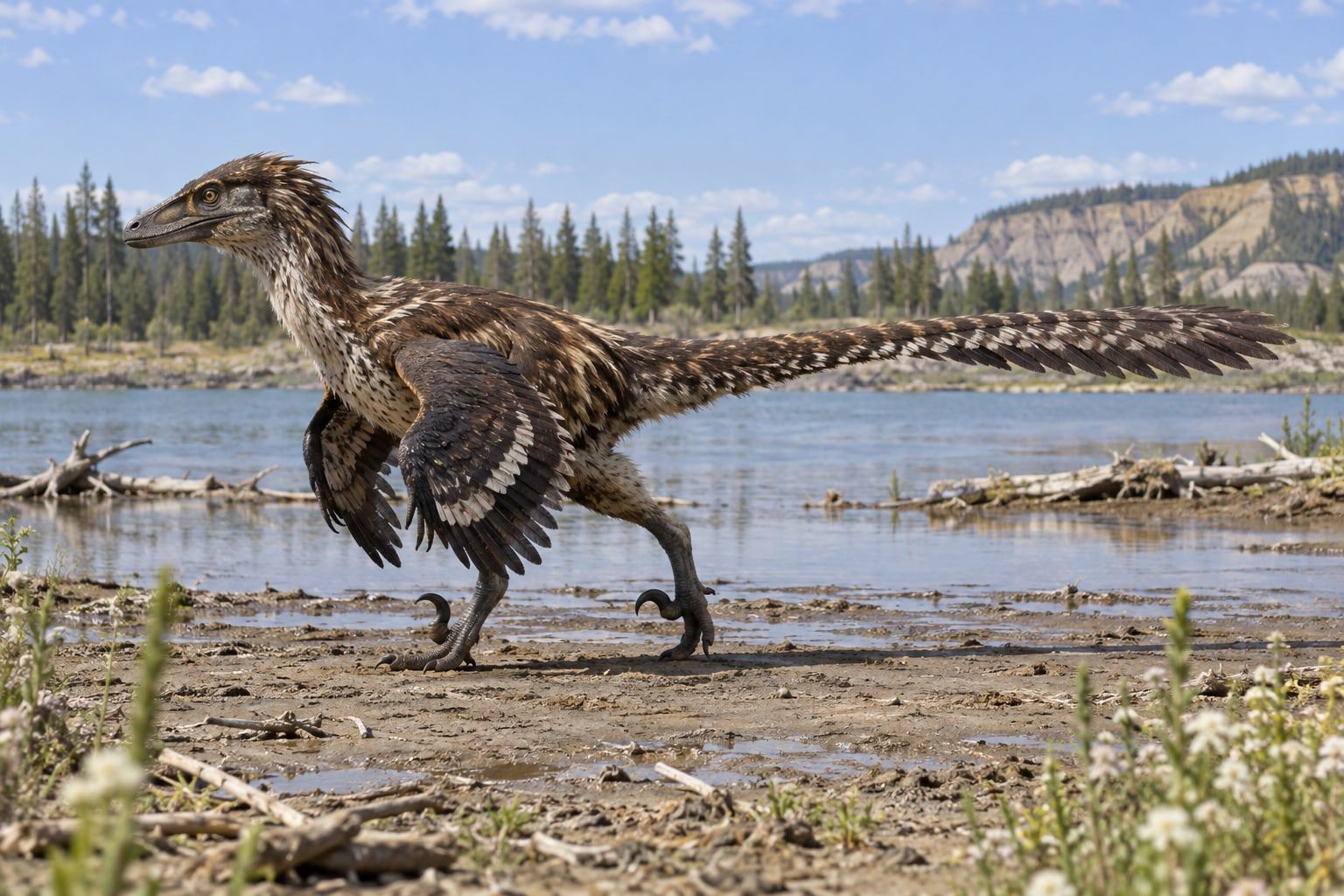
Dineobellator was a feathered raptor, a relative of Velociraptor. It is known from part of a skeleton, including arms, claws and part of the tail.
Its arms were strong and its claws curved and sharp, which suggests it could grip prey. Its tail was more flexible at the base than in many relatives, which may have helped it turn quickly.
Its world
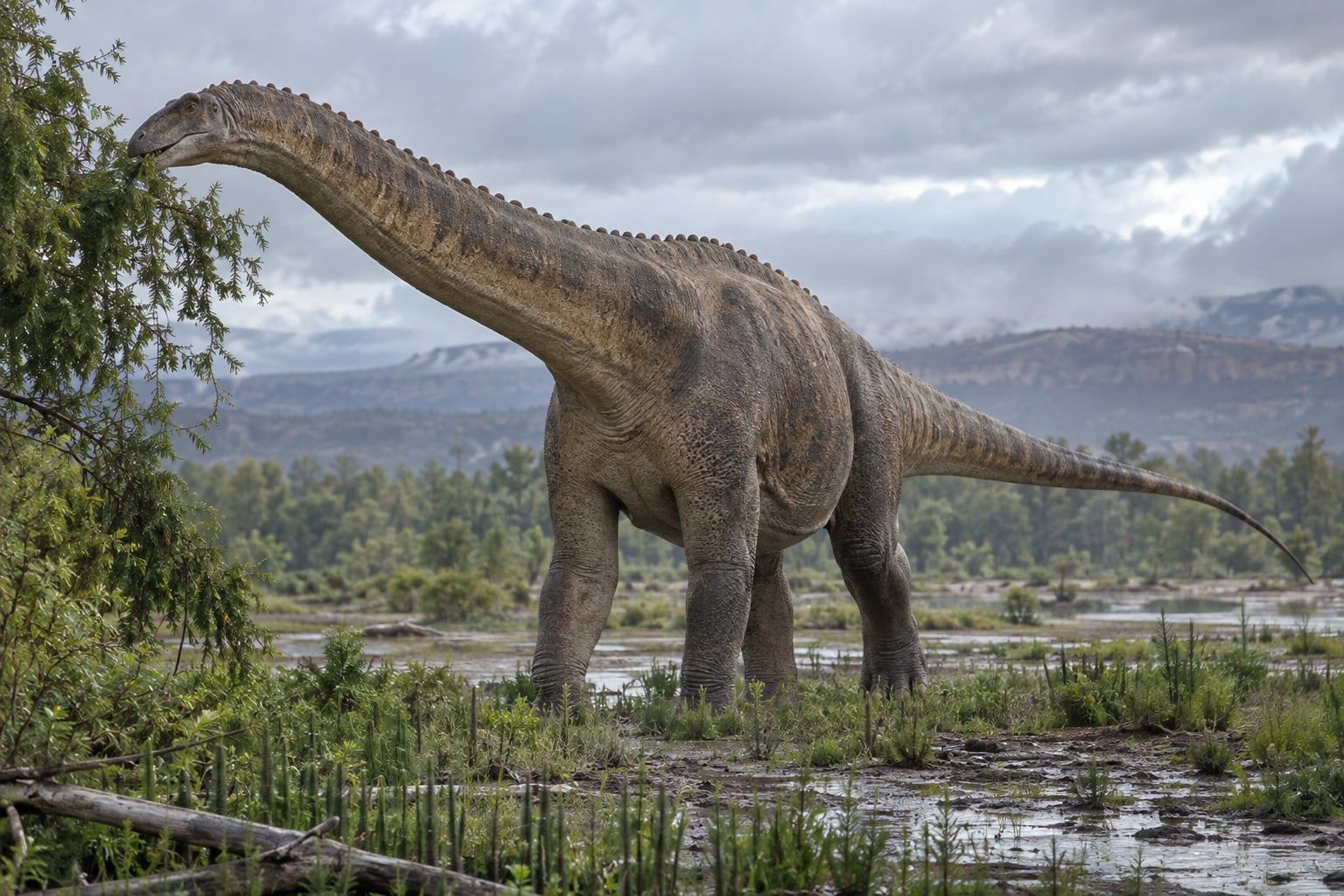
It lived about 72 to 66 million years ago, at the very end of the Late Cretaceous, in what is now New Mexico, in the United States. Its bones come from the Ojo Alamo Formation, where it shared the land with the giant long-necked Alamosaurus.
How it was found
Jasinski and colleagues named Dineobellator in 2020, from a single find. It is one of the last raptors known from North America.
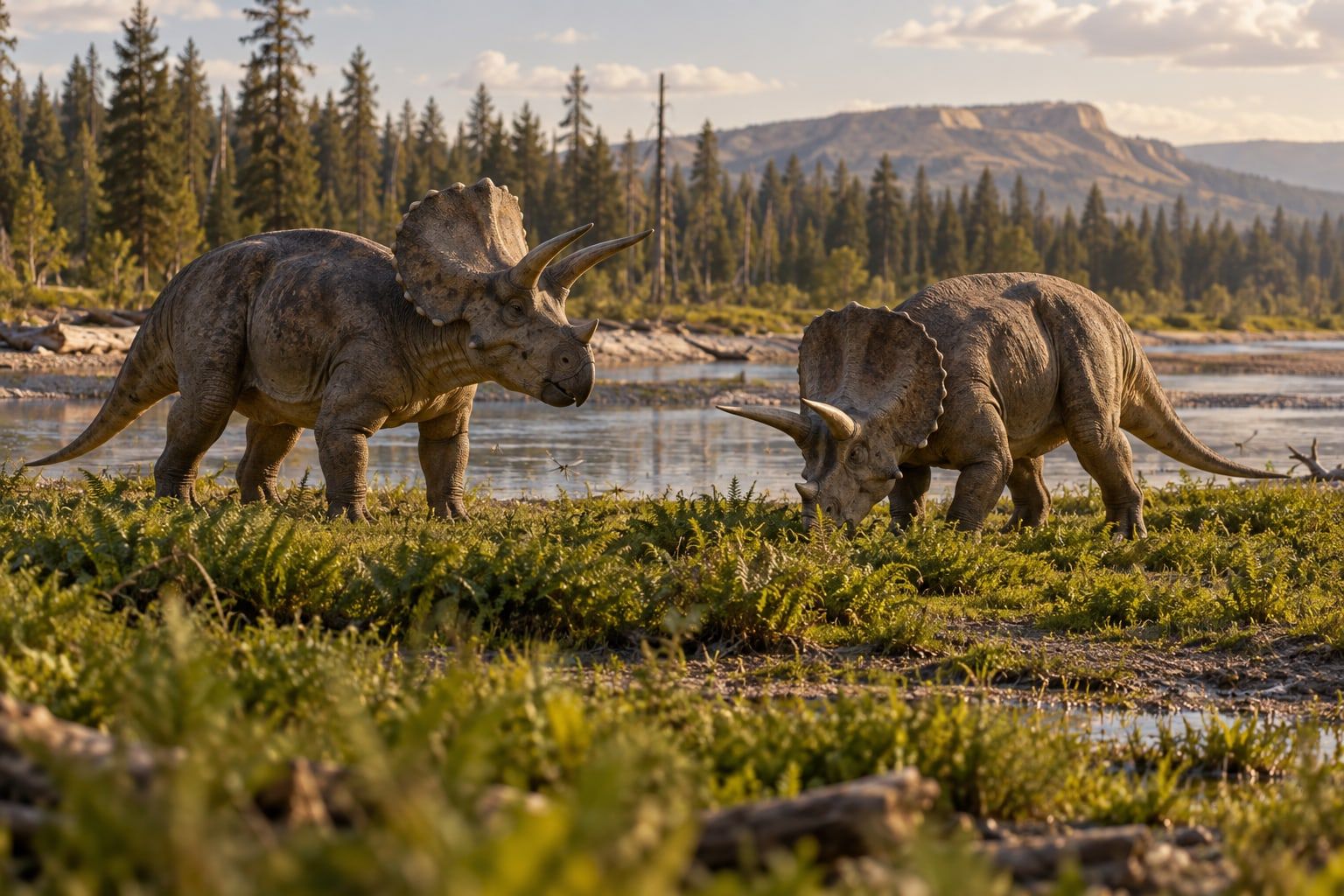
Lived alongside
Found in the same rock formations
Close relatives
Other members of Dromaeosauridae
Sources: WikidataNamed in: S. E. Jasinski, R. M. Sullivan, and P. Dodson. 2020. Dromaeosaurid dinosaur (Theropoda, Dromaeosauridae) from New Mexico and biodiversity of dromaeosaurids at the end of the Cretaceous. Scientific Reports 10(5105):1-10