Dilophosaurus
dy-LOH-foh-SORE-us
"two-crested lizard"
- Lived
- 200 to 184 million years ago, Early Jurassic
- Diet
- Carnivore
- Length
- about 7 m (23 ft)
- Group
- Theropods
- Found in
- United States
- Named by
- Welles 1970
Size comparison
To scale
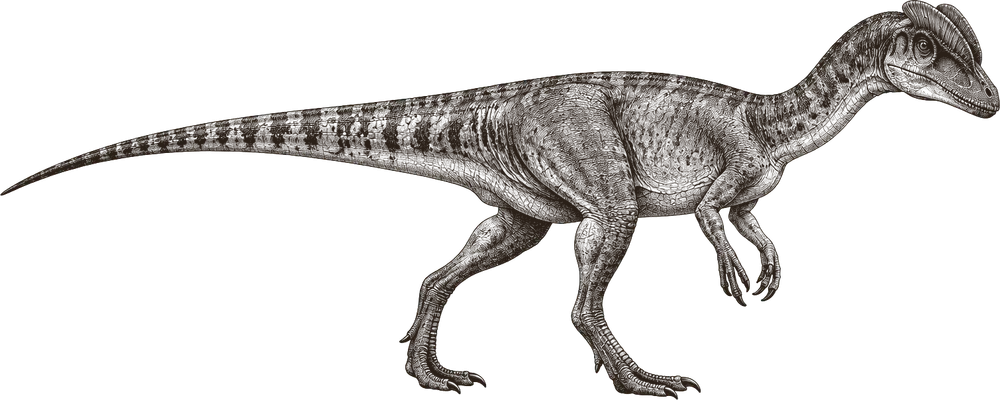

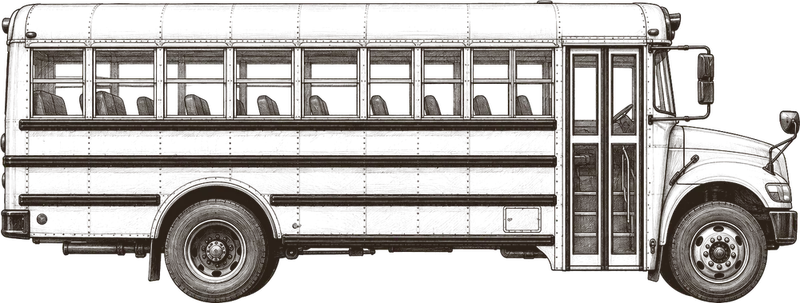
Scale in meters
Where its fossils were found
The evidence
Today

190 million years ago
Habitat
Rivers crossed floodplains in the Kayenta Formation landscape. Sarahsaurus and the small armored Scutellosaurus lived in this world.
Field notes
About Dilophosaurus
What it was like
Dilophosaurus was a slender, fast-moving hunter that stood on two legs. Its most striking feature was a pair of thin, curved crests running along the top of its skull, probably made mostly of keratin, the same material as claws and horns. At about 7 meters long, it was large for its time, with a long neck, a light skull, and rows of curved, blade-like teeth.
Its arms were strong, ending in four-fingered hands with sharp claws for gripping prey. Dilophosaurus is sometimes shown with a neck frill or venomous spit in movies and games, but fossils support neither of those features. The real crests were likely too delicate for fighting and may instead have been used for display, helping Dilophosaurus recognize others of its own kind.
Its world
Dilophosaurus lived in the Early Jurassic, from about 200 to 184 million years ago, in what is now Arizona. Its remains come from the Kayenta formation, layers of ancient river and floodplain rock that also preserved the small, armored Scutellosaurus and the plant-eating Sarahsaurus.
As one of the largest predators of its time and place, Dilophosaurus likely hunted a range of animals, and may have scavenged when the chance arose. Its long legs suggest it could cover ground quickly while chasing prey across the Early Jurassic landscape.
How it was found
Fossils of Dilophosaurus were uncovered in Arizona, and the genus was formally named by Welles in 1970. Paleontologists have since recorded seven finds of the animal, including a young individual, giving a fuller picture of how it grew.
Its closest relatives, including Dracovenator and Zupaysaurus, come from formations far outside Arizona, on other continents, showing that this early group of predatory dinosaurs was already spread around the world by the Early Jurassic.
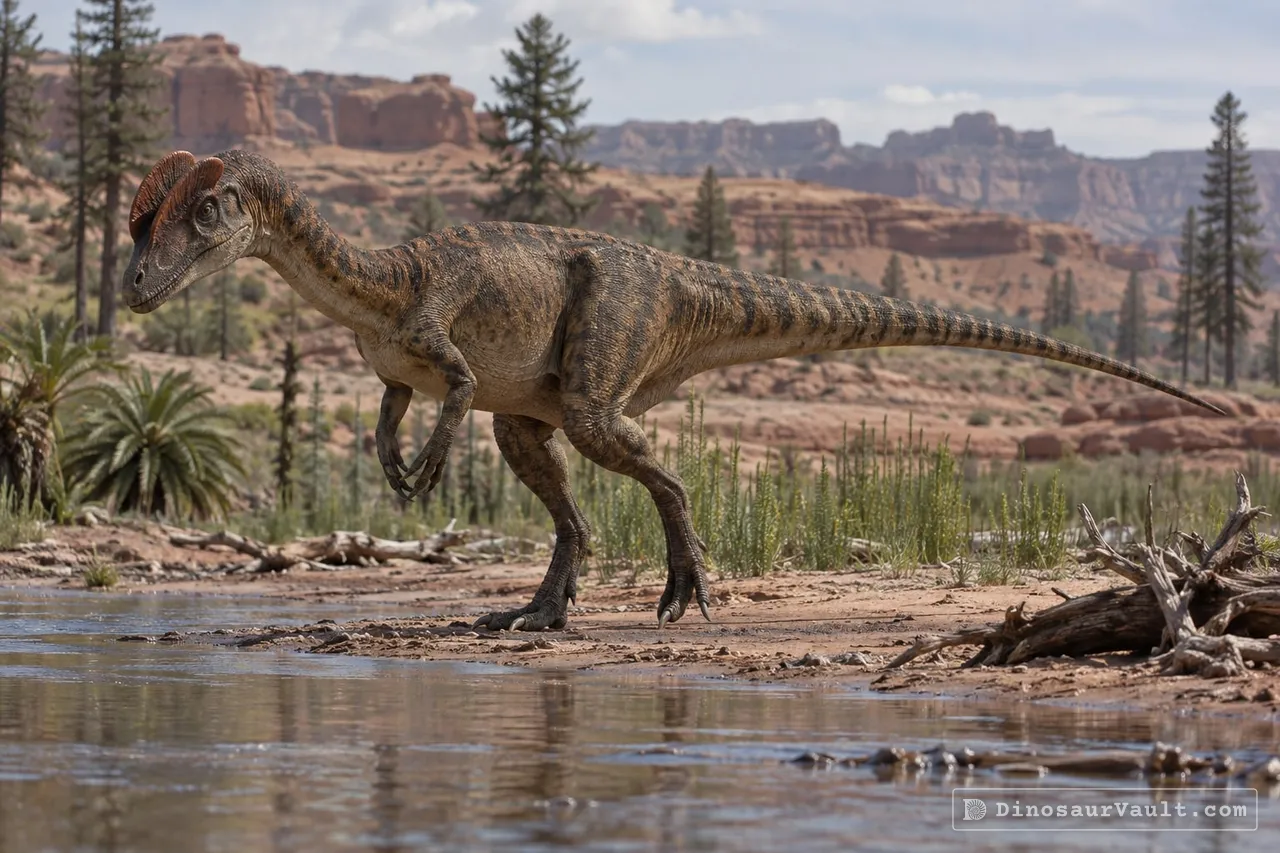
Field gallery
More views of Dilophosaurus
Scenes reconstructed from the available fossil evidence.
1 of 7
Lived alongside
Found in the same rock formations


A rock formation can hold fossils laid down millions of years apart, so not every animal here met Dilophosaurus.
The evidence
The science behind Dilophosaurus
Which parts of the picture come from its own bones, and which come from its relatives.
From its own fossils
- Several skeletons preserve a long neck, a narrow skull and paired thin crests running along the top of the head.
- Its jaws held curved, blade-like teeth, and air spaces extended through parts of its skeleton.
- Its arms could grasp, with palms facing inward.
Borrowed from relatives
- Much of its body is known from its own bones.
- Lips over the teeth are inferred from comparisons with other theropods, including Tyrannosaurus.
Still unknown
- Its color and the full pattern of its skin covering.
- How the crests changed during growth and how much their outer covering enlarged them.
- Whether its crests helped attract mates or recognize others of its kind.
Often drawn wrong
- The spreading neck frill and venomous spit familiar from movies have no fossil support.
- The crests ran lengthwise along the skull, rather than forming a single comb across it.
- Its palms faced inward, rather than downward.
Discovery timeline
- 1970Named itWelles
- 2018Same rocksMarsh & Rowe
- 2019PostureSenter & Sullivan
- 2020Full descriptionMarsh & Rowe
- 2023Close relativeCullen et al.
Key papers
The research behind what we know of Dilophosaurus
Named it
Gave Dilophosaurus its own genus name after the animal had first been described as a species of Megalosaurus.
Dilophosaurus (Reptilia: Saurischia), a new name for a dinosaur. Journal of Paleontology 44: 989
No link available
Same rocks
Described Sarahsaurus from a quarry that also contained an immature Dilophosaurus skeleton.
Anatomy and systematics of the sauropodomorph Sarahsaurus aurifontanalis from the Early Jurassic Kayenta Formation. PLOS ONE 13: e0204007
Read the paper : Anatomy and systematics of the sauropodomorph Sarahsaurus aurifontanalis from the Early Jurassic Kayenta Formation (opens in a new tab)Posture
Tested arm joint movement and found inward-facing palms and a grasping reach concentrated beneath the chest and base of the neck.
Forelimbs of the theropod dinosaur Dilophosaurus wetherilli: Range of motion, influence of paleopathology and soft tissues, and description of a distal carpal bone. Palaeontologia Electronica
Read the paper : Forelimbs of the theropod dinosaur Dilophosaurus wetherilli: Range of motion, influence of paleopathology and soft tissues, and description of a distal carpal bone (opens in a new tab)Full description
Redescribed the skeleton and new specimens, clarifying the skull crests, air-filled bones and differences associated with growth.
A comprehensive anatomical and phylogenetic evaluation of Dilophosaurus wetherilli (Dinosauria, Theropoda) with descriptions of new specimens from the Kayenta Formation of northern Arizona. Journal of Paleontology 94: 1-103
Read the paper : A comprehensive anatomical and phylogenetic evaluation of Dilophosaurus wetherilli (Dinosauria, Theropoda) with descriptions of new specimens from the Kayenta Formation of northern Arizona (opens in a new tab)Close relative
Comparisons of theropod teeth and living reptiles support lips covering the teeth when the mouth was closed.
Theropod dinosaur facial reconstruction and the importance of soft tissues in paleobiology. Science 379: 1348-1352
Read the paper : Theropod dinosaur facial reconstruction and the importance of soft tissues in paleobiology (opens in a new tab)
Close relatives
Other members of Neotheropoda


Sources: Wikidata