Kayentavenator
"Kayenta hunter"
Type species Kayentavenator elysiae
- Lived
- 200 to 184 million years ago, Early Jurassic
- Diet
- Carnivore
- Group
- Theropods
- Found in
- United States
- Named by
- Gay 2010
Where its fossils were found
The evidence
Today

190 million years ago
Habitat
River systems crossed its home in what is now Arizona. Dinosaurs from the Kayenta Formation include Dilophosaurus, Scutellosaurus and Sarahsaurus.
Field notes
About Kayentavenator
What it was like
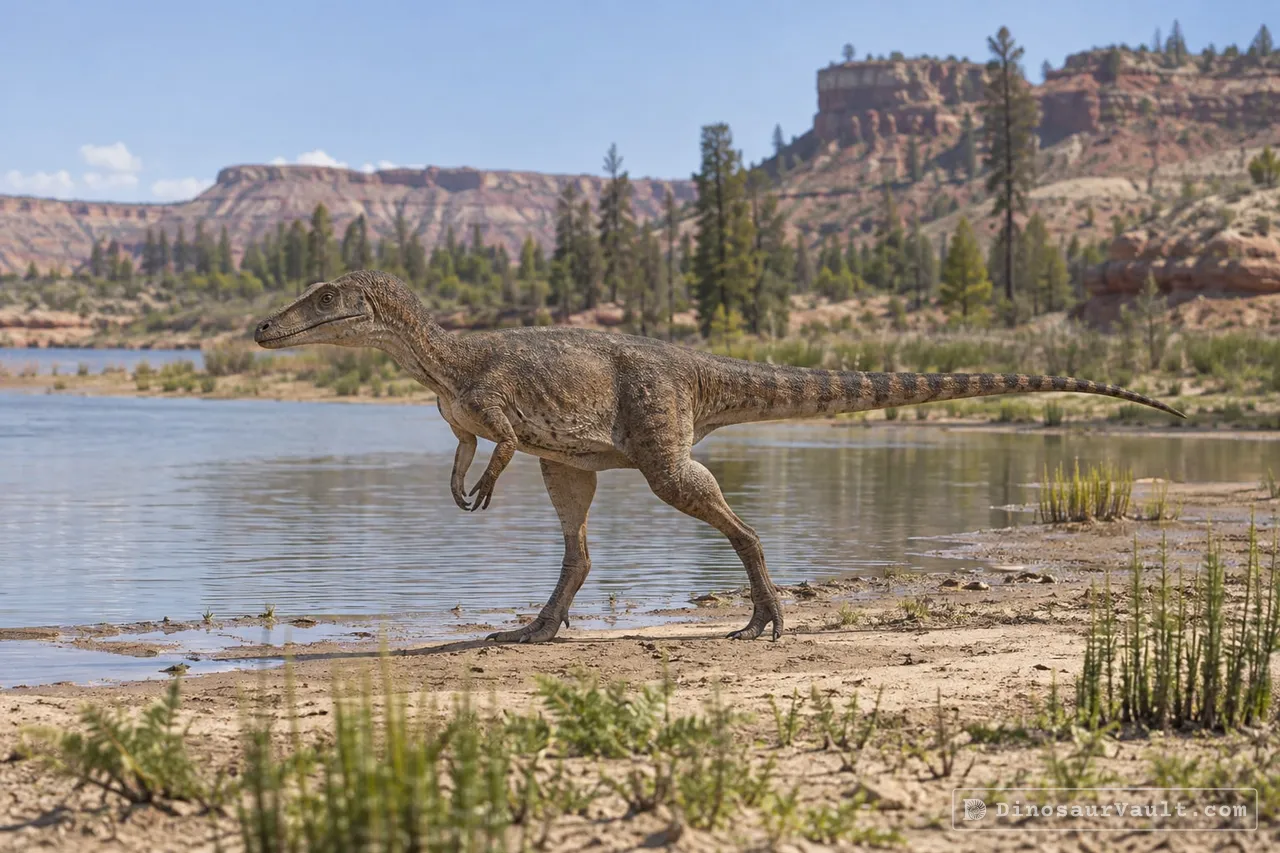
Kayentavenator was a small, two-legged meat eater known from part of the hips and legs of a young animal.
Its world
It lived in the Early Jurassic, in what is now Arizona. It comes from the Kayenta Formation, where it shared the land with the crested predator Dilophosaurus, the small armored Scutellosaurus and the plant eater Sarahsaurus.
How it was found
Gay named Kayentavenator in 2010. The type species is Kayentavenator elysiae.
Field gallery
More views of Kayentavenator
Scenes reconstructed from the available fossil evidence.
Lived alongside
Found in the same rock formations


A rock formation can hold fossils laid down millions of years apart, so not every animal here met Kayentavenator.
The evidence
The science behind Kayentavenator
Which parts of the picture come from its own bones, and which come from its relatives.
From its own fossils
- The type skeleton includes parts of the pelvis, thigh bones, lower legs and tail vertebrae.
- The tail vertebrae narrow sharply through the middle.
Borrowed from relatives
- Its head, arms and much of the body are unknown, and its closest relatives are disputed.
Still unknown
- Its adult size and skull shape.
- Its skin covering and color.
- A conference analysis proposed that Kayentavenator is the same animal as the small theropod Megapnosaurus kayentakatae, and a later paper lists its type with that species, so its separate status is unsettled.
Discovery timeline
- 1989Same rocksRowe
- 2010Named itGay
- 2017Family treeEzcurra
- 2020Same rocksMarsh & Rowe
Key papers
The research behind what we know of Kayentavenator
Same rocks
Described a small theropod from the same rocks, the species with which later studies group the Kayentavenator type.
A new species of the theropod dinosaurSyntarsusfrom the Early Jurassic Kayenta Formation of Arizona. Journal of Vertebrate Paleontology 9: 125-136
Read the paper : A new species of the theropod dinosaurSyntarsusfrom the Early Jurassic Kayenta Formation of Arizona (opens in a new tab)Named it
Named a small theropod from a young animal's partial skeleton and proposed that it belonged to Tetanurae.
Kayentavenator elysiae, a new tetanuran from the Early Jurassic of Arizona. Notes on Early Mesozoic Theropods.
No link available
Family tree
Listed the Kayentavenator type specimen with that small theropod species in comparisons of early theropod thigh bones.
A New Early Coelophysoid Neotheropod from the Late Triassic of Northwestern Argentina. Ameghiniana 54: 506
Read the paper : A New Early Coelophysoid Neotheropod from the Late Triassic of Northwestern Argentina (opens in a new tab)Same rocks
Restudied Dilophosaurus skeletons from the same formation and placed this large crested predator outside the coelophysoid group.
A comprehensive anatomical and phylogenetic evaluation of Dilophosaurus wetherilli (Dinosauria, Theropoda) with descriptions of new specimens from the Kayenta Formation of northern Arizona. Journal of Paleontology 94: 1-103
Read the paper : A comprehensive anatomical and phylogenetic evaluation of Dilophosaurus wetherilli (Dinosauria, Theropoda) with descriptions of new specimens from the Kayenta Formation of northern Arizona (opens in a new tab)
Close relatives
Other members of Tetanurae


Sources: Wikidata