Comahuesaurus
"Comahue lizard"
- Lived
- 120 to 110 million years ago, Early Cretaceous
- Diet
- Herbivore
- Group
- Sauropods, Rebbachisauridae
- Found in
- Argentina
- Named by
- Carballido et al. 2012
Where its fossils were found
The evidence
Today

115 million years ago
Habitat
It lived in a landscape crossed by rivers in the Lohan Cura Formation. A flow of debris in a temporary river channel buried its bones; other sauropods from these rocks include Agustinia and Ligabuesaurus.
Field notes
About Comahuesaurus
What it was like
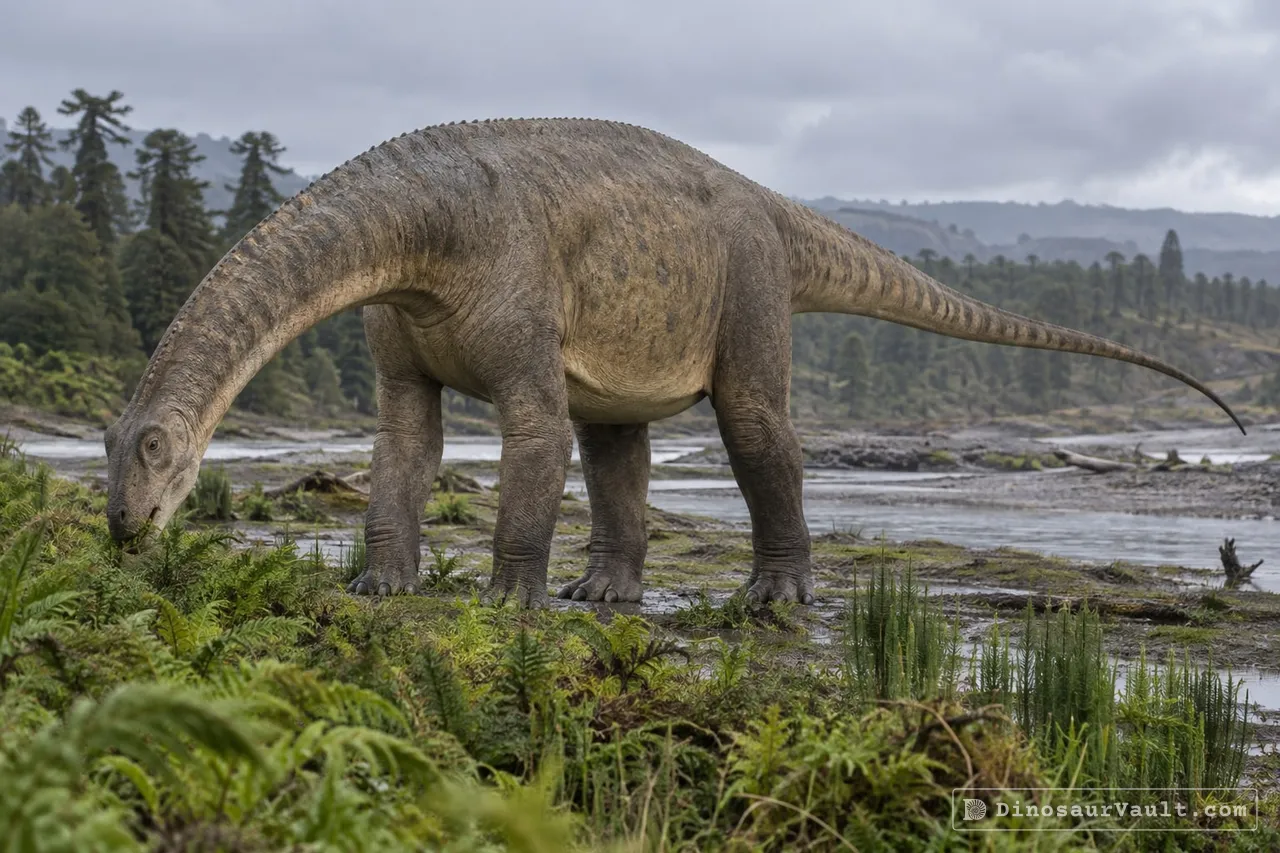
Comahuesaurus was a rebbachisaurid, a sauropod related to Limaysaurus. It is known from bones of several animals.
Its world
It lived in the Early Cretaceous, in what is now Argentina. It comes from the Lohan Cura Formation, where it shared the land with the sauropods Agustinia and Ligabuesaurus.
How it was found
Carballido and colleagues named Comahuesaurus in 2012. Its bones had first been placed in Limaysaurus.
Field gallery
More views of Comahuesaurus
Scenes reconstructed from the available fossil evidence.
1 of 2
Lived alongside
Found in the same rock formations


A rock formation can hold fossils laid down millions of years apart, so not every animal here met Comahuesaurus.
The evidence
The science behind Comahuesaurus
Which parts of the picture come from its own bones, and which come from its relatives.
From its own fossils
- Back and tail vertebrae, hip bones and limb bones come from several animals in a single bonebed.
- The back vertebrae have reduced extra bracing joints, a feature linking it with more advanced rebbachisaurids.
Borrowed from relatives
- The missing skull and much of the neck can be restored by comparison with other rebbachisaurids, such as Limaysaurus.
Still unknown
- The shape of its skull and teeth.
- Its complete neck length and adult body size.
- Its skin texture and color.
Discovery timeline
- 2004Its worldLeanza et al.
- 2012Named itCarballido et al.
- 2015Family treeFanti et al.
Key papers
The research behind what we know of Comahuesaurus
Its world
Reviewed the dinosaur-bearing rock units of Argentina and the animals recorded in each, including the Lohan Cura Formation.
Cretaceous terrestrial beds from the Neuquén Basin (Argentina) and their tetrapod assemblages. Cretaceous Research 25: 61-87
Read the paper : Cretaceous terrestrial beds from the Neuquén Basin (Argentina) and their tetrapod assemblages (opens in a new tab)Named it
Named Comahuesaurus from a bonebed and traced changes in the back joints during rebbachisaurid evolution.
A new basal rebbachisaurid (Sauropoda, Diplodocoidea) from the Early Cretaceous of the Neuquén Basin; evolution and biogeography of the group. Historical Biology 24: 631-654
Read the paper : A new basal rebbachisaurid (Sauropoda, Diplodocoidea) from the Early Cretaceous of the Neuquén Basin; evolution and biogeography of the group (opens in a new tab)Family tree
Compared rebbachisaurids and found that the position of Comahuesaurus changes with the method used to build the family tree.
New Information on Tataouinea hannibalis from the Early Cretaceous of Tunisia and Implications for the Tempo and Mode of Rebbachisaurid Sauropod Evolution. PLOS ONE 10: e0123475
Read the paper : New Information on Tataouinea hannibalis from the Early Cretaceous of Tunisia and Implications for the Tempo and Mode of Rebbachisaurid Sauropod Evolution (opens in a new tab)
Close relatives
Other members of Rebbachisauridae


Sources: Wikidata