Breviceratops
"short horned face"
Type species Breviceratops kozlowskii
- Lived
- 84 to 72 million years ago, Late Cretaceous
- Diet
- Herbivore
- Group
- Ceratopsians, Protoceratopsidae
- Found in
- Mongolia
- Named by
- Kurzanov 1990
Where its fossils were found
The evidence
Today

80 million years ago
Habitat
It lived in a dry landscape in Mongolia, recorded in the Baruungoyot Formation. Other dinosaurs from these rocks include Saichania, Tarchia and Shri.
Field notes
About Breviceratops
What it was like
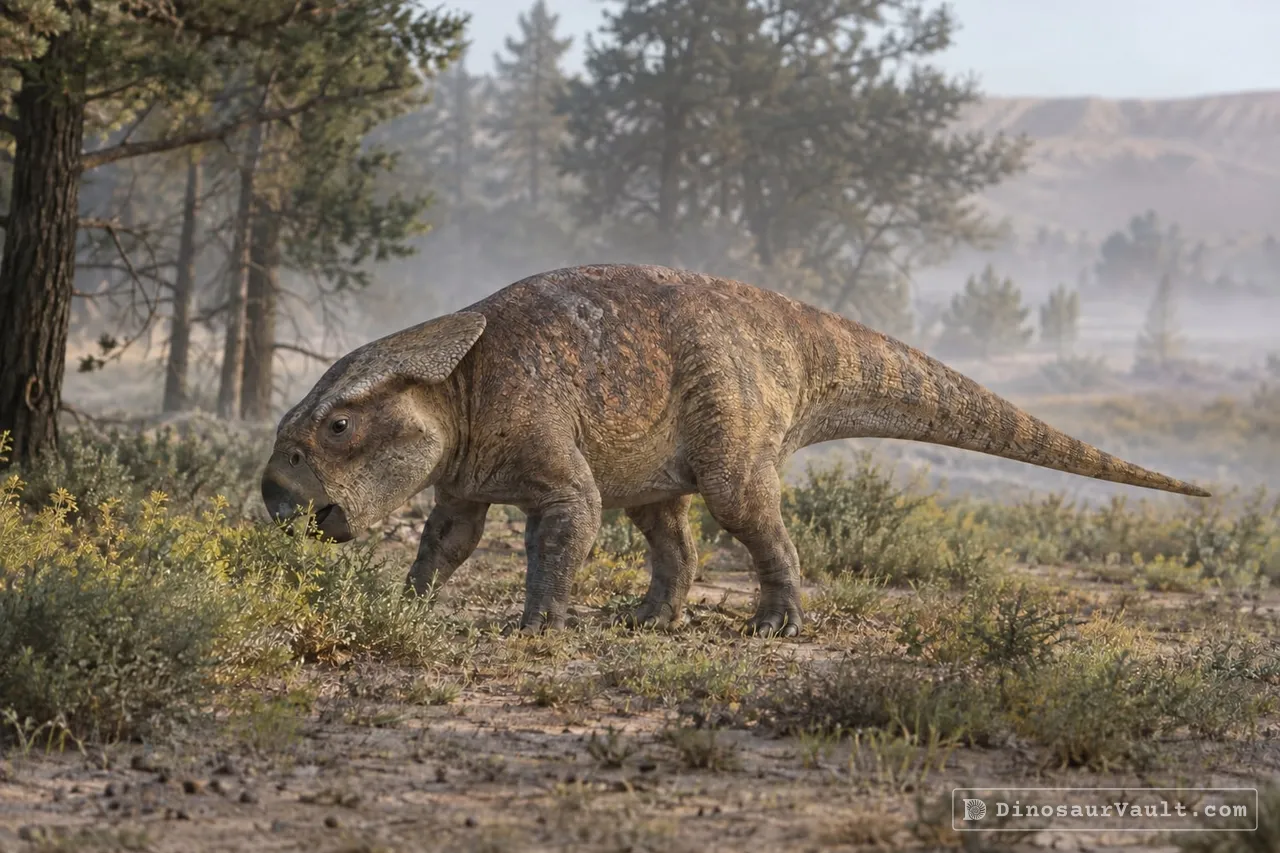
Breviceratops was a small horned dinosaur related to Protoceratops. It is known from young animals. Some skulls once assigned to it have been moved to Bagaceratops, while the type remains Breviceratops.
Its world
It lived in the Late Cretaceous, in what is now Mongolia. It comes from the Baruungoyot Formation, a dry land shared with the armored Saichania and Tarchia and the dromaeosaur Shri.
How it was found
Kurzanov named Breviceratops in 1990. The type species is Breviceratops kozlowskii.
Field gallery
More views of Breviceratops
Scenes reconstructed from the available fossil evidence.
Lived alongside
Found in the same rock formations
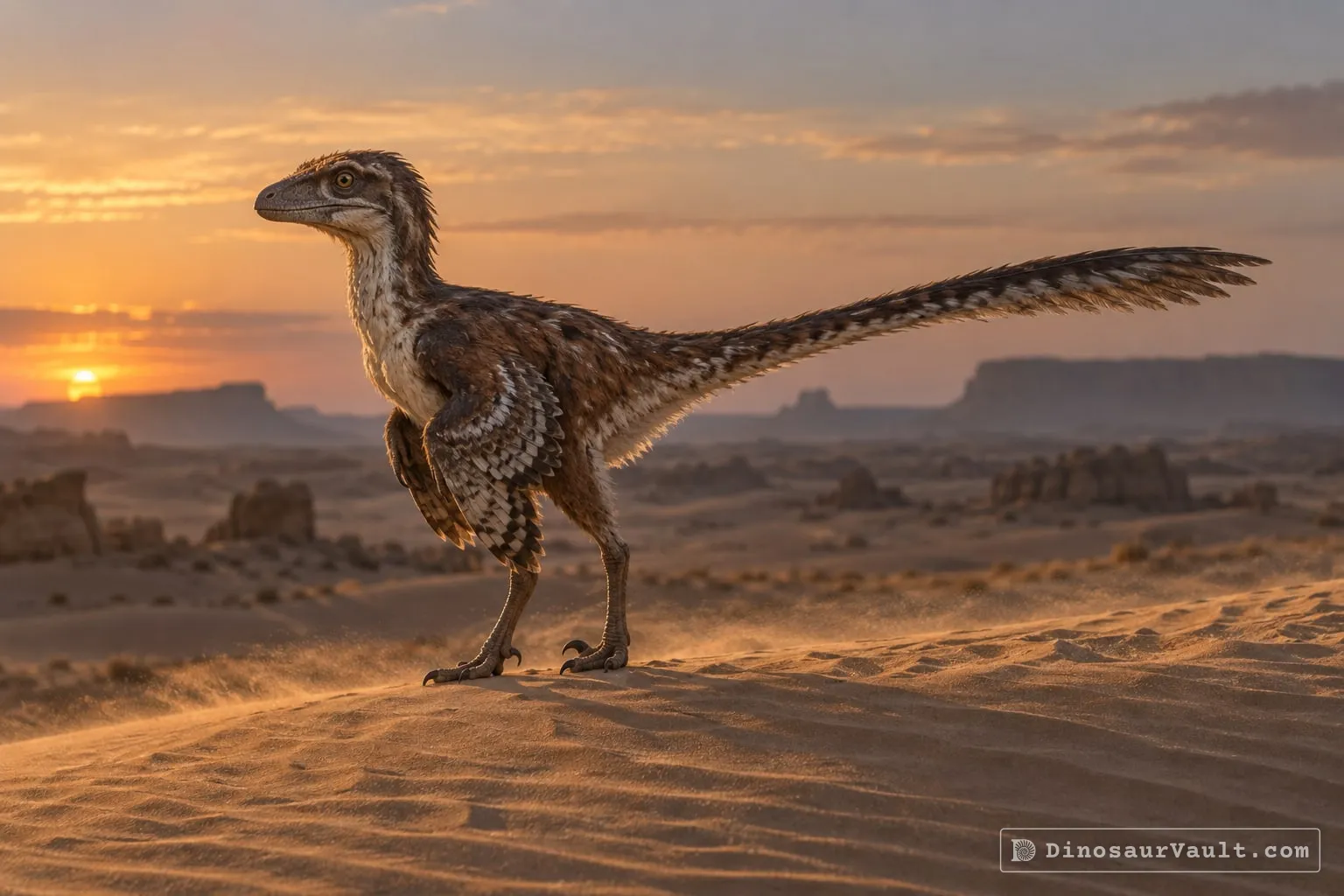
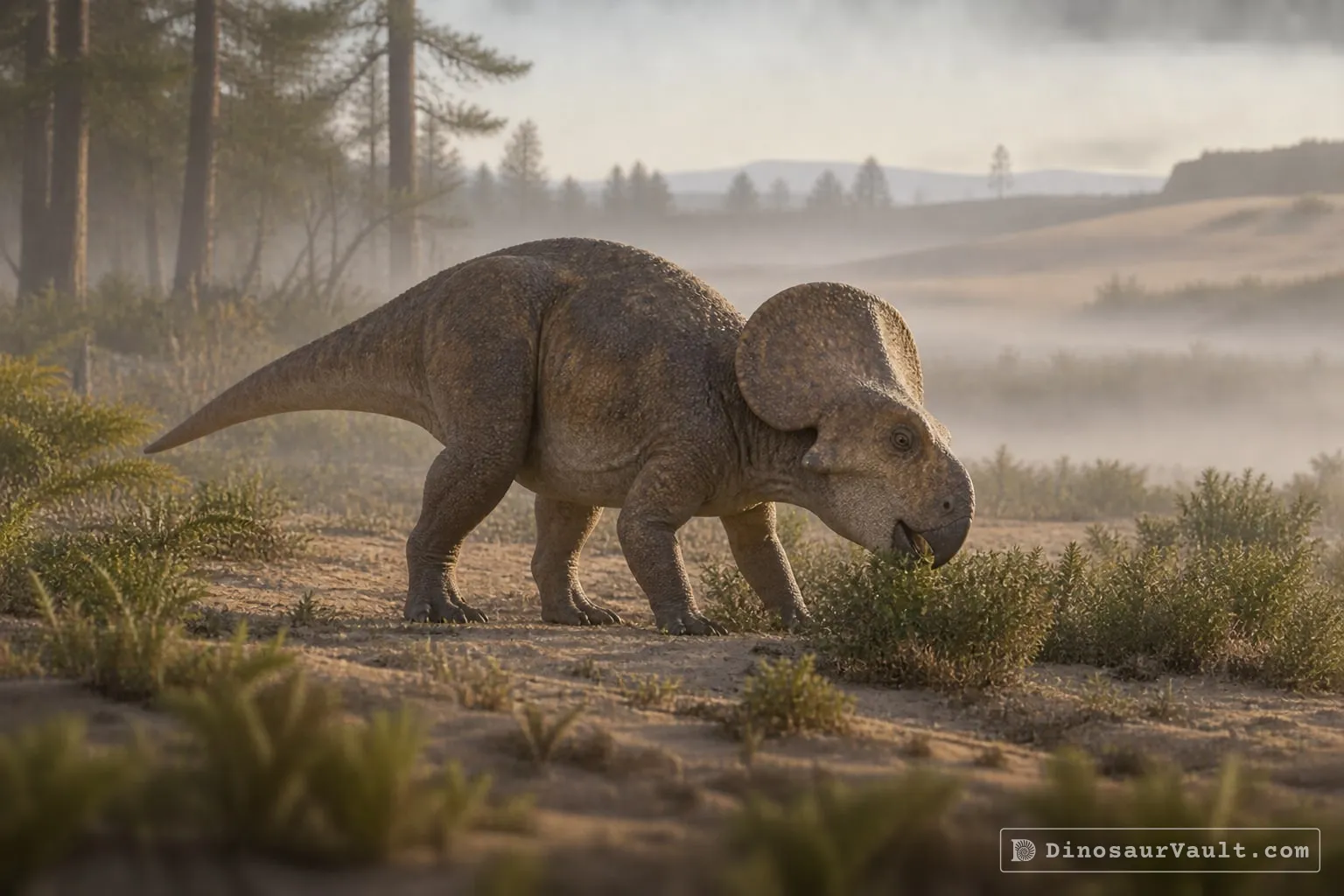
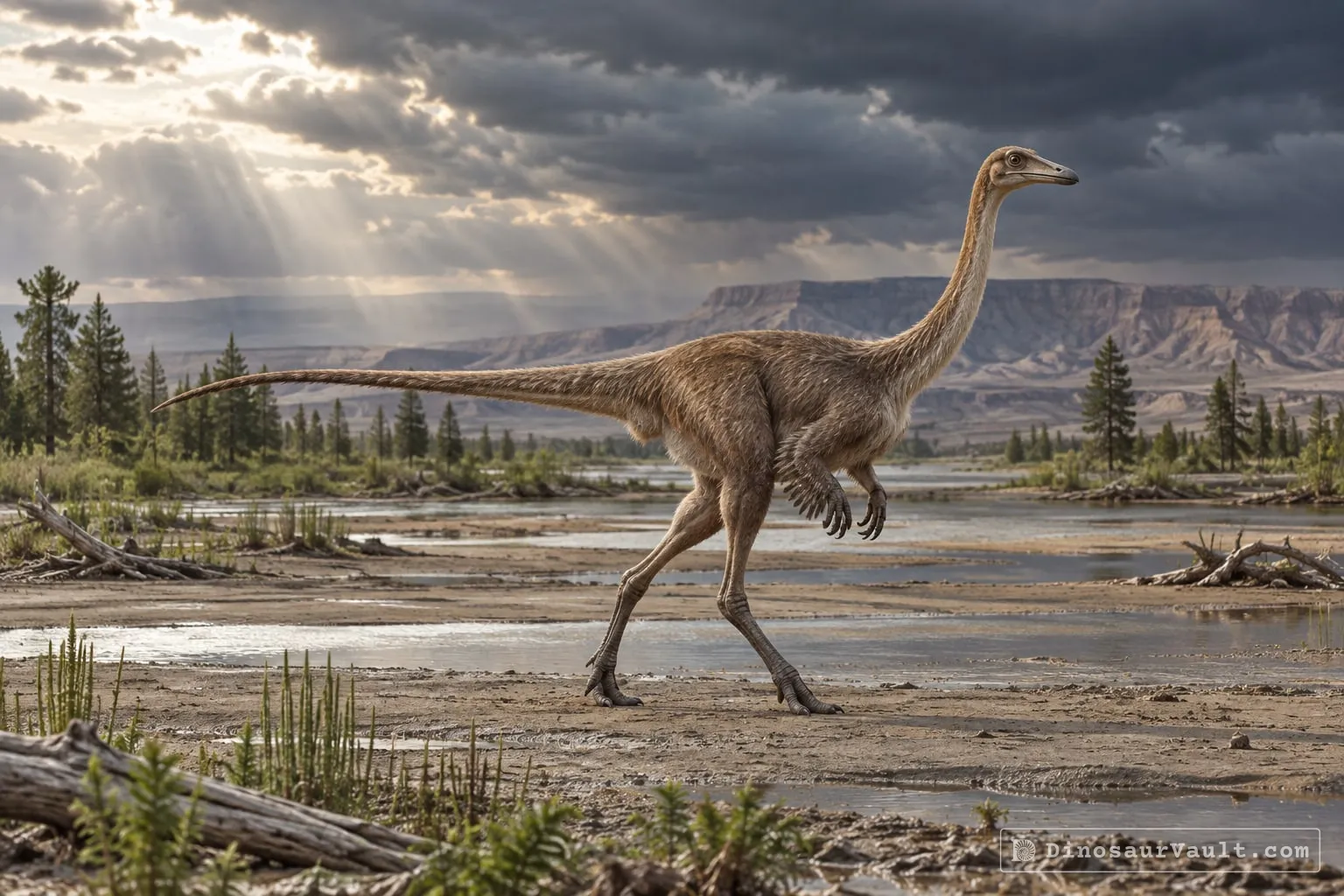
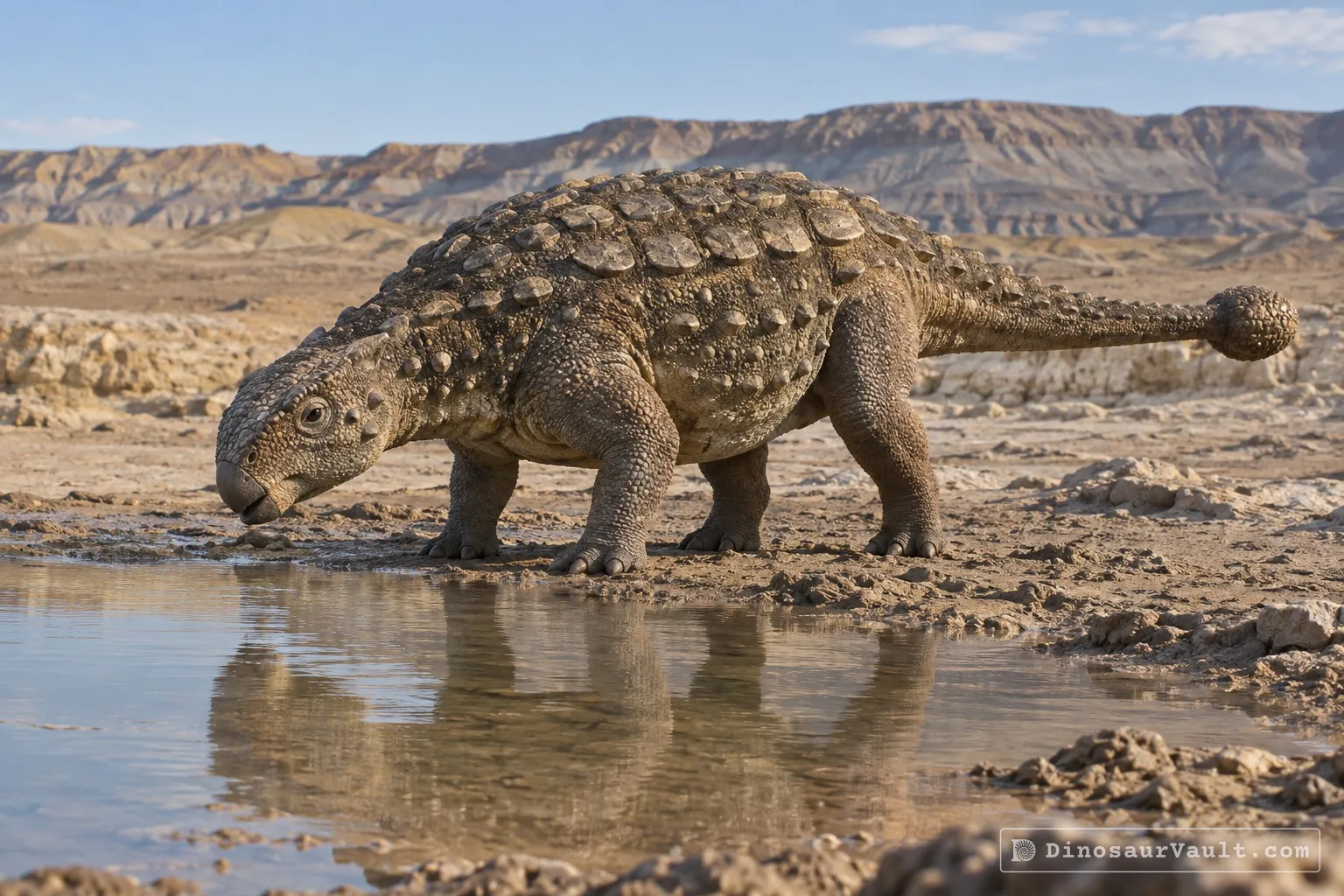
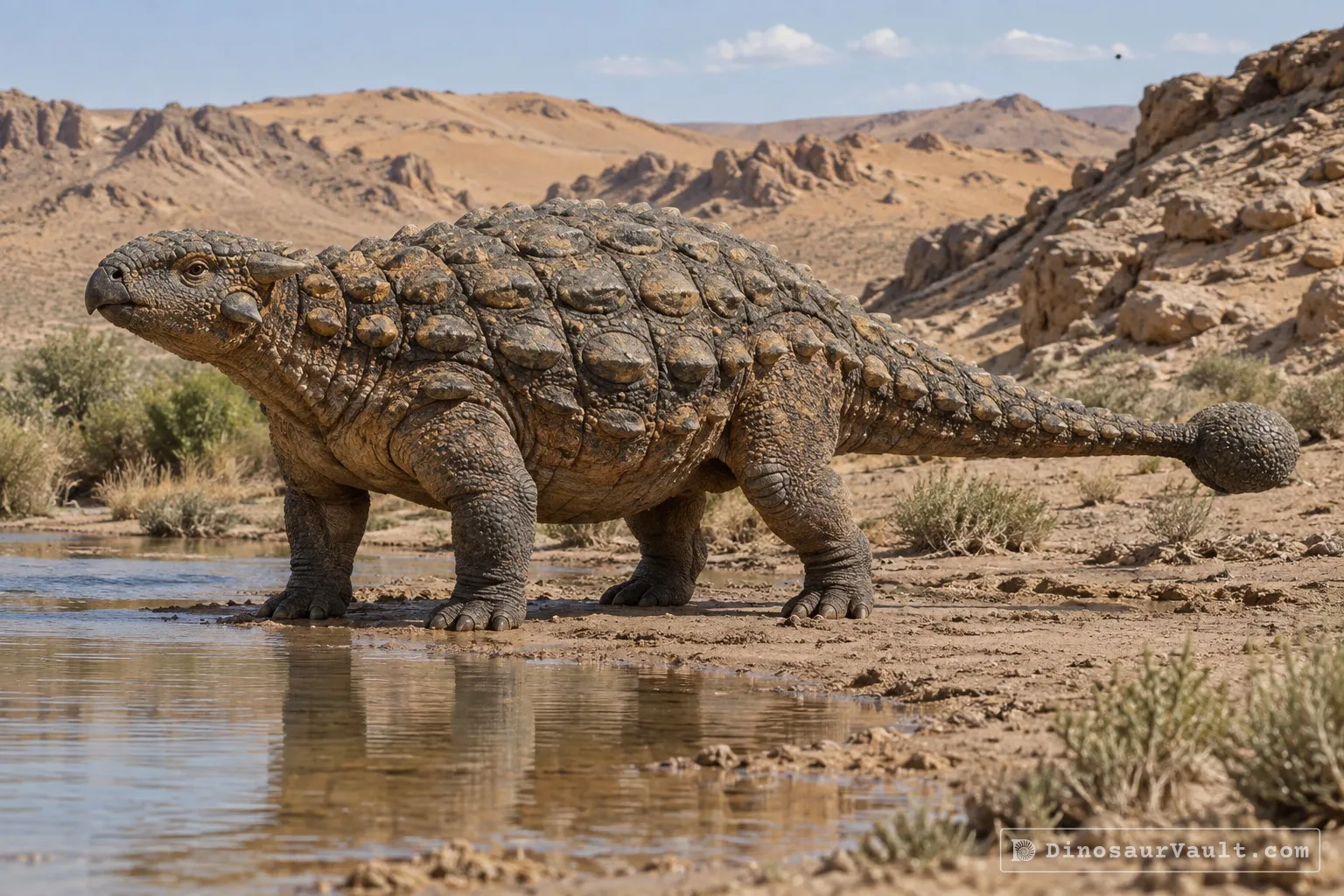
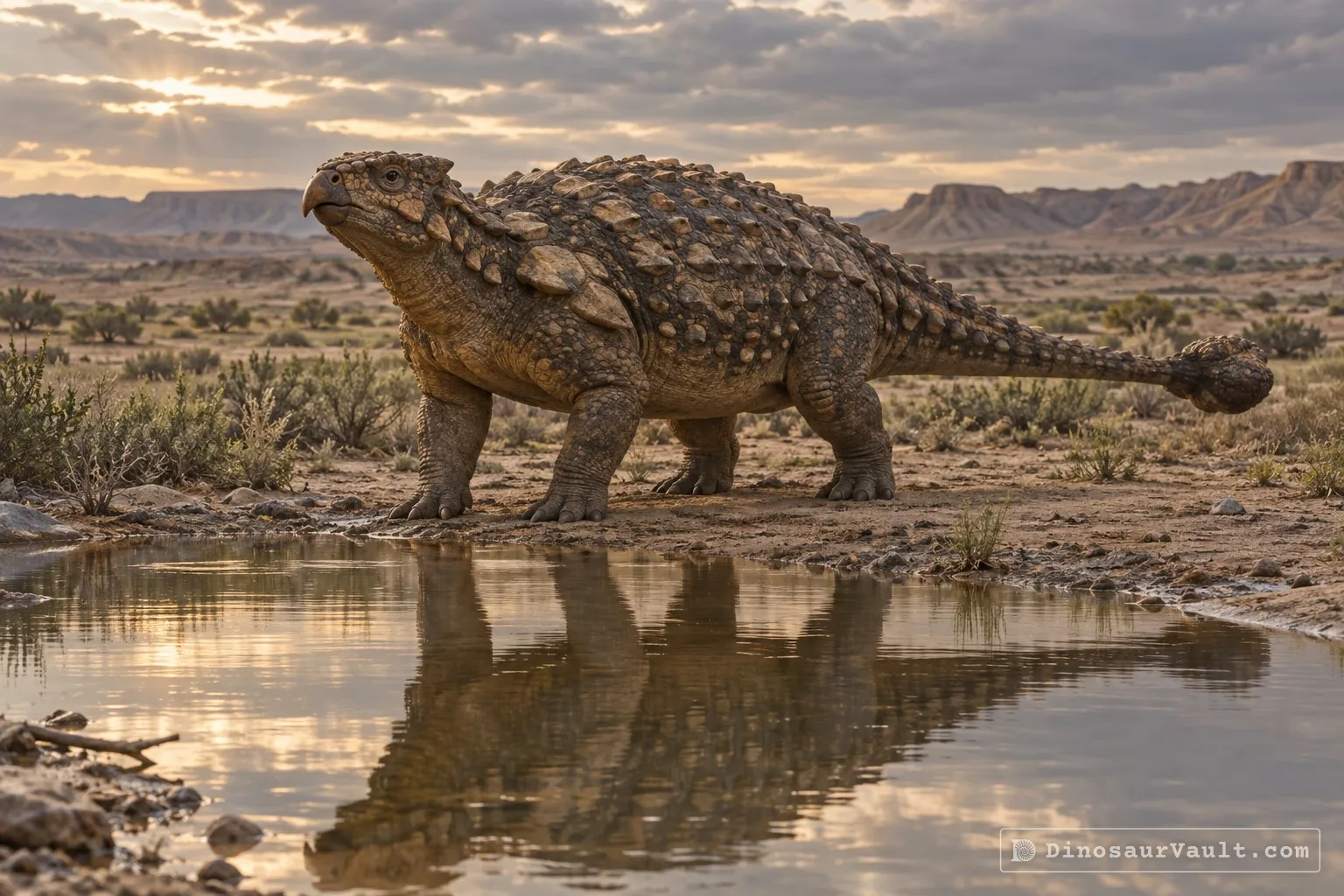
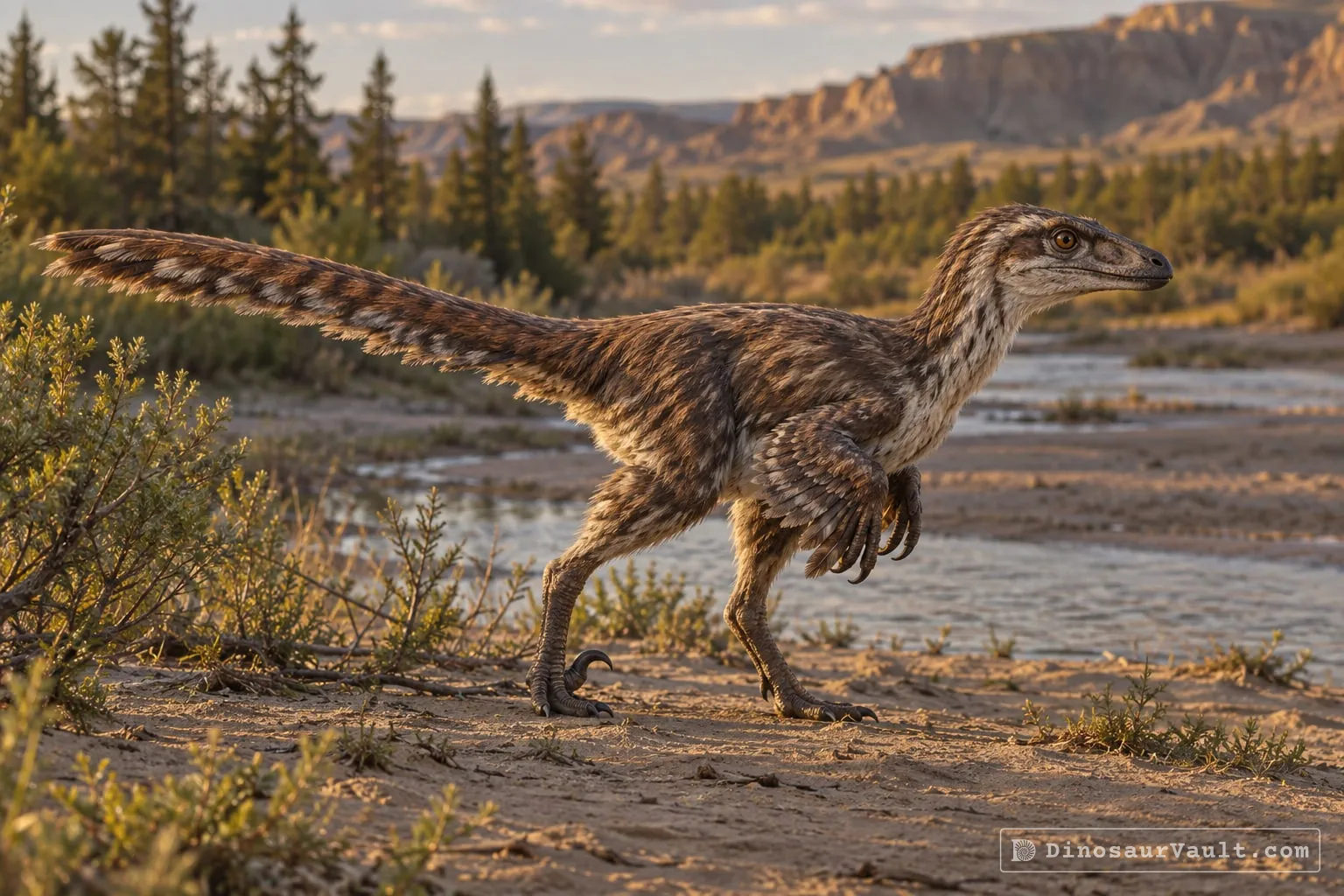


A rock formation can hold fossils laid down millions of years apart, so not every animal here met Breviceratops.
The evidence
The science behind Breviceratops
Which parts of the picture come from its own bones, and which come from its relatives.
From its own fossils
- The type specimen is the skull and lower jaw of a young animal, found with parts of its neck, back and hip vertebrae, a shoulder blade, an arm, hip bones, thigh bones, broken shin bones and ribs.
- Its skulls have teeth near the front of the upper jaw, a narrow extra opening in the side of the snout, and a lower jaw without a sharp, angled ridge along its side.
- The narrow frill has a ridge along its midline. In the skeleton, the upper arm bone is short and stout and the thigh bone is slender.
Borrowed from relatives
- The missing tip of the snout and the lost parts of the body are restored by comparison with young Protoceratops.
Still unknown
- The shape of its nose. The nasal bones are missing from both skulls, and the type skull also lacks the tip of its snout.
- Whether its frill had openings, and the shape of its back edge.
- The size and proportions of a fully grown adult.
Discovery timeline
- 1990Named itKurzanov
- 2011Close relativeFastovsky et al.
- 2019SkullsCzepiński
- 2020Fossil sitesCzepiński
Key papers
The research behind what we know of Breviceratops
Named it
Moved a species originally placed in Protoceratops into its own genus, Breviceratops.
A new Late Cretaceous protoceratopsid genus from Mongolia. Paleontological Journal 1990: 85-91
No link available
Close relative
Described a nest of young Protoceratops, one with nearly all of its head bones and complete forelimbs, showing how very young animals of this family were built.
A nest ofProtoceratops andrewsi(Dinosauria, Ornithischia). Journal of Paleontology 85: 1035-1041
Read the paper : A nest ofProtoceratops andrewsi(Dinosauria, Ornithischia) (opens in a new tab)Skulls
Compared skulls across growth stages, reassigned several Breviceratops specimens to Bagaceratops and retained Breviceratops as a distinct dinosaur.
Ontogeny and variation of a protoceratopsid dinosaur Bagaceratops rozhdestvenskyi from the Late Cretaceous of the Gobi Desert. Historical Biology 32: 1394-1421
Read the paper : Ontogeny and variation of a protoceratopsid dinosaur Bagaceratops rozhdestvenskyi from the Late Cretaceous of the Gobi Desert (opens in a new tab)Fossil sites
Used differences among Protoceratops and Bagaceratops skulls to compare the ages of fossil sites in Mongolia.
New protoceratopsid specimens improve the age correlation of the Upper Cretaceous Gobi Desert strata. Acta Palaeontologica Polonica 65
Read the paper : New protoceratopsid specimens improve the age correlation of the Upper Cretaceous Gobi Desert strata (opens in a new tab)
Close relatives
Other members of Protoceratopsidae

Sources: Wikidata