Bagaceratops
"small horned face"
Type species Bagaceratops rozhdestvenskyi
- Lived
- 84 to 72 million years ago, Late Cretaceous
- Diet
- Herbivore
- Length
- about 1 m (3 ft)
- Group
- Ceratopsians, Protoceratopsidae
- Found in
- Mongolia and China
- Named by
- Maryanska and Osmólska 1975
Size comparison
To scale

Scale in metersOutline: typical ceratopsian shape
Where its fossils were found
The evidence
Today

80 million years ago
Habitat
Dry, sandy landscapes in Mongolia and China supported Bagaceratops and other small plant eaters. Velociraptor, Protoceratops and Pinacosaurus occur in the region's fossil record.
Field notes
About Bagaceratops
What it was like
Bagaceratops was a small horned dinosaur about 1 meter (3 feet) long. It had a parrot-like beak, a short frill and a small bump on its nose. Many skulls are known, from babies to adults.
Its world
It lived in the Late Cretaceous, in what is now Mongolia and China. It comes from the Baruungoyot and Bayan Mandahu formations, dry lands shared with Velociraptor, Protoceratops and the armored Pinacosaurus.
How it was found
Maryanska and Osmólska named Bagaceratops in 1975. The type species is Bagaceratops rozhdestvenskyi. Several other small horned dinosaurs from the region are now thought to belong to it.
Field gallery
More views of Bagaceratops
Scenes reconstructed from the available fossil evidence.
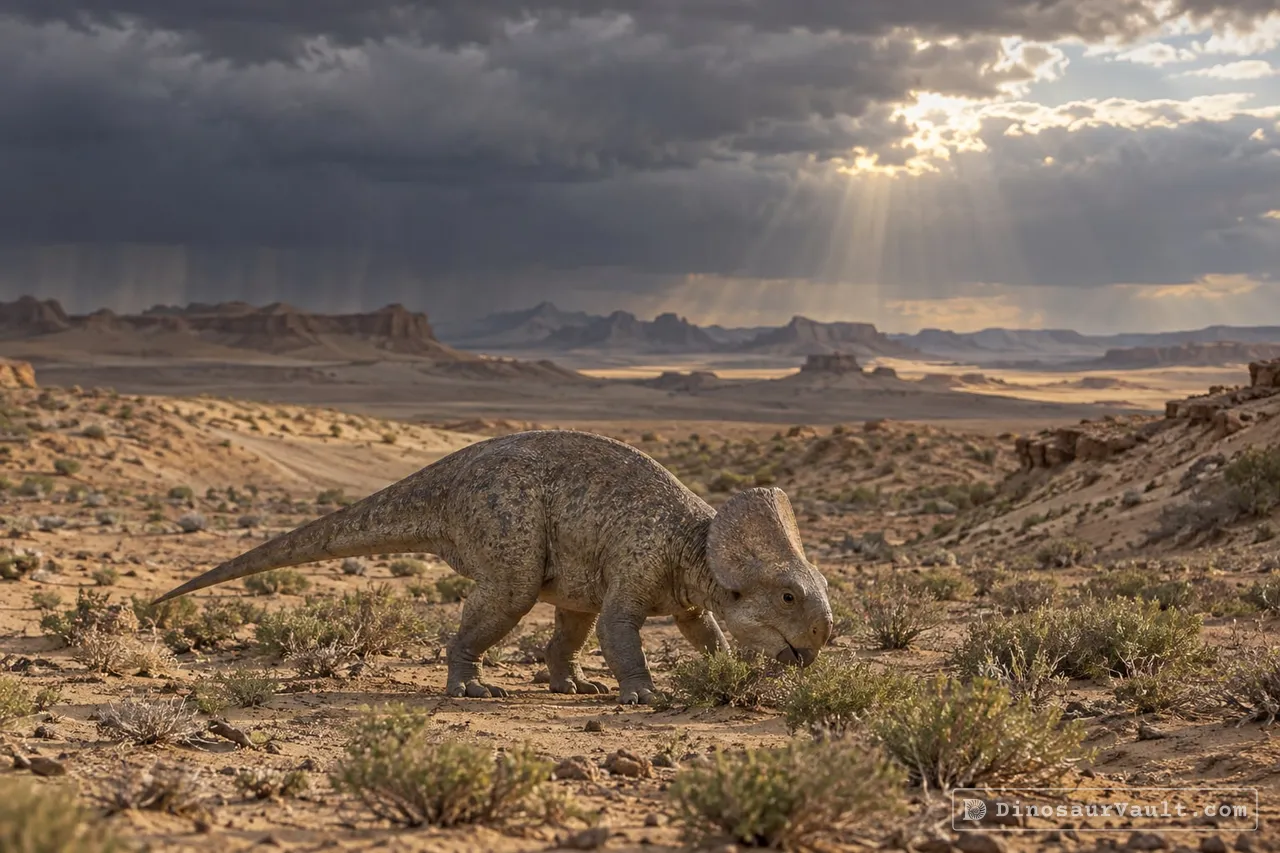
1 of 3
Lived alongside
Found in the same rock formations
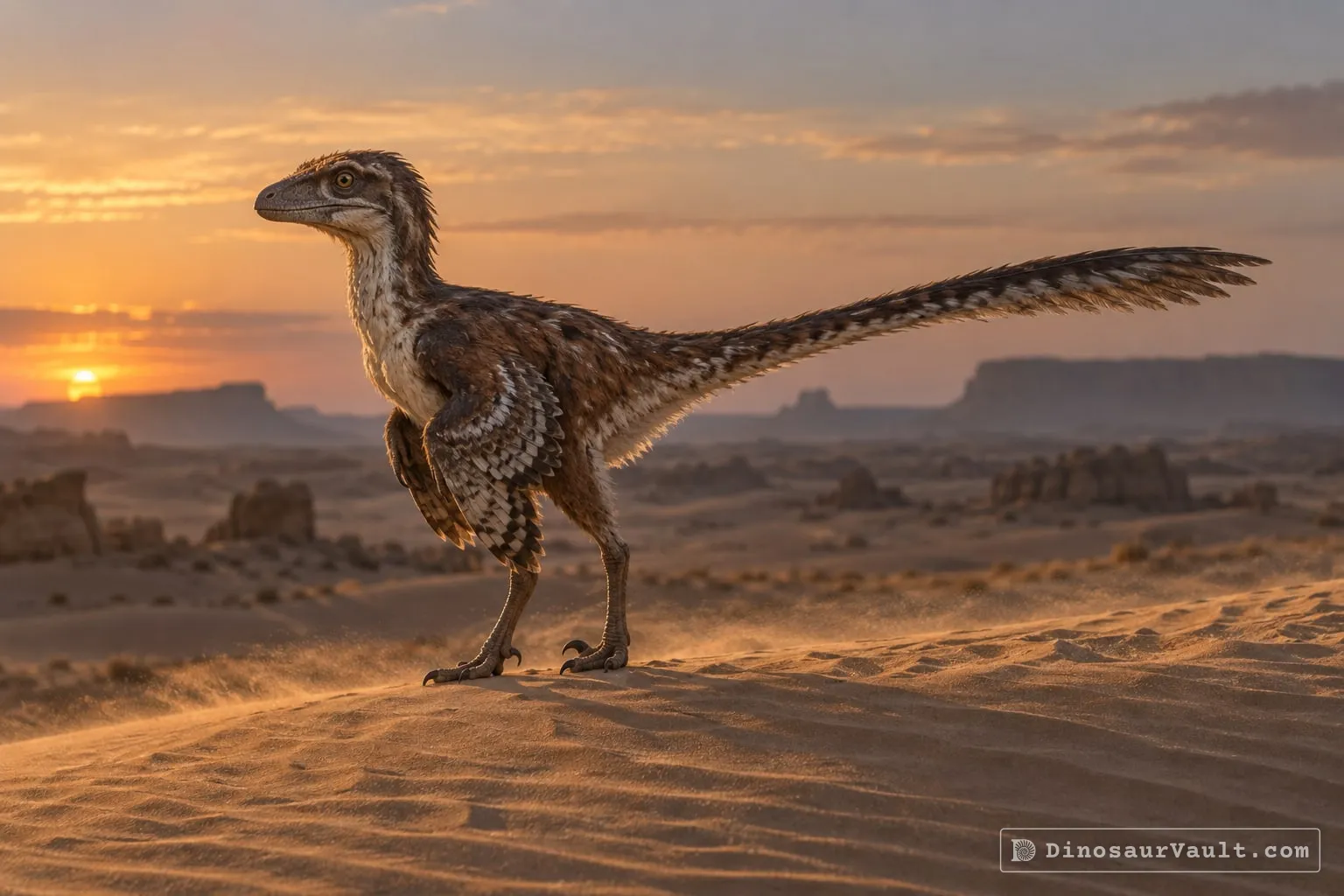
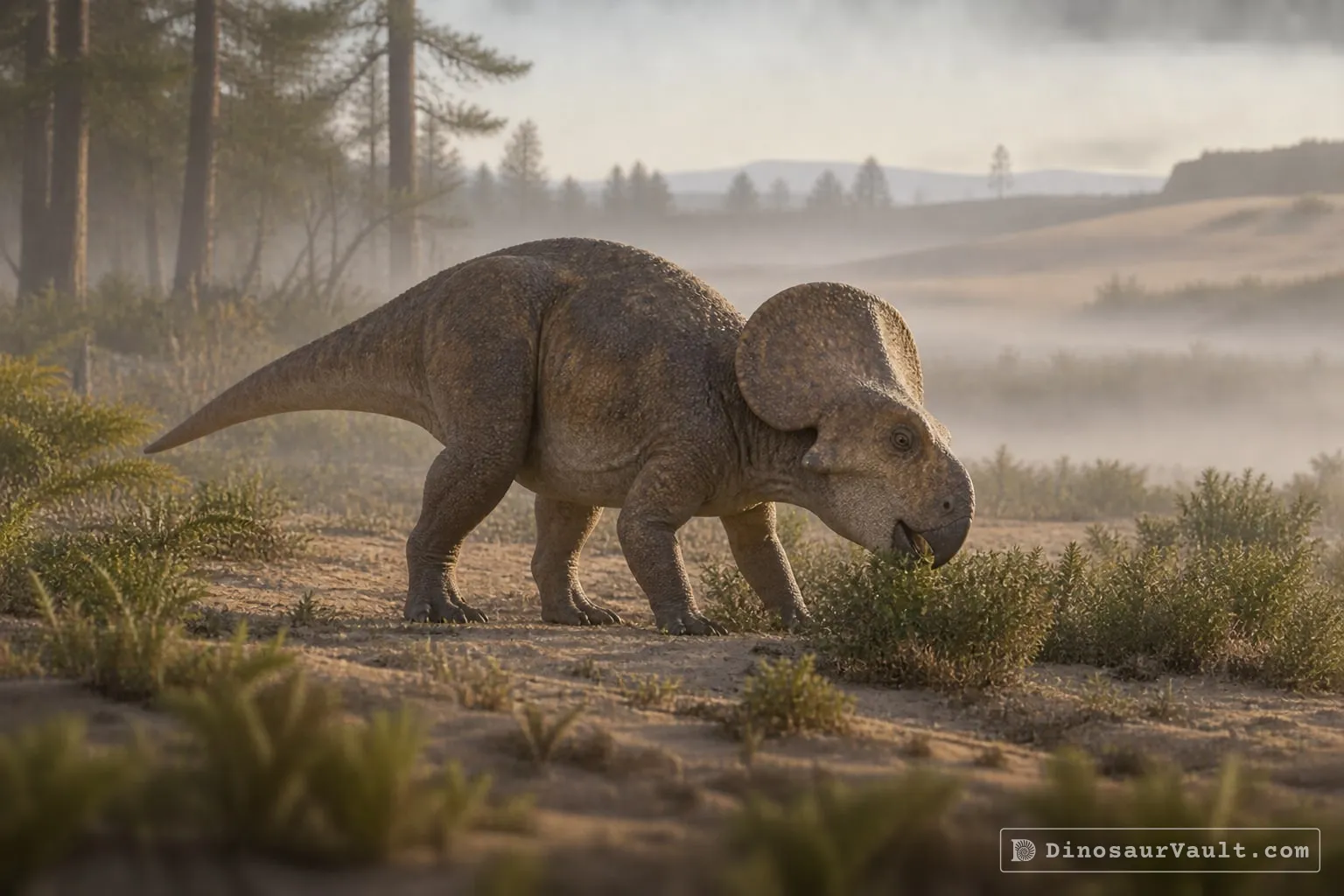
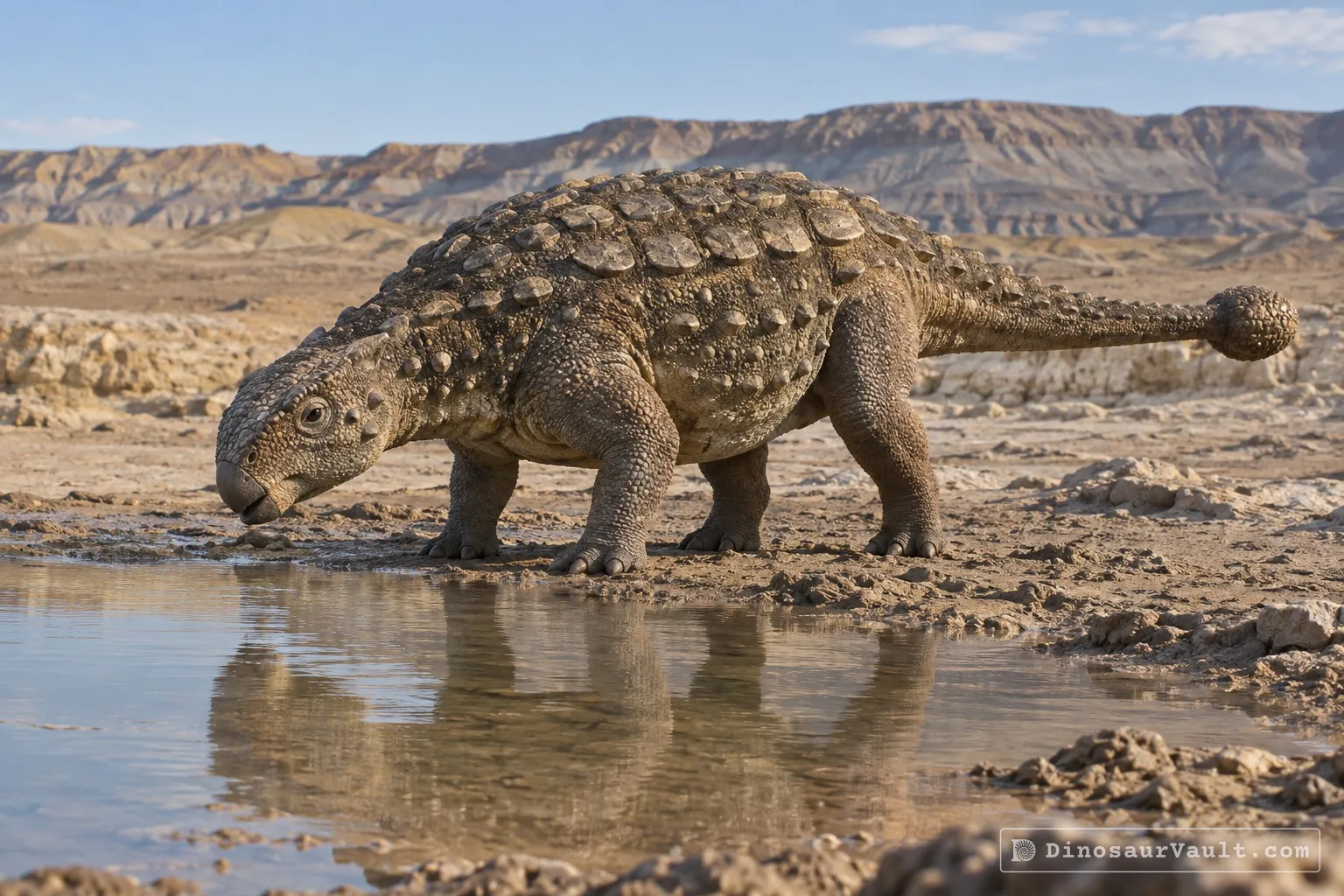
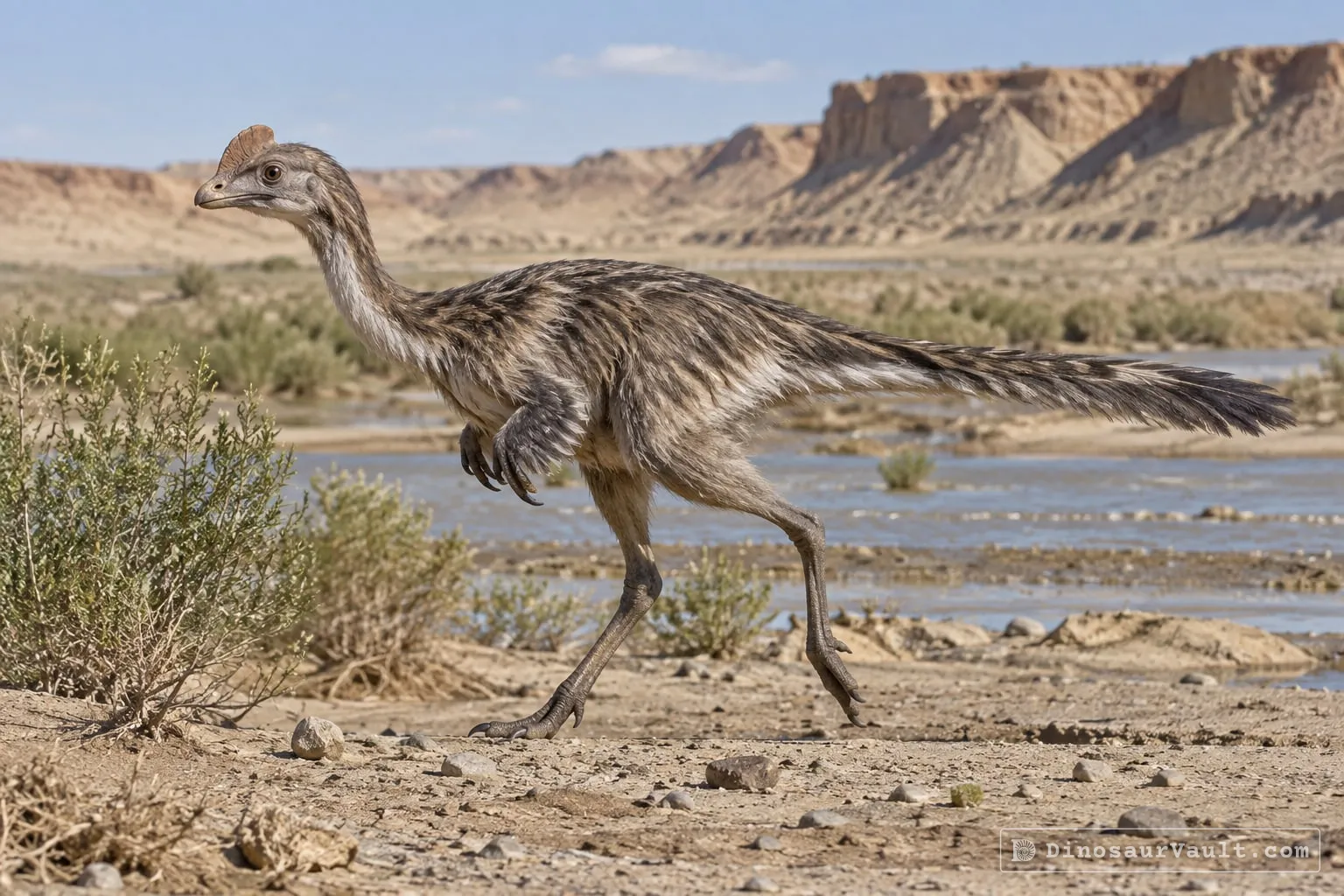
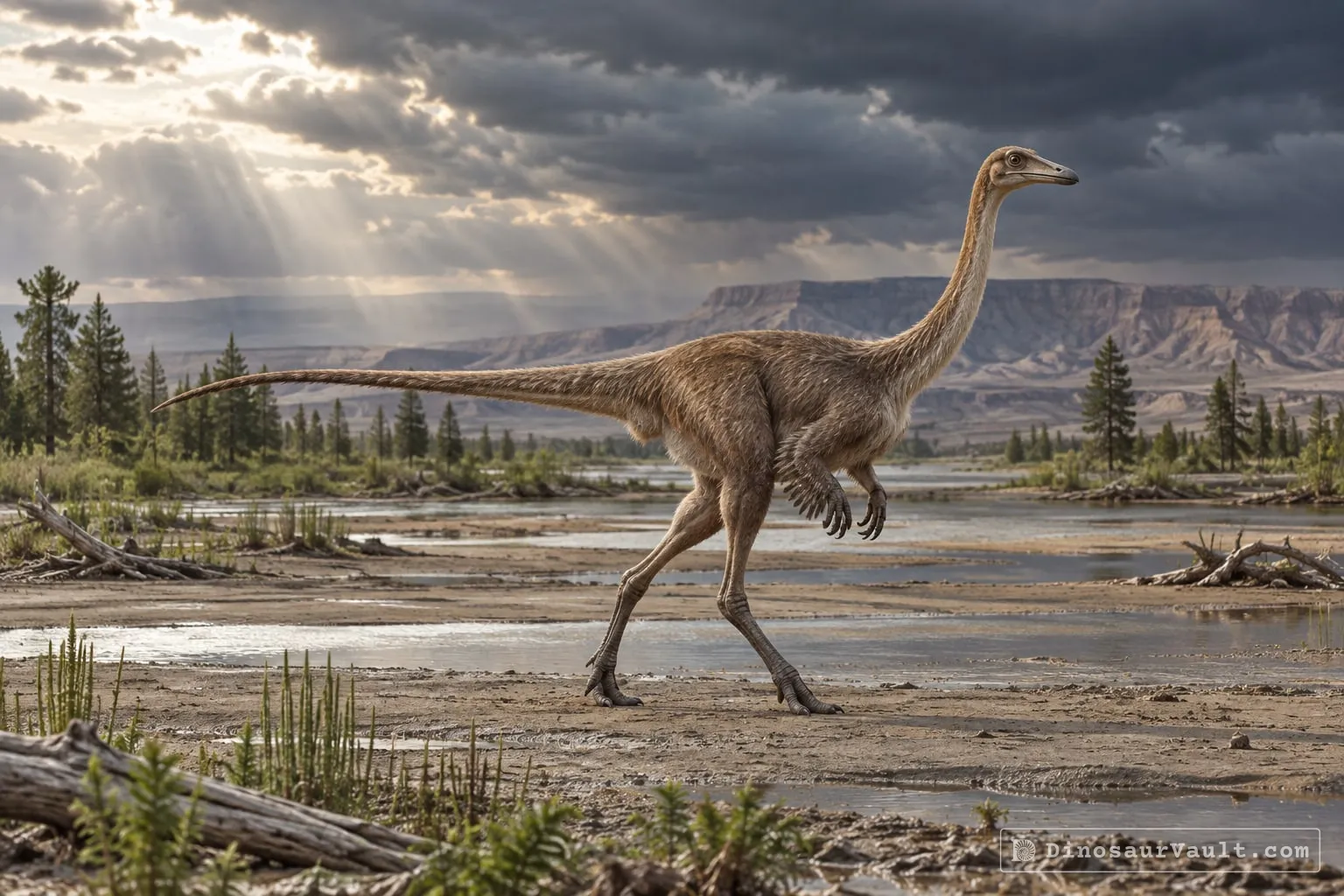
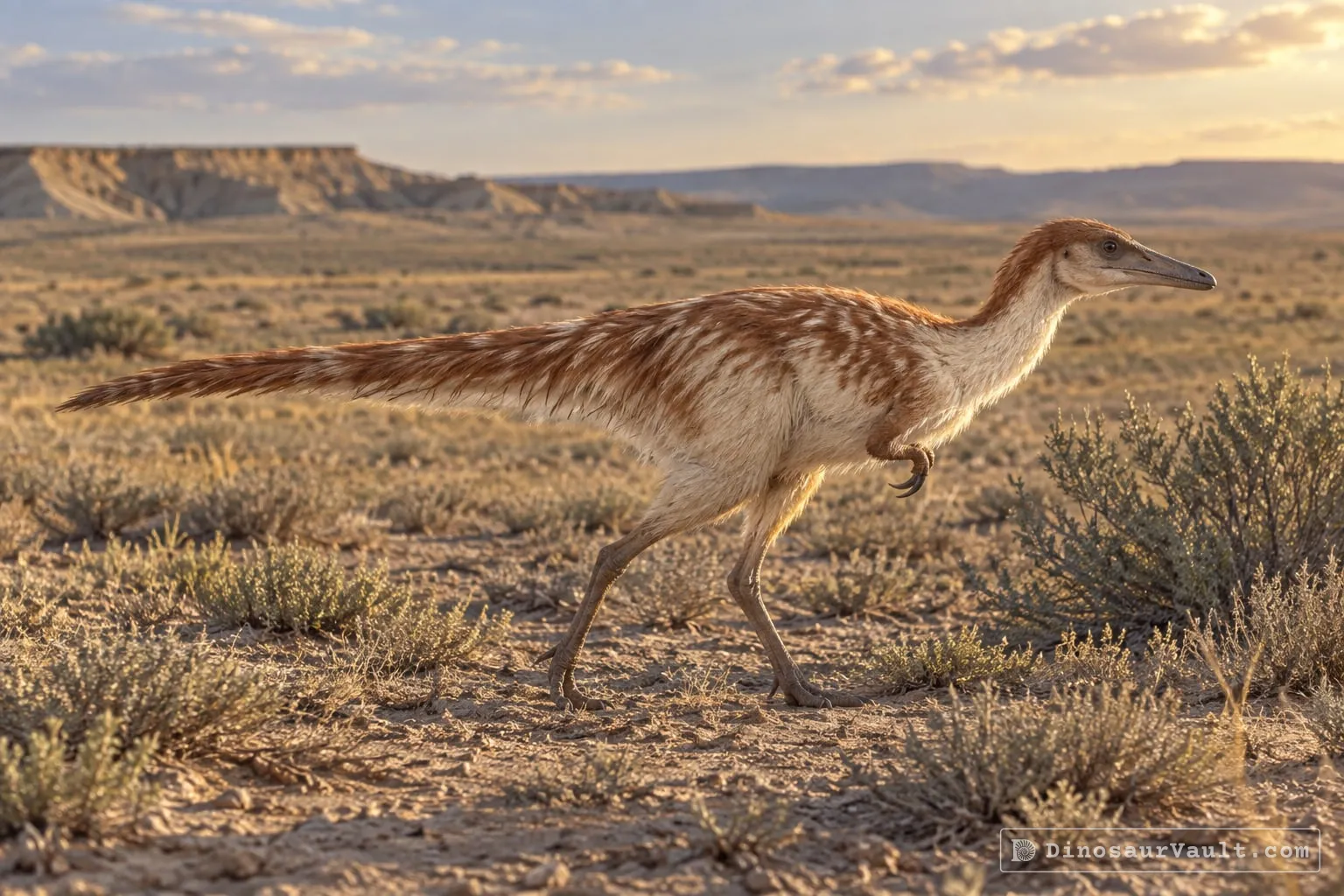
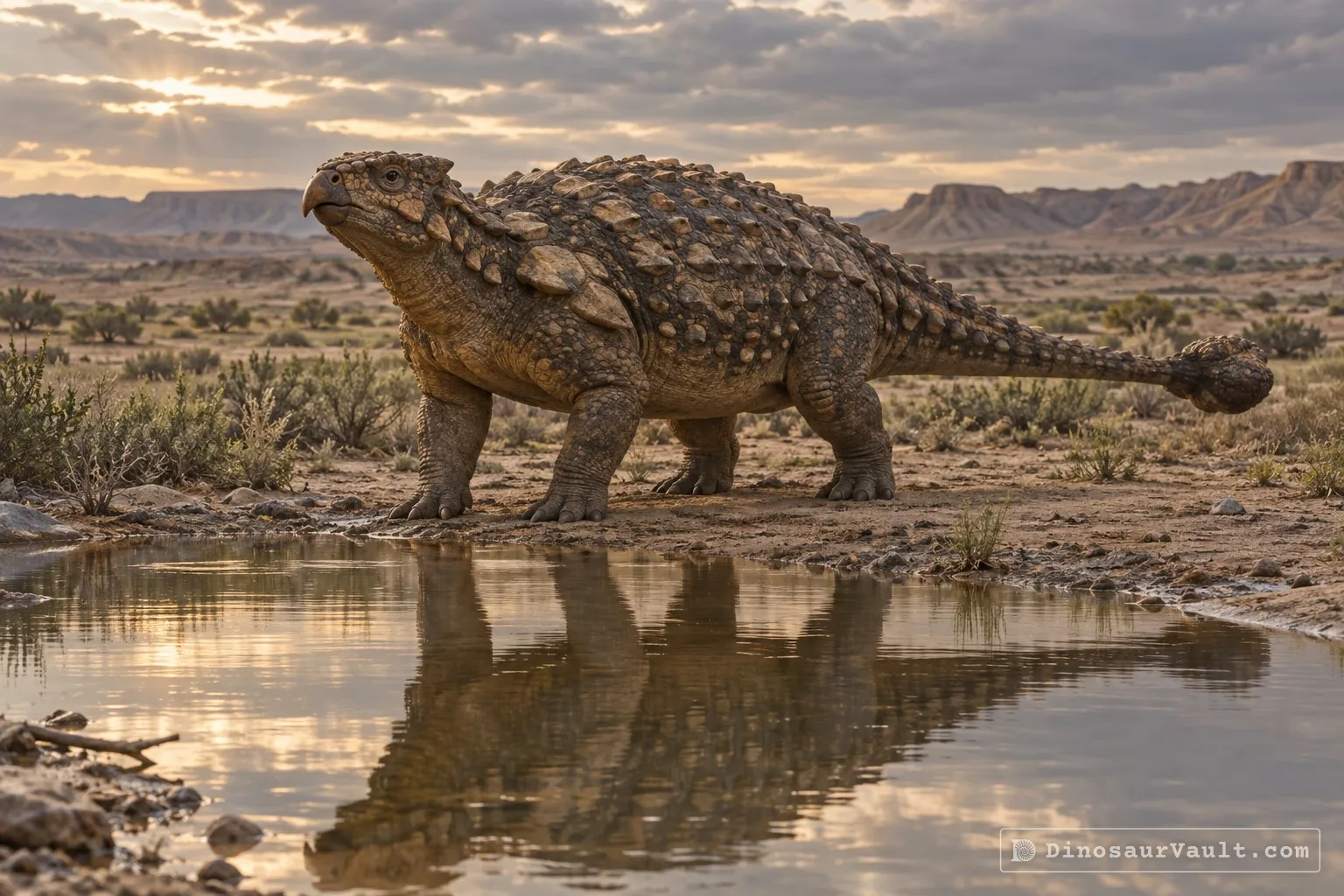


A rock formation can hold fossils laid down millions of years apart, so not every animal here met Bagaceratops.
The evidence
The science behind Bagaceratops
Which parts of the picture come from its own bones, and which come from its relatives.
From its own fossils
- Many skulls preserve a toothless beak, a small nose bump and a short bony frill.
- Skulls of different sizes show wide variation within the species.
- The smallest skulls have proportionally large eye sockets, and their frills lack the openings seen in larger individuals.
Borrowed from relatives
- Protoceratops helps fill out restorations of the body, while Bagaceratops skulls provide the details of the head.
Still unknown
- Its skin texture and color.
- Whether adults cared for their young.
- Which plants made up most of its diet.
Discovery timeline
- 1975Named itMaryanska & Osmólska
- 2019Growing upCzepiński
- 2020New findCzepiński
Key papers
The research behind what we know of Bagaceratops
Named it
Named Bagaceratops from Mongolian skulls and distinguished its beak, nose and frill from those of Protoceratops.
Protoceratopsidae (Dinosauria) of Asia. Palaeontologica Polonica 33: 133-181
No link available
Growing up
Compared skulls across growth stages and found that several separately named dinosaurs fell within the variation of Bagaceratops.
Ontogeny and variation of a protoceratopsid dinosaur Bagaceratops rozhdestvenskyi from the Late Cretaceous of the Gobi Desert. Historical Biology 32: 1394-1421
Read the paper : Ontogeny and variation of a protoceratopsid dinosaur Bagaceratops rozhdestvenskyi from the Late Cretaceous of the Gobi Desert (opens in a new tab)New find
Described additional skulls and used differences between Bagaceratops and Protoceratops to compare the ages of fossil-bearing rocks.
New protoceratopsid specimens improve the age correlation of the Upper Cretaceous Gobi Desert strata. Acta Palaeontologica Polonica 65
Read the paper : New protoceratopsid specimens improve the age correlation of the Upper Cretaceous Gobi Desert strata (opens in a new tab)
Close relatives
Other members of Protoceratopsidae

Sources: Wikidata