Tarascosaurus
"Tarasque lizard"
- Lived
- 84 to 72 million years ago, Late Cretaceous
- Diet
- Carnivore
- Group
- Theropods, Abelisauridae
- Found in
- France
- Named by
- Le Loeuff and Buffetaut 1991
Where its fossils were found
The evidence
Today

80 million years ago
Habitat
Its bones come from gray limestone in the continental Late Cretaceous rocks of southern France.
Field notes
About Tarascosaurus
What it was like
Tarascosaurus was a small predator known from a few bones. It was described as an abelisaur, but the fossils are so incomplete that many scientists think the name is doubtful.
Its world
It lived in the Late Cretaceous, in what is now France.
How it was found
Le Loeuff and Buffetaut named Tarascosaurus in 1991. Its name comes from a monster of local legend.
Field gallery
More views of Tarascosaurus
Scenes reconstructed from the available fossil evidence.
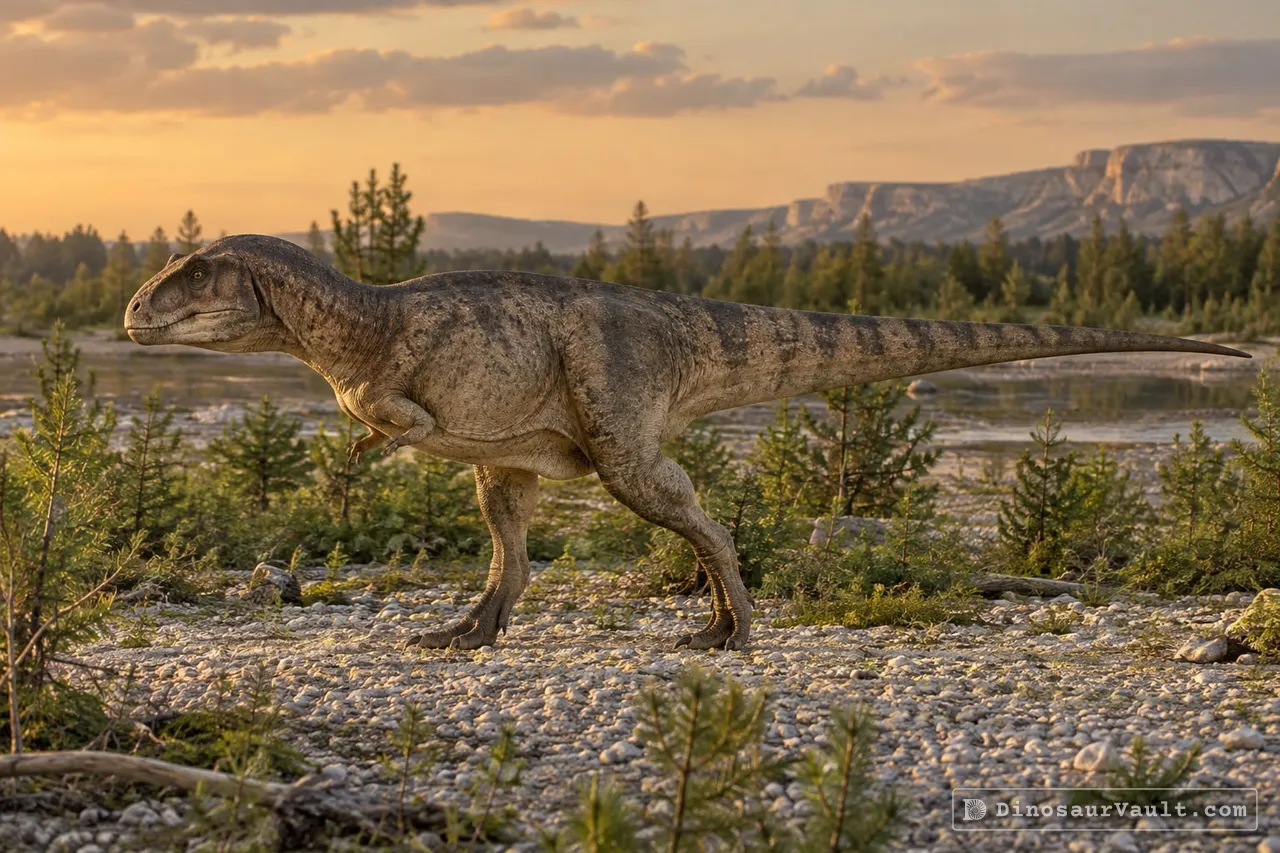
The evidence
The science behind Tarascosaurus
Which parts of the picture come from its own bones, and which come from its relatives.
From its own fossils
- The named specimen is the upper part of a left thighbone.
- Back vertebrae assigned to Tarascosaurus have air spaces in their upper arches.
Borrowed from relatives
- Restorations borrow most of the body from abelisaurids such as Majungasaurus, including the head and reduced arms.
Still unknown
- Whether the known bones distinguish Tarascosaurus from every other named predator.
- The shape of its skull and arms.
- Its skin covering and color.
Discovery timeline
- 1991Named itLe Loeuff & Buffetaut
- 2008Family treeCarrano & Sampson
- 2014Close relativeTortosa et al.
Key papers
The research behind what we know of Tarascosaurus
Named it
Named Tarascosaurus from a partial thighbone and assigned vertebrae from southern France, comparing them with abelisaurids.
Tarascosaurus salluvicus nov. gen., nov. sp.,dinosaure théropode du Crétacé supérieur du Sud de la France. Geobios 24: 585-594
Read the paper : Tarascosaurus salluvicus nov. gen., nov. sp.,dinosaure théropode du Crétacé supérieur du Sud de la France (opens in a new tab)Family tree
Compared the thighbone and vertebrae with other ceratosaurs and supported an abelisauroid identity for Tarascosaurus.
The Phylogeny of Ceratosauria (Dinosauria: Theropoda). Journal of Systematic Palaeontology 6: 183-236
Read the paper : The Phylogeny of Ceratosauria (Dinosauria: Theropoda) (opens in a new tab)Close relative
Described Arcovenator and compared the French abelisaurid record, including Tarascosaurus, with relatives from other continents.
A new abelisaurid dinosaur from the Late Cretaceous of southern France: Palaeobiogeographical implications. Annales de Paléontologie 100: 63-86
Read the paper : A new abelisaurid dinosaur from the Late Cretaceous of southern France: Palaeobiogeographical implications (opens in a new tab)
Close relatives
Other members of Abelisauridae


Sources: Wikidata