Eocursor
"dawn runner"
- Lived
- 201 to 193 million years ago, Early Jurassic
- Diet
- Herbivore
- Group
- Early ornithischians
- Found in
- South Africa
- Named by
- Butler et al. 2007
Where its fossils were found
The evidence
Today

195 million years ago
Habitat
The Elliot Formation records river channels and floodplains. Heterodontosaurus, Lesothosaurus and Massospondylus are among the dinosaurs known from these rocks.
Field notes
About Eocursor
What it was like
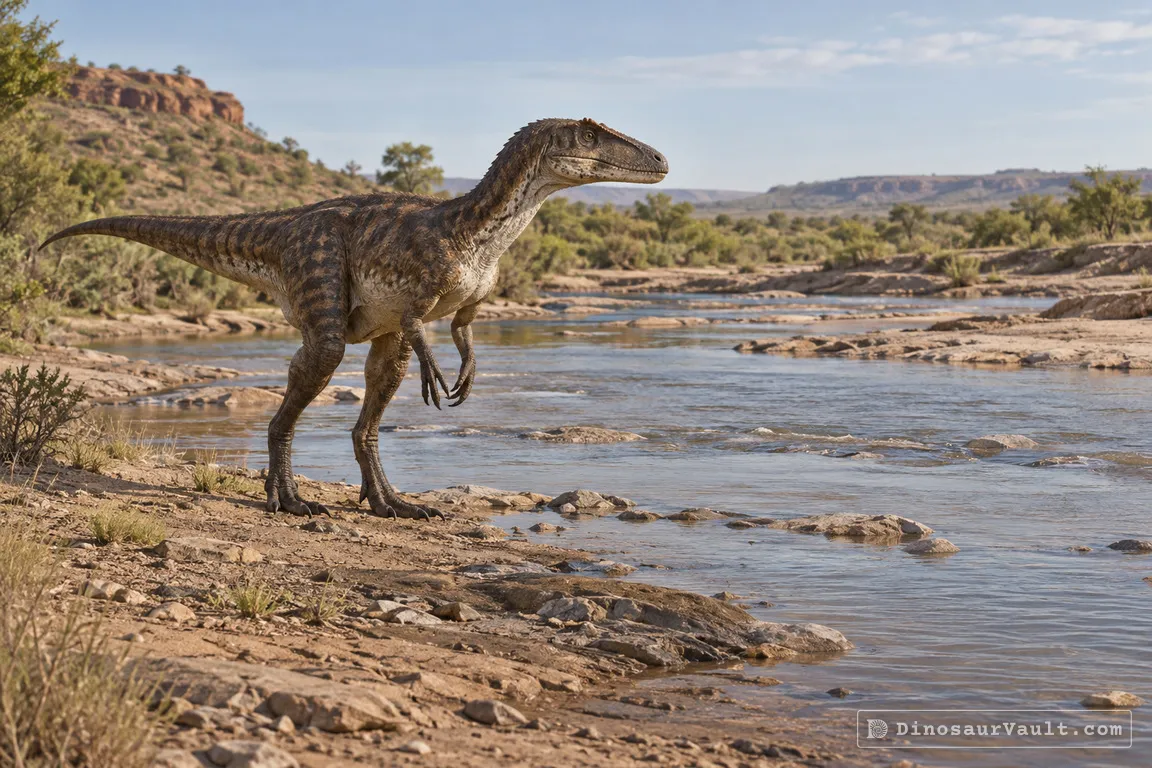
Eocursor was a small, early ornithischian that ran on its hind legs. It had long legs and fairly large hands. Its skeleton is one of the most complete of any early ornithischian.
Its world
It lived in the Early Jurassic, in what is now South Africa. It comes from the Elliot Formation, where it shared the land with Heterodontosaurus, Lesothosaurus, the long-necked Massospondylus and the hunter Dracovenator.
How it was found
Butler and colleagues named Eocursor in 2007.
Field gallery
More views of Eocursor
Scenes reconstructed from the available fossil evidence.
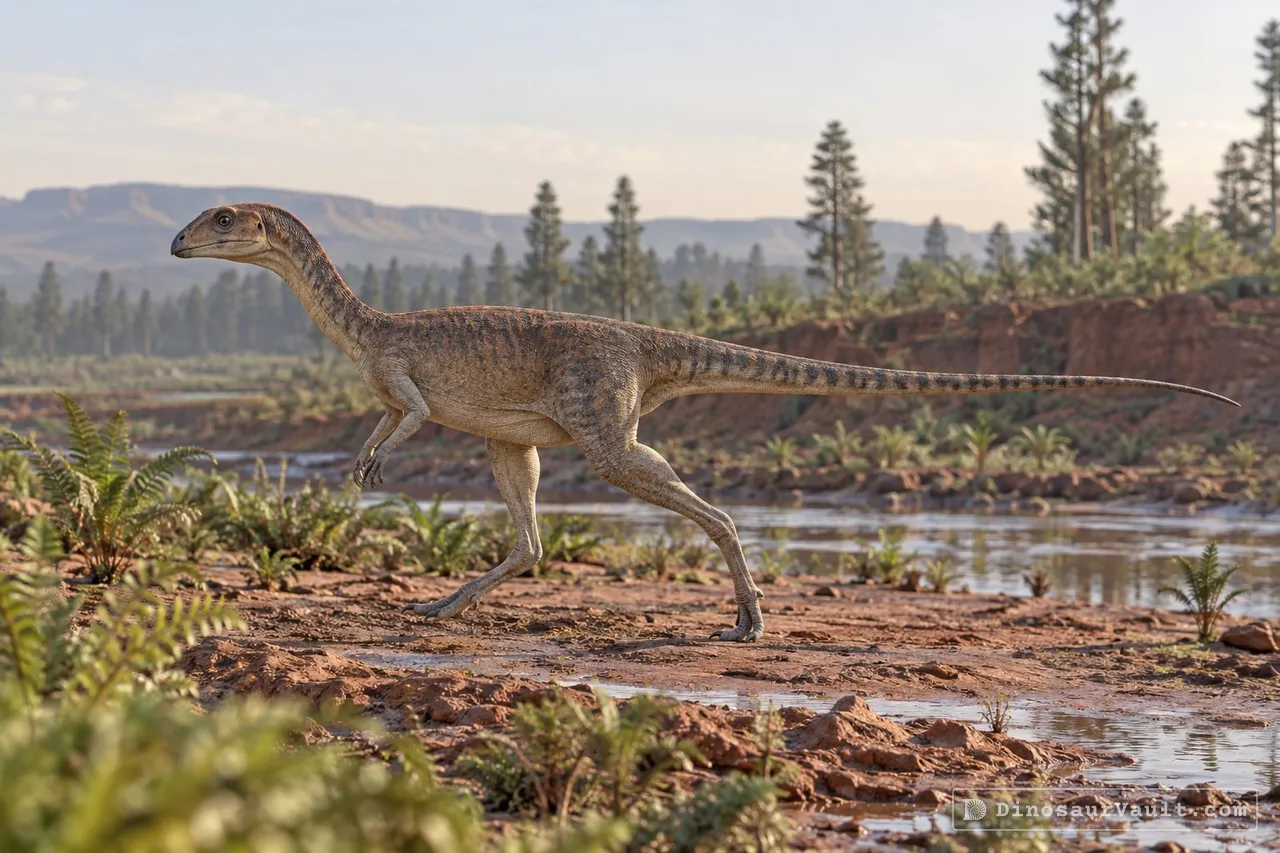
1 of 3
Lived alongside
Found in the same rock formations
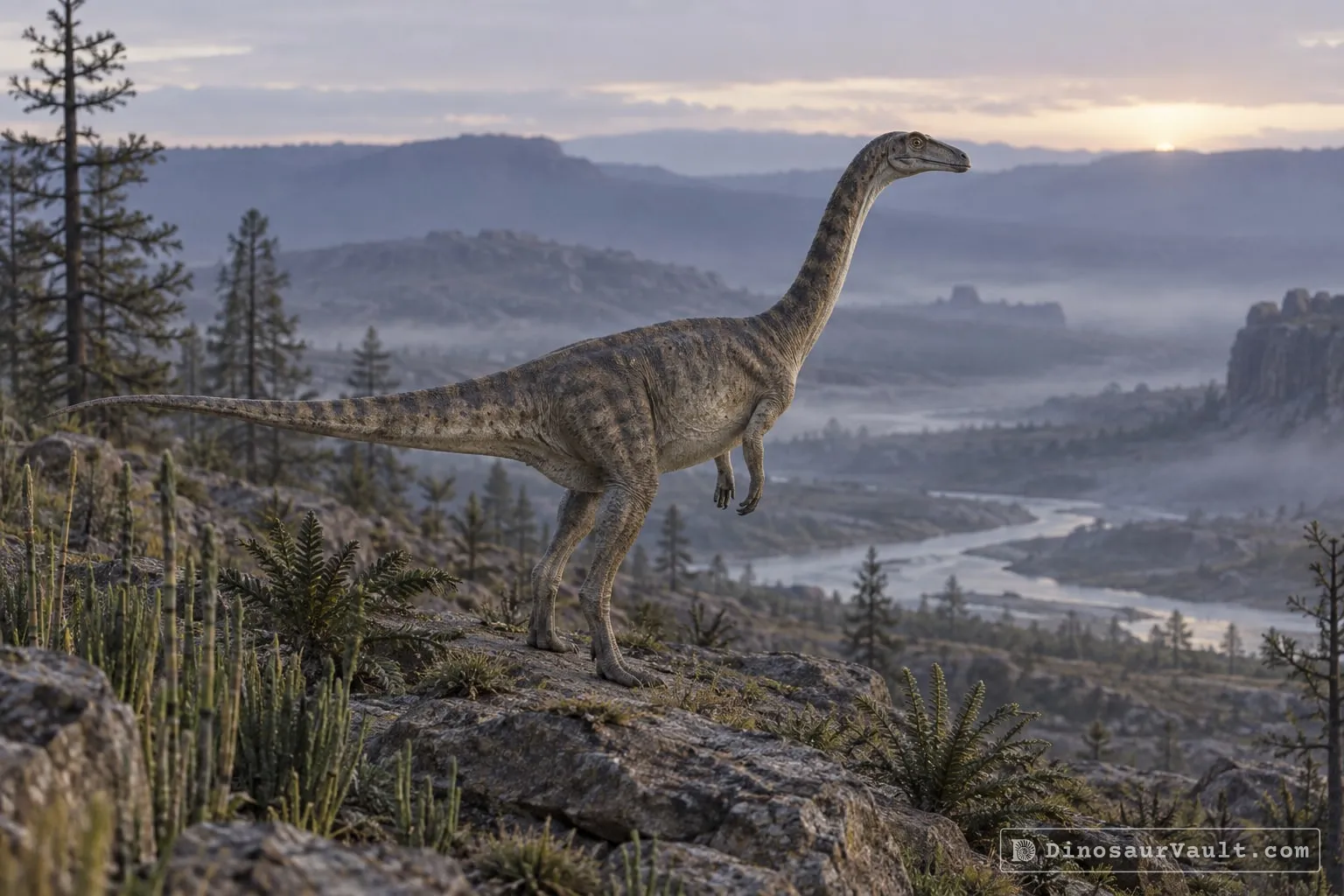
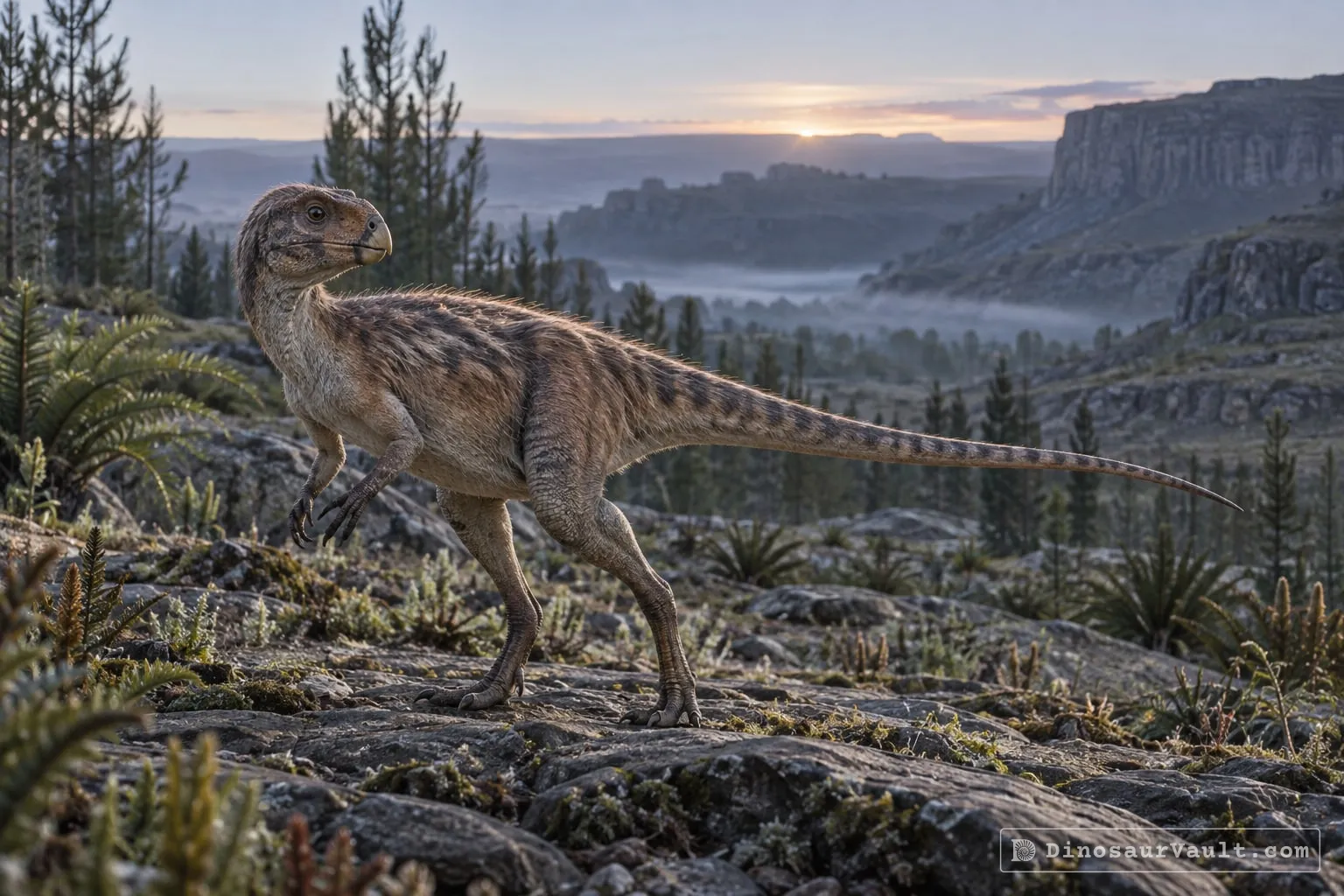
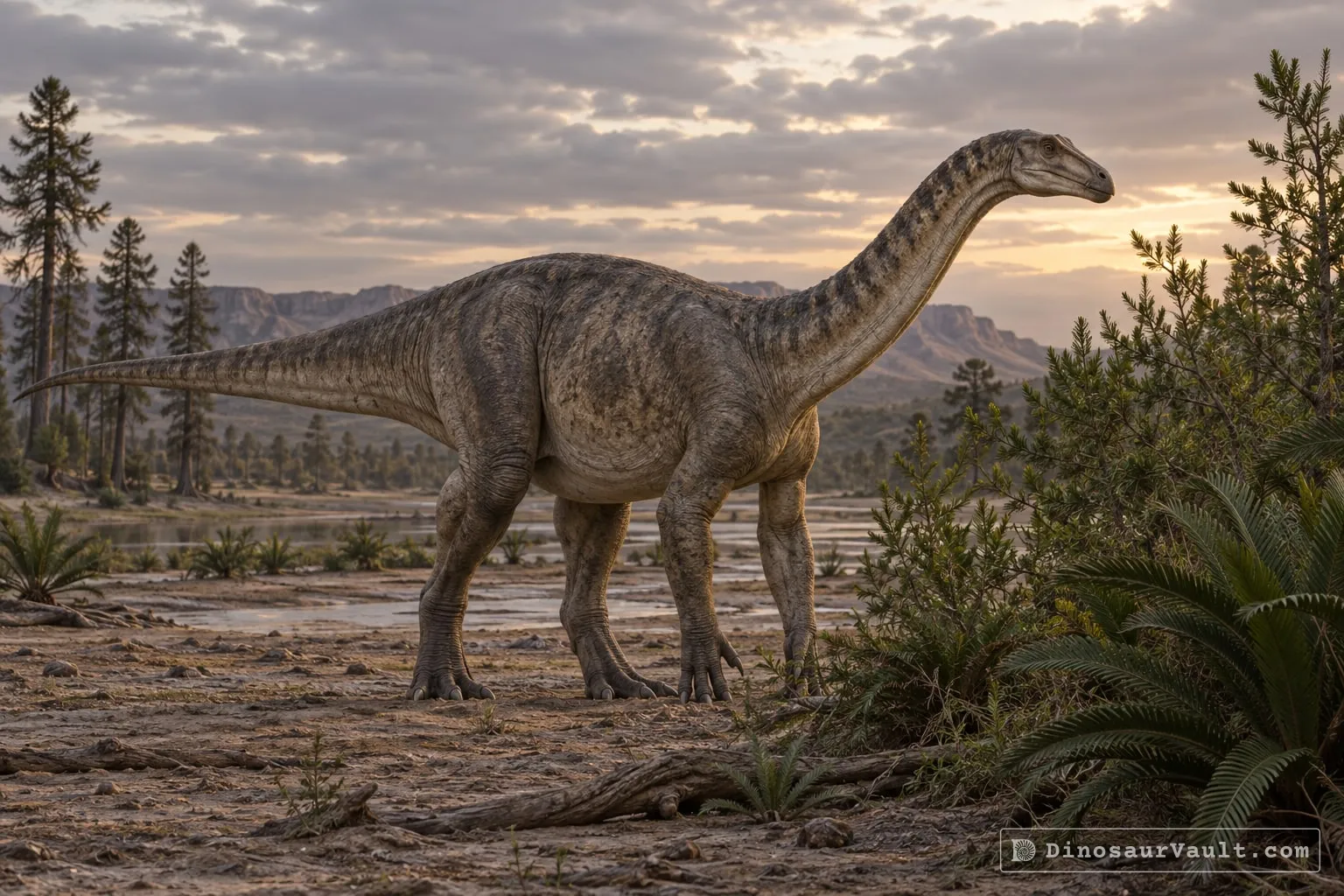
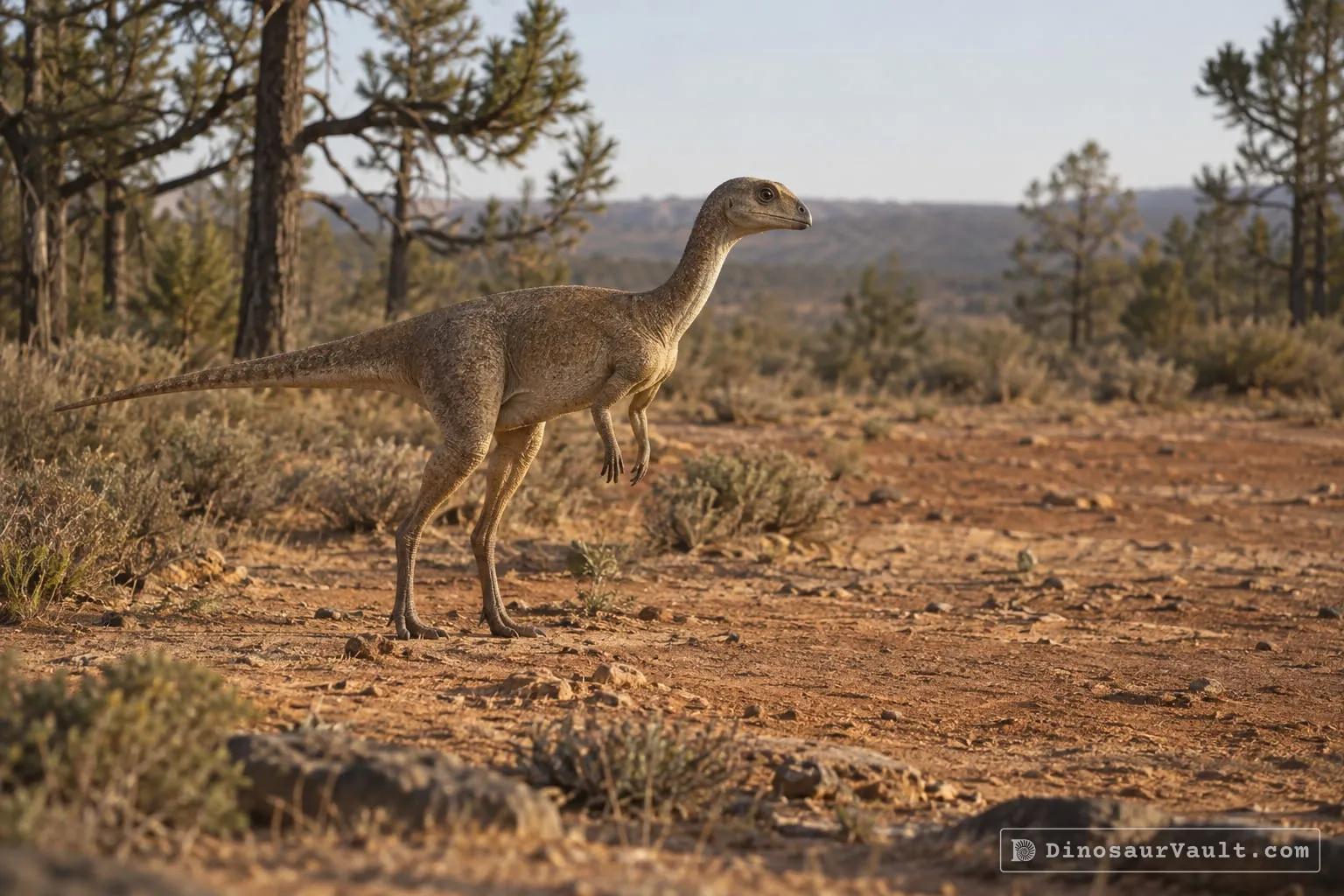
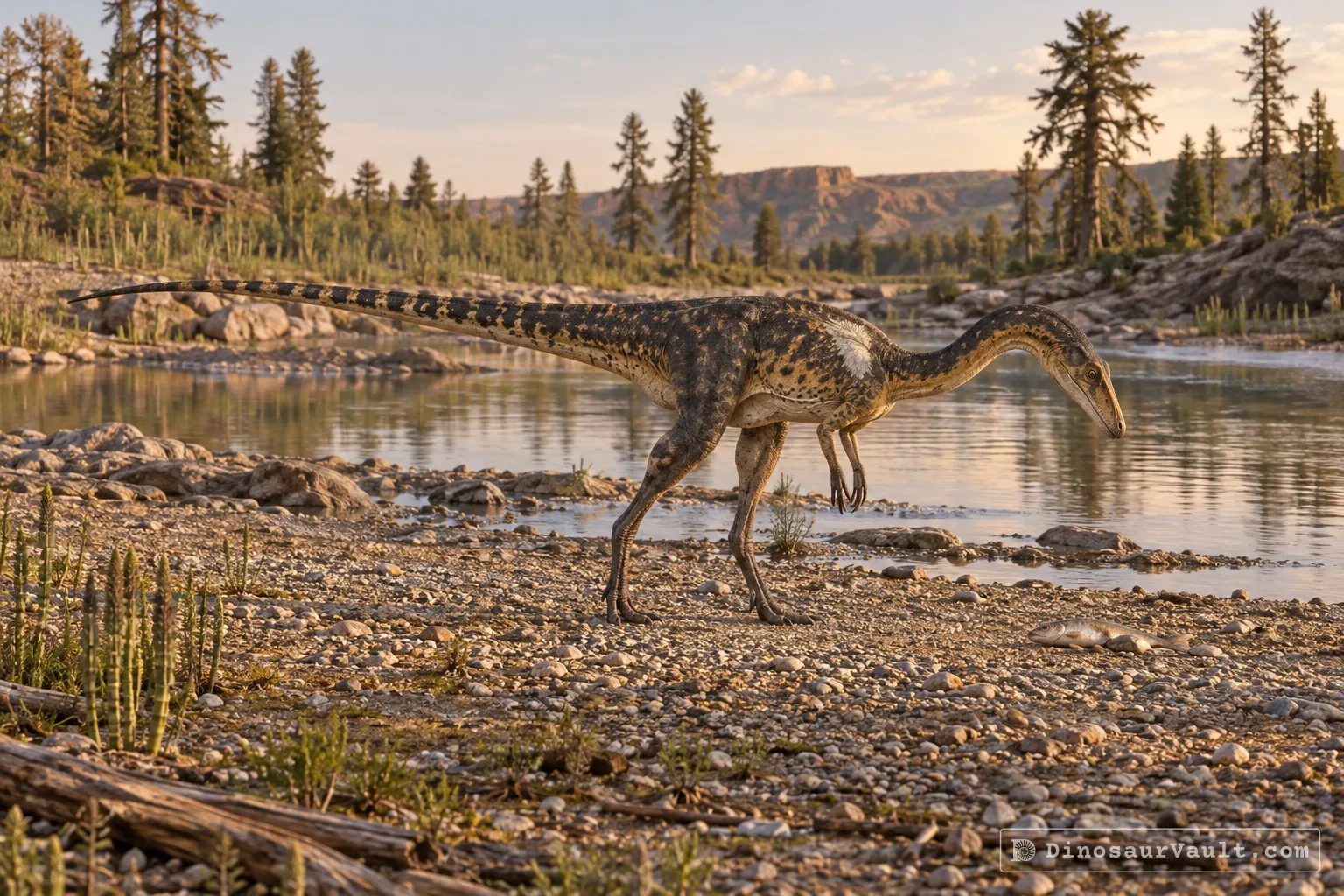
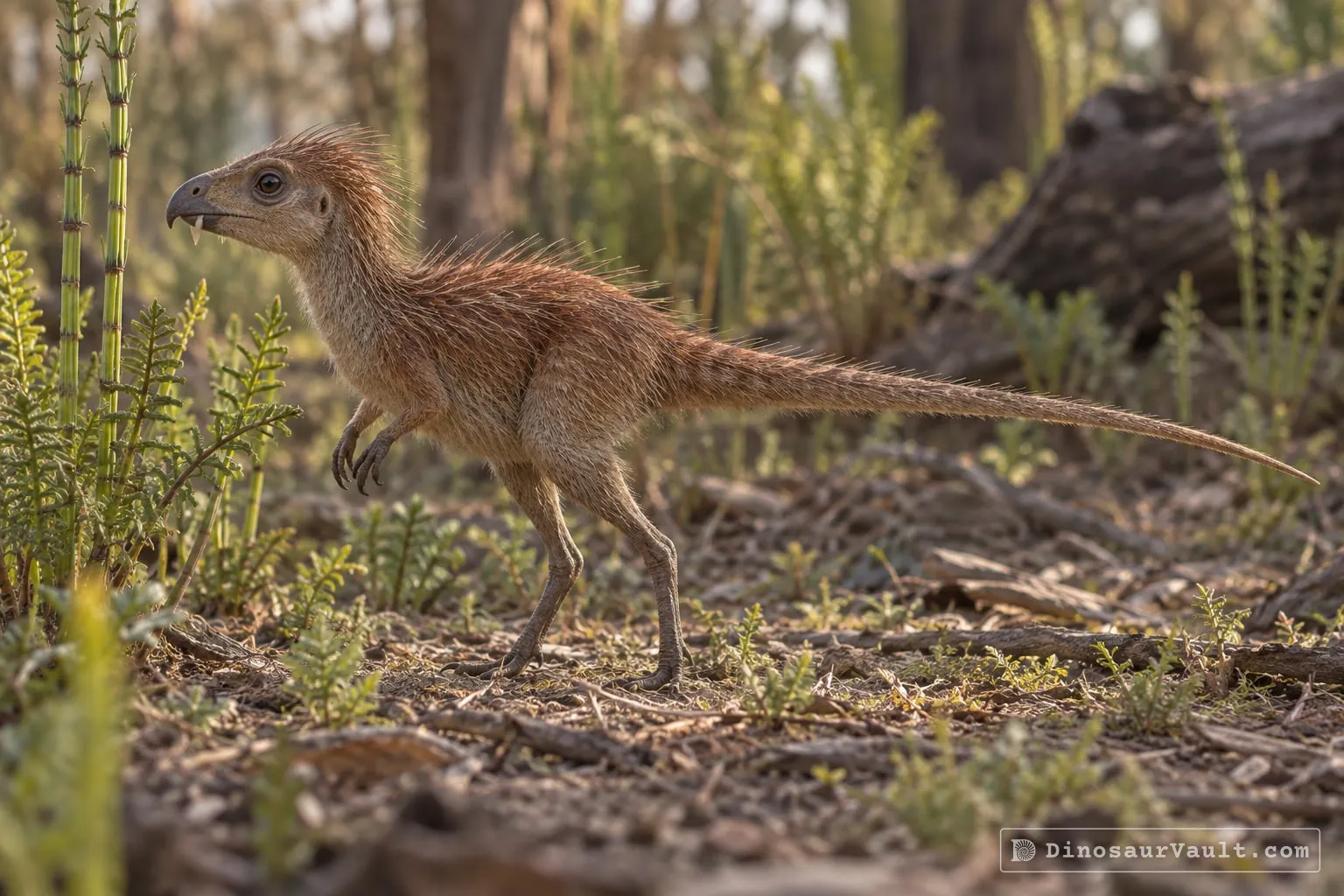
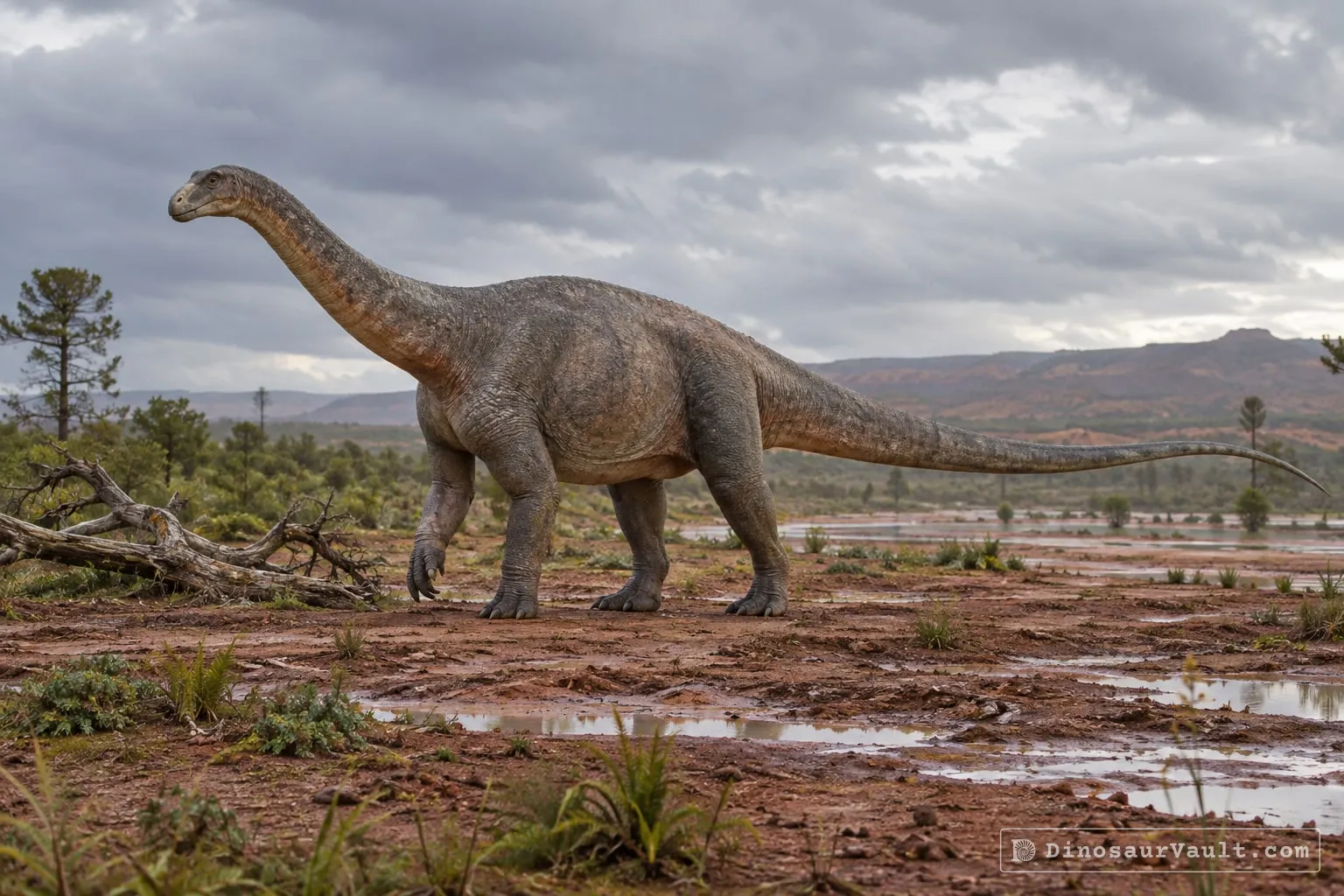


A rock formation can hold fossils laid down millions of years apart, so not every animal here met Eocursor.
The evidence
The science behind Eocursor
Which parts of the picture come from its own bones, and which come from its relatives.
From its own fossils
- An associated partial skeleton preserves pieces of the skull, backbone, pelvis and limbs.
- The lower jaw is long and shallow, and the hands have large, sturdy grasping fingers.
- Long lower legs and slender foot bones fit an animal that moved on its hind legs.
Borrowed from relatives
- The missing upper face and parts of the body and tail are restored by comparison with Lesothosaurus.
- Heterodontosaurus provides a comparison for the missing finger tips because its grasping hand resembles the preserved Eocursor fingers.
Still unknown
- The complete shape of its upper face and the exact arrangement of its fingers and toes.
- Whether the known individual had finished growing.
- Its skin covering and color.
Discovery timeline
- 2007Named itButler, Smith & Norman
- 2010Full descriptionBUTLER
- 2012Close relativeSereno
Key papers
The research behind what we know of Eocursor
Named it
Introduced an early ornithischian with long hind legs and unusually large grasping hands.
A primitive ornithischian dinosaur from the Late Triassic of South Africa, and the early evolution and diversification of Ornithischia. Proceedings of the Royal Society B: Biological Sciences 274: 2041-2046
Read the paper : A primitive ornithischian dinosaur from the Late Triassic of South Africa, and the early evolution and diversification of Ornithischia (opens in a new tab)Full description
Detailed the skeleton, revised the features distinguishing Eocursor and reassessed whether the known animal was still growing.
The anatomy of the basal ornithischian dinosaur Eocursor parvus from the lower Elliot Formation (Late Triassic) of South Africa. Zoological Journal of the Linnean Society 160: 648-684
Read the paper : The anatomy of the basal ornithischian dinosaur Eocursor parvus from the lower Elliot Formation (Late Triassic) of South Africa (opens in a new tab)Close relative
Described the grasping hand of Heterodontosaurus, a useful comparison for the incomplete fingers of Eocursor.
Taxonomy, morphology, masticatory function and phylogeny of heterodontosaurid dinosaurs. ZooKeys 226: 1-225
Read the paper : Taxonomy, morphology, masticatory function and phylogeny of heterodontosaurid dinosaurs (opens in a new tab)
Sources: Wikidata