Zapsalis
Type species Zapsalis abradens
- Lived
- 86 to 66 million years ago, Late Cretaceous
- Diet
- Carnivore
- Group
- Theropods, Dromaeosauridae
- Named by
- Cope 1876
Where its fossils were found
The evidence
No finds with map coordinates are recorded yet.
Habitat
Teeth assigned to Zapsalis come from Late Cretaceous rocks in North America. The Canadian deposits also contain Dromaeosaurus and Saurornitholestes.
Field notes
About Zapsalis
What it was like
Zapsalis is known only from teeth. They came from a small theropod, perhaps a dromaeosaur, but teeth alone are not enough to tell what the animal looked like.
How it was found
Cope named Zapsalis in 1876. The type species is Zapsalis abradens. Most scientists treat the name as doubtful.
Field gallery
More views of Zapsalis
Scenes reconstructed from the available fossil evidence.
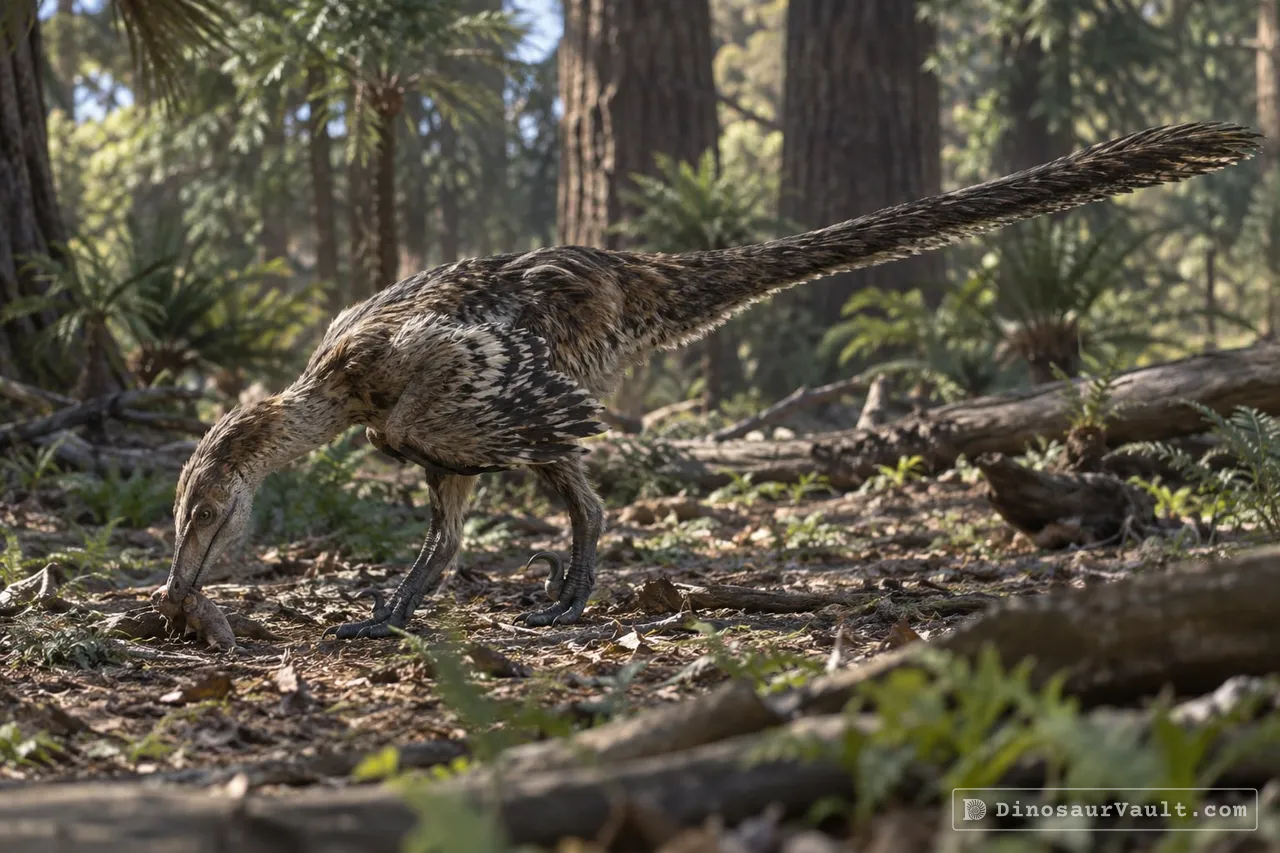
The evidence
The science behind Zapsalis
Which parts of the picture come from its own bones, and which come from its relatives.
From its own fossils
- Zapsalis was named from an isolated tooth.
- Teeth assigned to it have strong lengthwise ridges and small serrations along the rear edge.
Borrowed from relatives
- Its teeth closely resemble teeth at the front of the upper jaw in Saurornitholestes.
- A restoration would borrow the limbs and tail from dromaeosaurs such as Saurornitholestes.
Still unknown
- Whether Zapsalis and Saurornitholestes belong to the same genus.
- Its body size and proportions.
- Which teeth from widely separated fossil sites belong to the same species.
Discovery timeline
- 1876Named it
- 2013RedescriptionLarson & Currie
- 2019SkullCurrie & Evans
Key papers
The research behind what we know of Zapsalis
Redescription
Compared isolated teeth statistically and recognized Zapsalis as a distinct tooth type among small theropods.
Multivariate Analyses of Small Theropod Dinosaur Teeth and Implications for Paleoecological Turnover through Time. PLoS ONE 8: e54329
Read the paper : Multivariate Analyses of Small Theropod Dinosaur Teeth and Implications for Paleoecological Turnover through Time (opens in a new tab)Skull
Found teeth resembling Zapsalis in the front of a Saurornitholestes jaw and recommended keeping the genera separate pending better fossils.
Cranial Anatomy of New Specimens of Saurornitholestes langstoni (Dinosauria, Theropoda, Dromaeosauridae) from the Dinosaur Park Formation (Campanian) of Alberta. The Anatomical Record 303: 691-715
Read the paper : Cranial Anatomy of New Specimens of Saurornitholestes langstoni (Dinosauria, Theropoda, Dromaeosauridae) from the Dinosaur Park Formation (Campanian) of Alberta (opens in a new tab)
Close relatives
Other members of Dromaeosauridae


Sources: Wikidata