Tuebingosaurus
"Tübingen lizard"
Type species Tuebingosaurus maierfritzorum
- Lived
- 227 to 206 million years ago, Late Triassic
- Found in
- Germany
- Named by
- Regalado Fernández and Werneburg 2022
Where its fossils were found
The evidence
Today

220 million years ago
Habitat
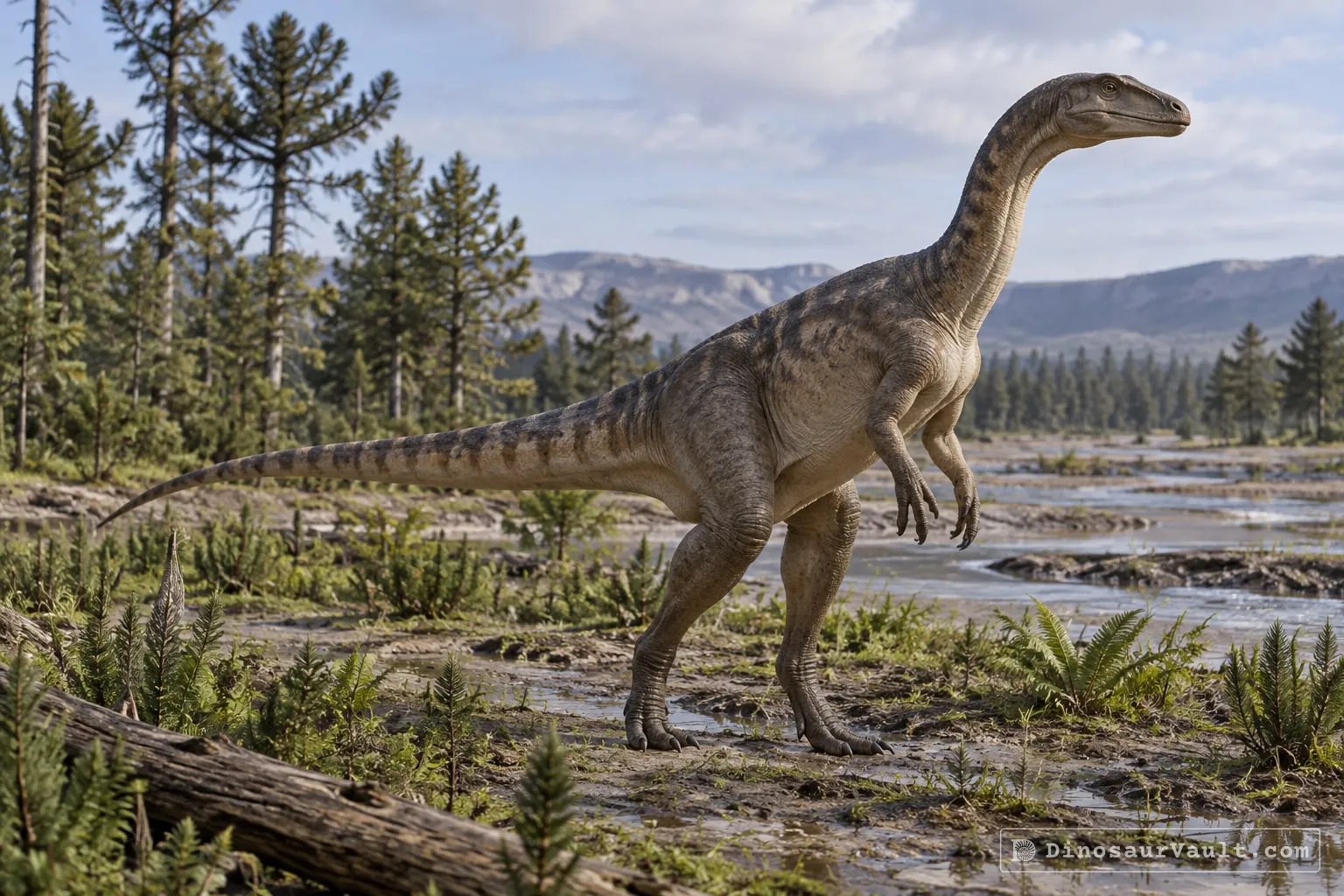
A floodplain in what is now Germany alternated between dry periods and wetter spells that left soft mud. Plateosaurus and Liliensternus lived in the surrounding Late Triassic world.
Field notes
About Tuebingosaurus
What it was like
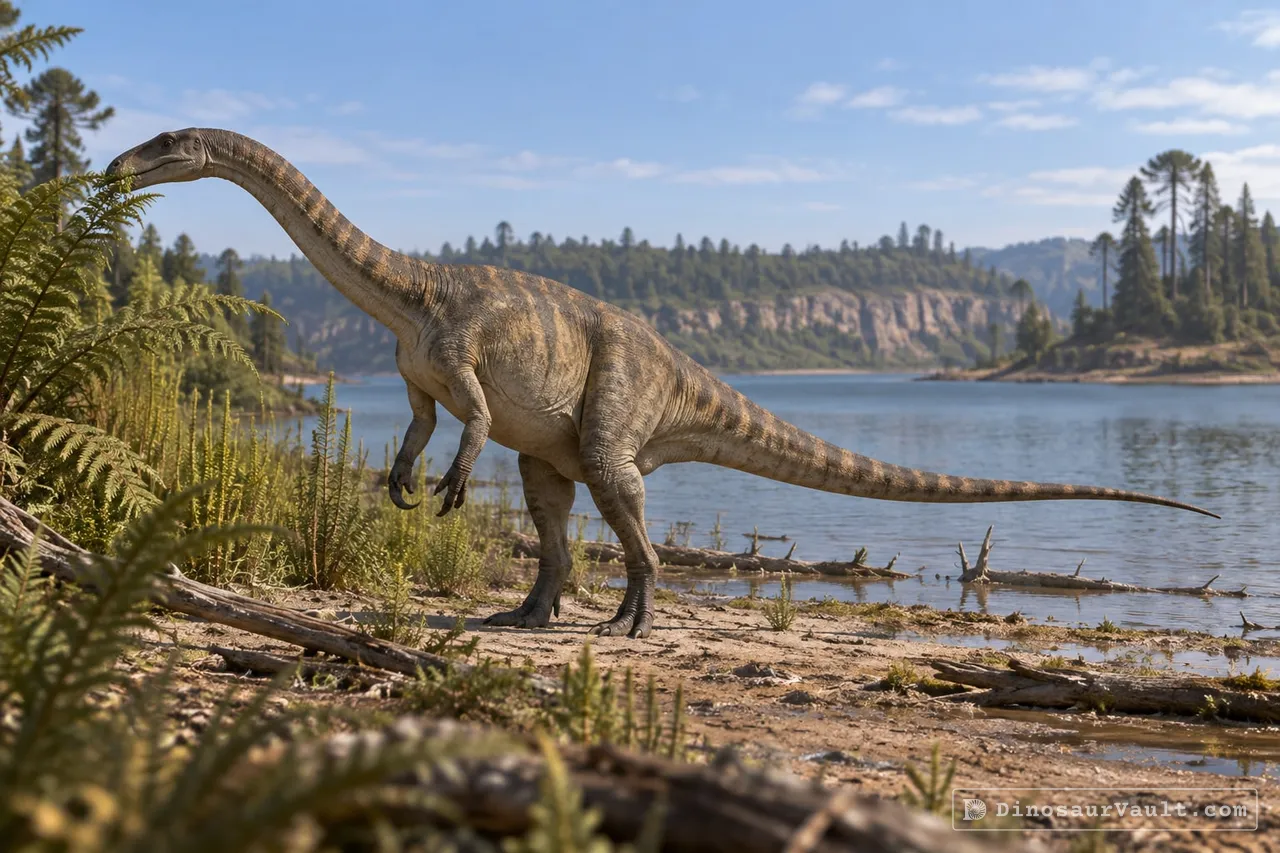
Tuebingosaurus was described as an early relative of the giant sauropods, a plant eater known from a partial skeleton. Its hip and leg bones resemble those of relatives that walked on all fours, but its arms are unknown, so its stance remains uncertain.
Its world
It lived in the Late Triassic in what is now Germany, alongside the more common Plateosaurus and the predator Liliensternus.
How it was found
Its bones were long thought to belong to Plateosaurus. Regalado Fernández and Werneburg gave it its own name in 2022. A later review treated the name as doubtful, reporting that its main distinguishing features rest on damaged bones. It is named after the university town where it is kept.
Field gallery
More views of Tuebingosaurus
Scenes reconstructed from the available fossil evidence.
Lived alongside
Found in the same rock formations
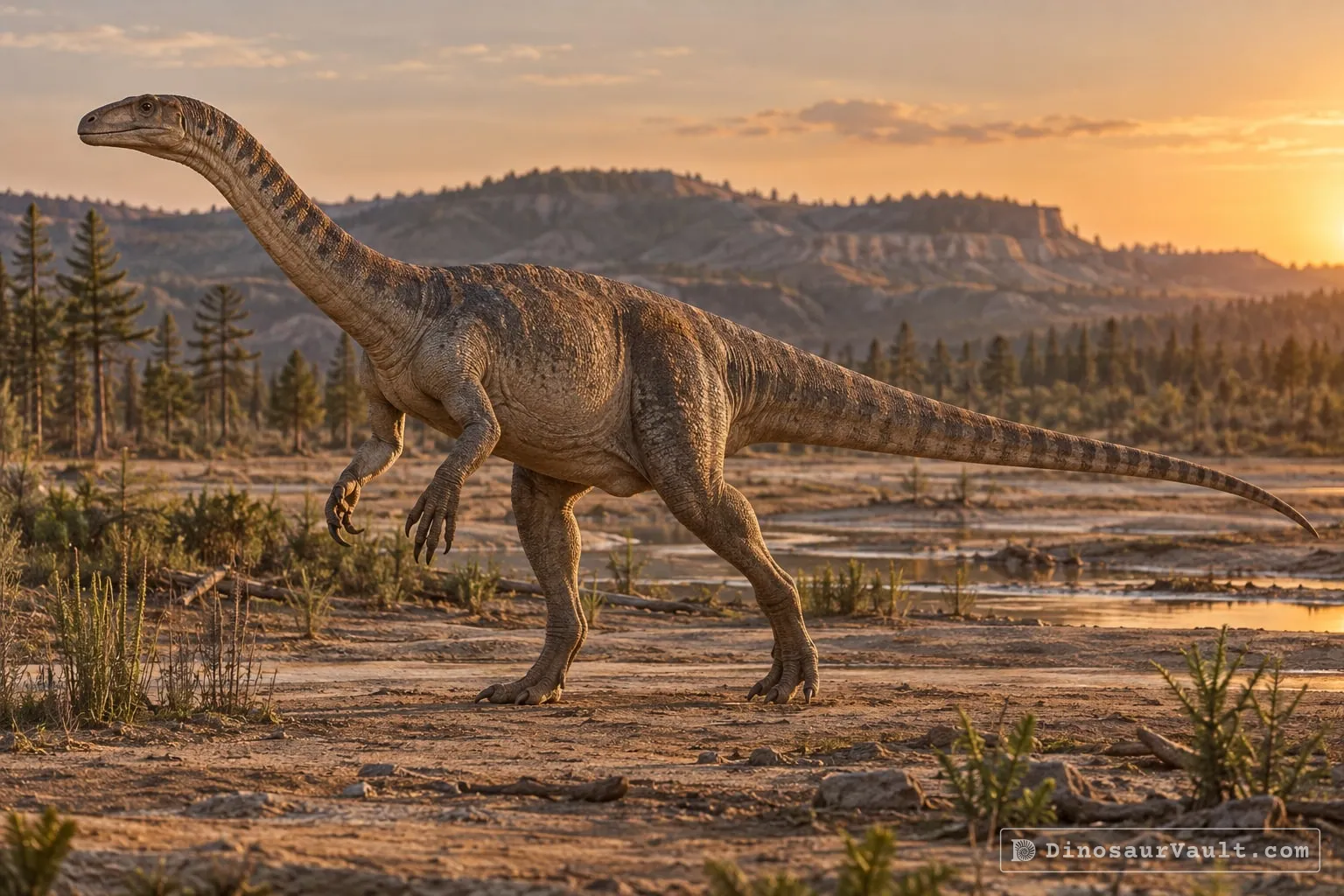
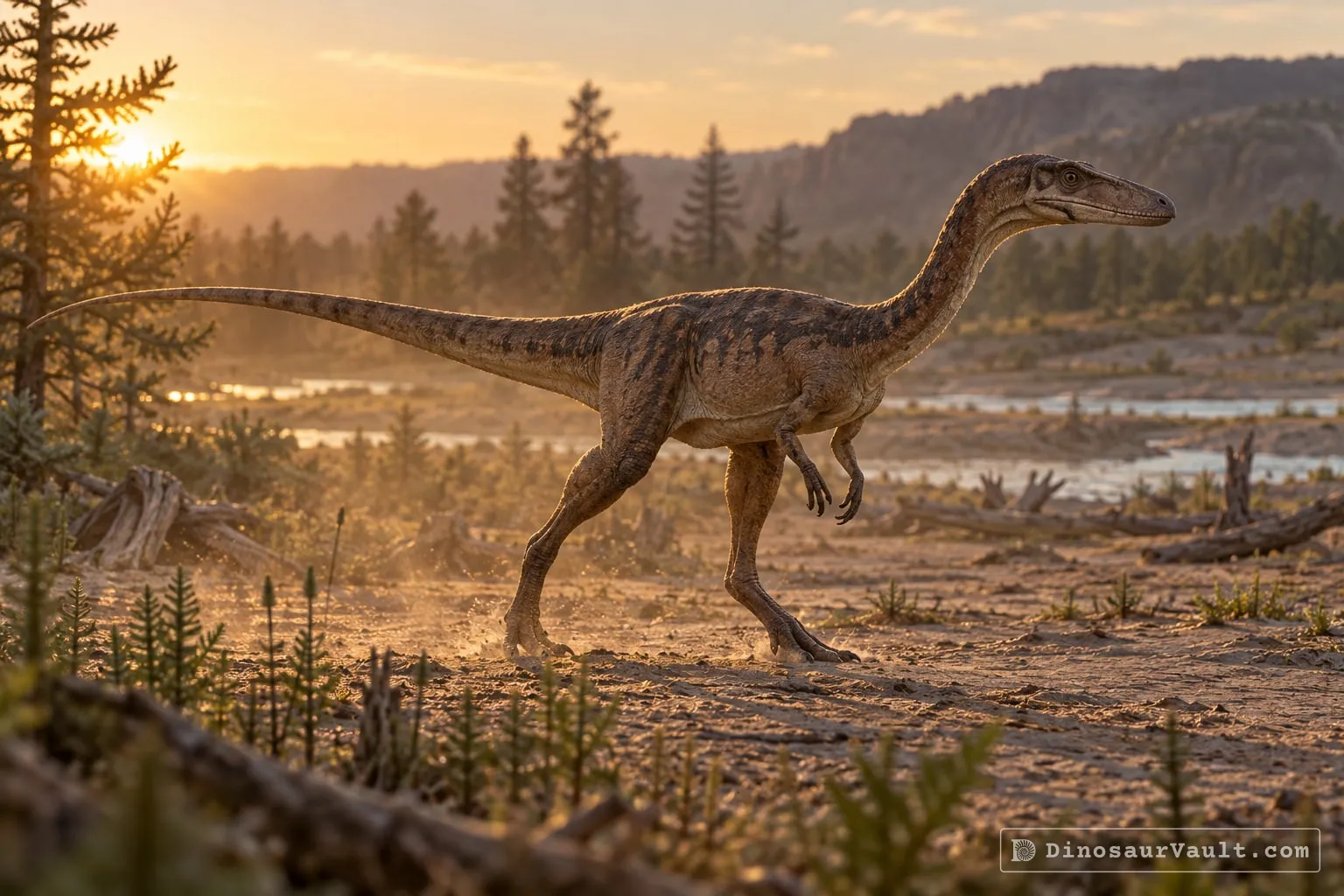
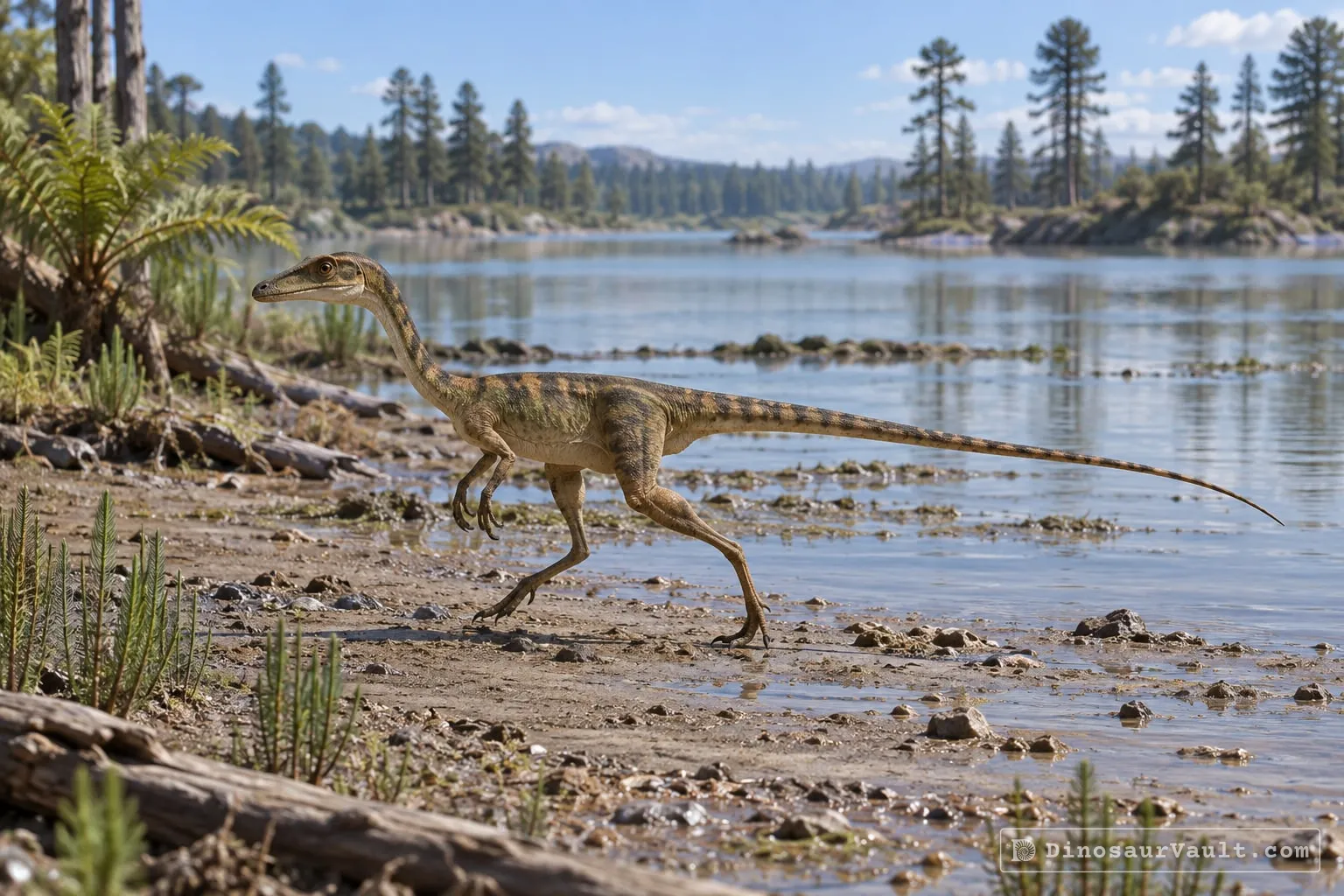


A rock formation can hold fossils laid down millions of years apart, so not every animal here met Tuebingosaurus.
The evidence
The science behind Tuebingosaurus
Which parts of the picture come from its own bones, and which come from its relatives.
From its own fossils
- The type skeleton preserves a complete pelvis, vertebrae from the front of the tail, a left thigh bone and shin, both calf bones, the left ankle and part of the foot. A lower jaw and forearm bones once linked to it are no longer counted as part of it.
- Features of its hip and leg bones resemble those of sauropodomorphs that walked on all fours.
- The thigh bone has a curved shaft and the foot is robust. One toe claw is curved and flattened from side to side, and another is more curved still.
Borrowed from relatives
- The missing head, neck and forelimbs are restored by comparison with Massospondylus.
- Its ankle was compared with those of early sauropods to understand its stance.
Still unknown
- Whether it is a distinct animal. Its describers kept the name in a later study, but a review then reported that its main distinguishing features rest on damaged bones and treated the name as doubtful.
- Its skull and teeth.
- Whether it walked on all fours, since its arms are unknown.
Discovery timeline
- 2010Close relativeMallison
- 2014Fossil sitesSchoch & Seegis
- 2022Named itFernández & Werneburg
- 2025Family treeSues & Schoch
Key papers
The research behind what we know of Tuebingosaurus
Close relative
Showed that Plateosaurus had grasping hands and forelimbs poorly suited to walking on all fours, providing a comparison for Tuebingosaurus.
The digital Plateosaurus II: an assessment of the range of motion of the limbs and vertebral column and of previous reconstructions using a digital skeletal mount. Acta Palaeontologica Polonica 55: 433-458
Read the paper : The digital Plateosaurus II: an assessment of the range of motion of the limbs and vertebral column and of previous reconstructions using a digital skeletal mount (opens in a new tab)Fossil sites
Studied the floodplain mudstones where Tuebingosaurus was found and distinguished animals trapped in mud from remains carried by floods.
Taphonomy, deposition and pedogenesis in the Upper Triassic dinosaur beds of Trossingen. Palaeobiodiversity and Palaeoenvironments 94: 571-593
Read the paper : Taphonomy, deposition and pedogenesis in the Upper Triassic dinosaur beds of Trossingen (opens in a new tab)Named it
Separated Tuebingosaurus from Plateosaurus and linked its hip and hindlimb features to the transition toward walking on all fours.
A new massopodan sauropodomorph from Trossingen Formation (Germany) hidden as ‘ Plateosaurus’ for 100 years in the historical Tübingen collection. Vertebrate Zoology 72: 771-822
Read the paper : A new massopodan sauropodomorph from Trossingen Formation (Germany) hidden as ‘ Plateosaurus’ for 100 years in the historical Tübingen collection (opens in a new tab)Family tree
Reviewed the Triassic reptiles from Germany and reported that the main features separating Tuebingosaurus rest on damaged bones, treating the name as doubtful for now.
Synopsis of the Triassic reptiles from Germany. Fossil Record 28: 411-483
Read the paper : Synopsis of the Triassic reptiles from Germany (opens in a new tab)
Close relatives
Other members of Massopoda


Sources: Wikidata