Outline: a typical ornithopod
Pareisactus
"intruder"
Type species Pareisactus evrostos
- Lived
- 72 to 66 million years ago, Late Cretaceous
- Diet
- Herbivore
- Group
- Ornithopods
- Found in
- Spain
- Named by
- Párraga and Prieto-Márquez 2019
Where its fossils were found
The evidence
Today

70 million years ago
Field notes
About Pareisactus
What it was like
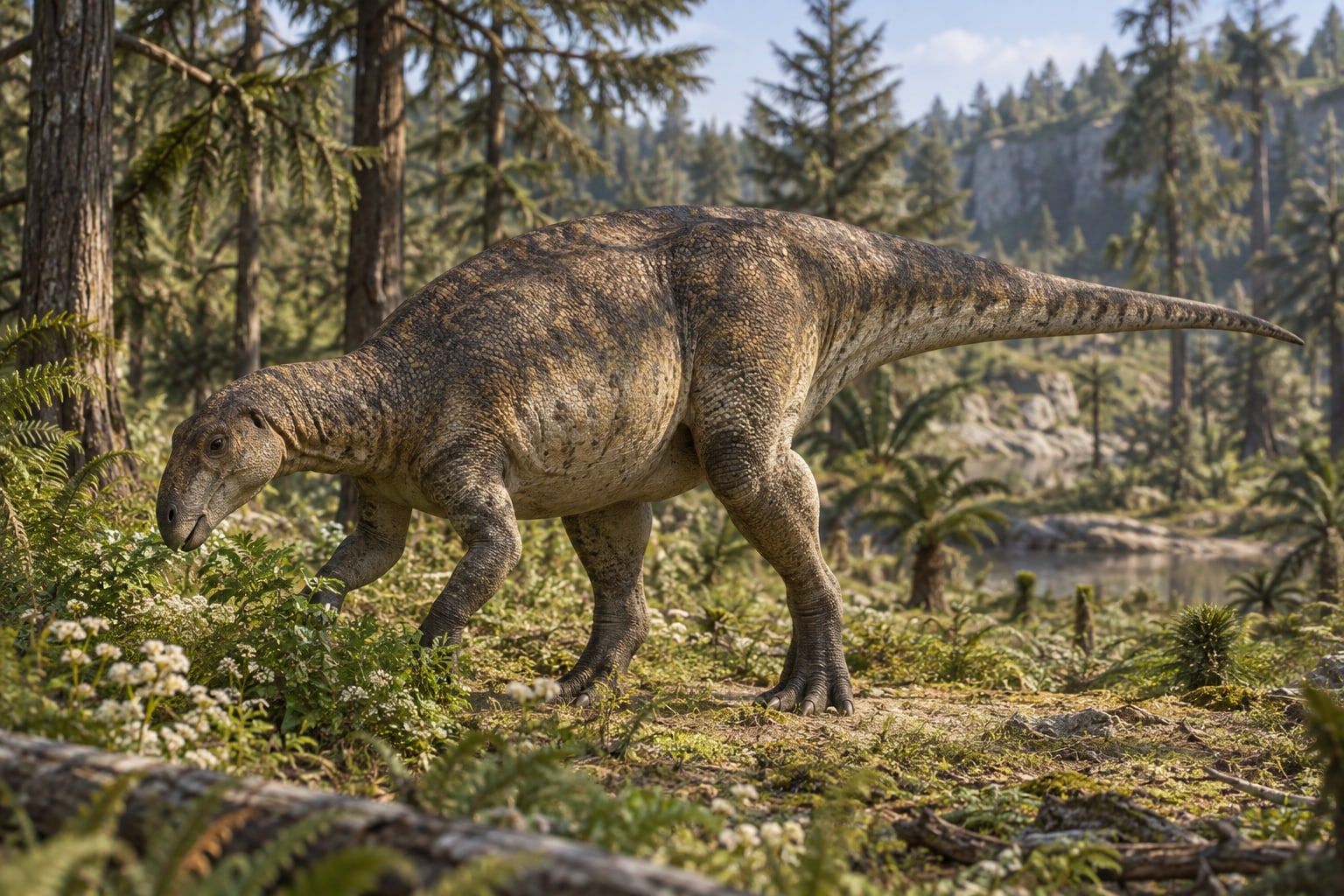
Pareisactus was a plant eater from the rhabdodontids, a family of stocky ornithopods that lived on the islands of Late Cretaceous Europe. It is known from a single shoulder blade.
Its world
It lived about 72 to 66 million years ago, at the end of the Late Cretaceous, in what is now Spain. Its bone comes from the Conques Formation, where the titanosaur Abditosaurus and the duckbill Pararhabdodon also lived.
How it was found
Párraga and Prieto-Márquez named it in 2019. The type species is Pareisactus evrostos. Its name refers to how it was the one odd bone among many duckbill bones at the site.
Lived alongside
Found in the same rock formations
Close relatives
Other members of Rhabdodontoidea
Sources: WikidataNamed in: J. Párraga and A. Prieto-Márquez. 2019. Pareisactus evrostos, a new basal iguanodontian (Dinosauria: Ornithopoda) from the Upper Cretaceous of southwestern Europe. Zootaxa 4555(2):247-258