Vitakridrinda
- Lived
- 72 to 66 million years ago, Late Cretaceous
- Diet
- Carnivore
- Group
- Theropods, Vitakrisauridae
- Found in
- Pakistan
- Named by
- Malkani 2004
Where its fossils were found
The evidence
Today

70 million years ago
Habitat
Meandering rivers crossed floodplains, leaving sandstone in their channels and mud beyond their banks. Dinosaurs reported from these rocks include Pakisaurus, Isisaurus and Vitakrisaurus.
Field notes
About Vitakridrinda
What it was like
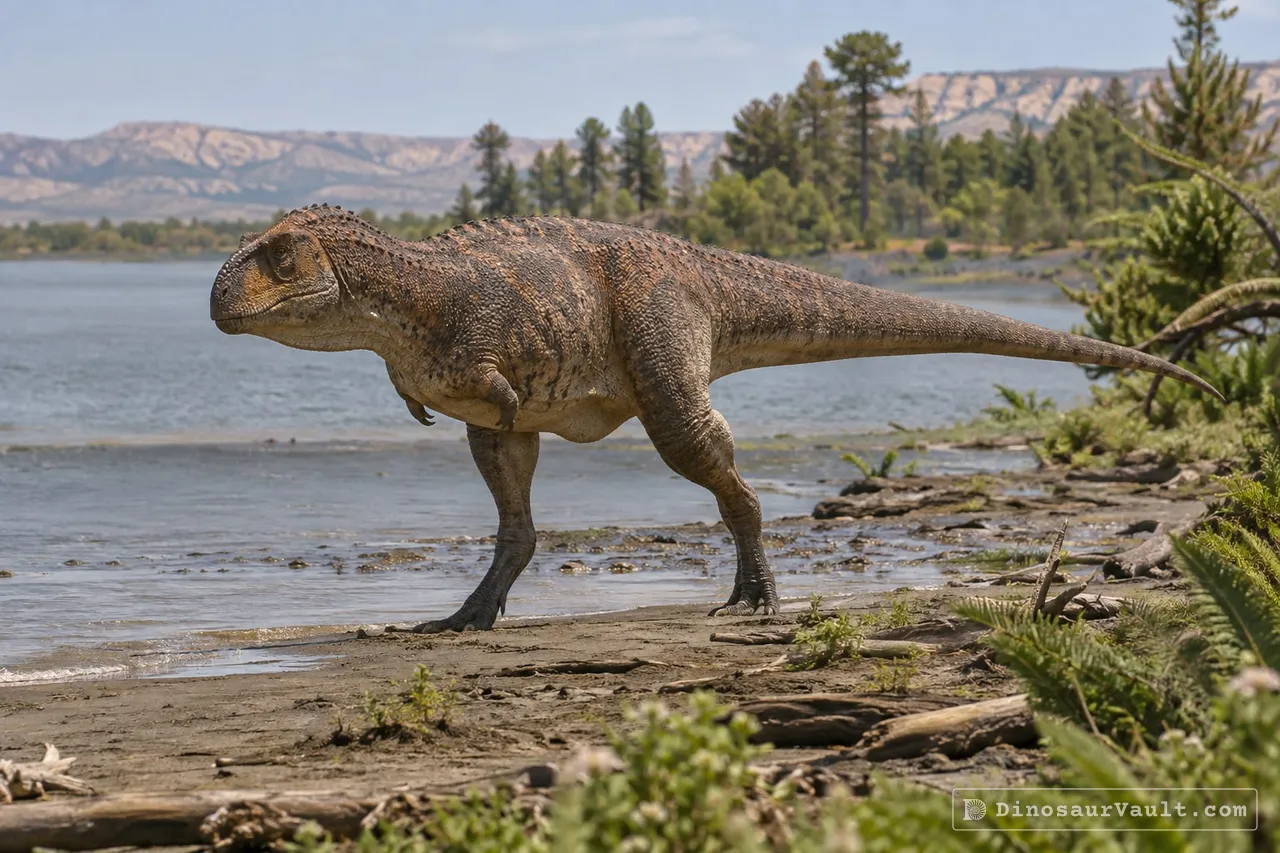
Vitakridrinda was named as a meat-eating dinosaur, perhaps an abelisaurid, from a few bones and teeth.
Its world
It lived about 72 to 66 million years ago, at the end of the Late Cretaceous, in what is now Pakistan. Its bones come from the Vitakri Formation.
How it was found
Malkani named it in 2004. Its bones are fragmentary, and many scientists doubt how much can be said about it.
Field gallery
More views of Vitakridrinda
Scenes reconstructed from the available fossil evidence.
Lived alongside
Found in the same rock formations
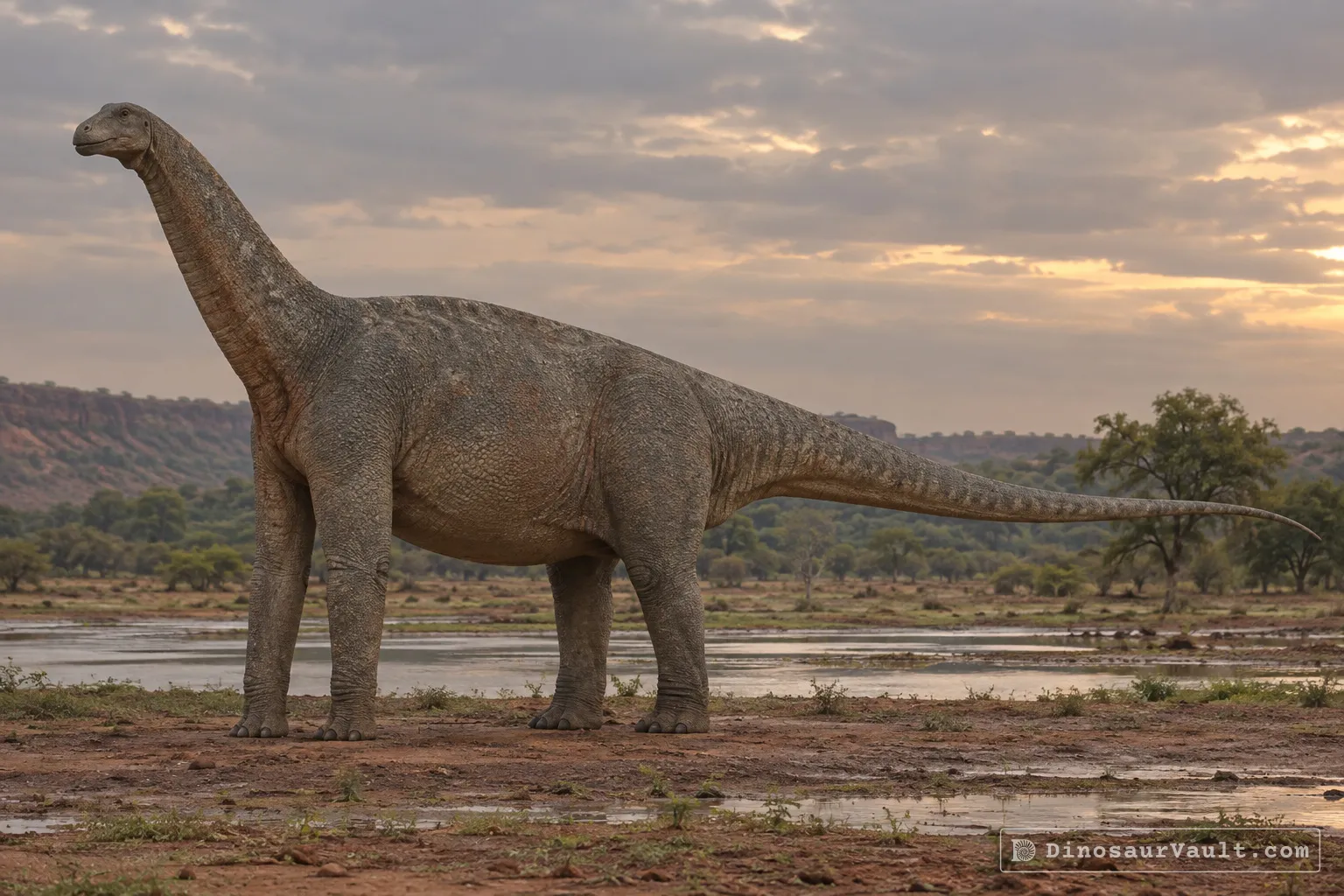
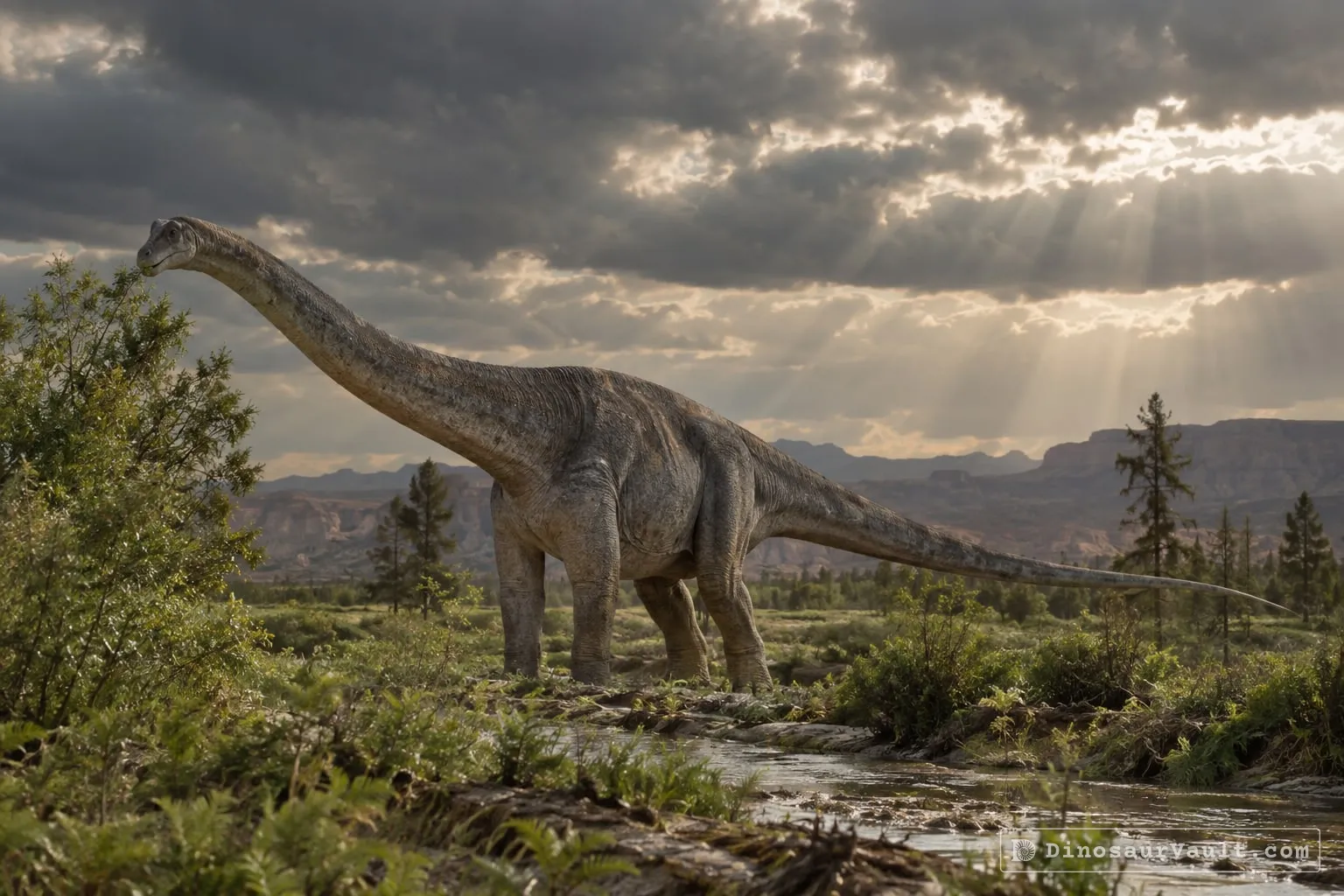
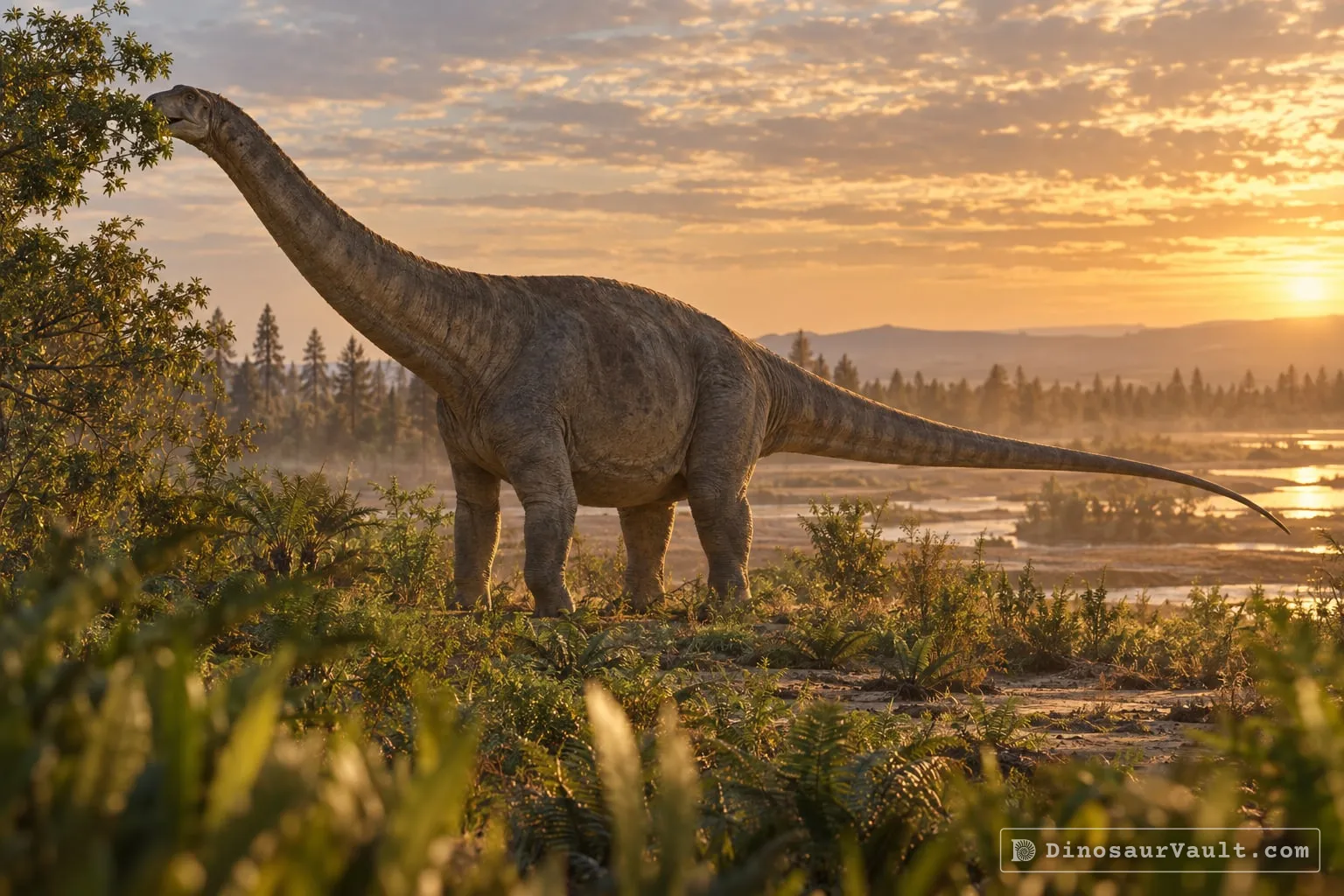
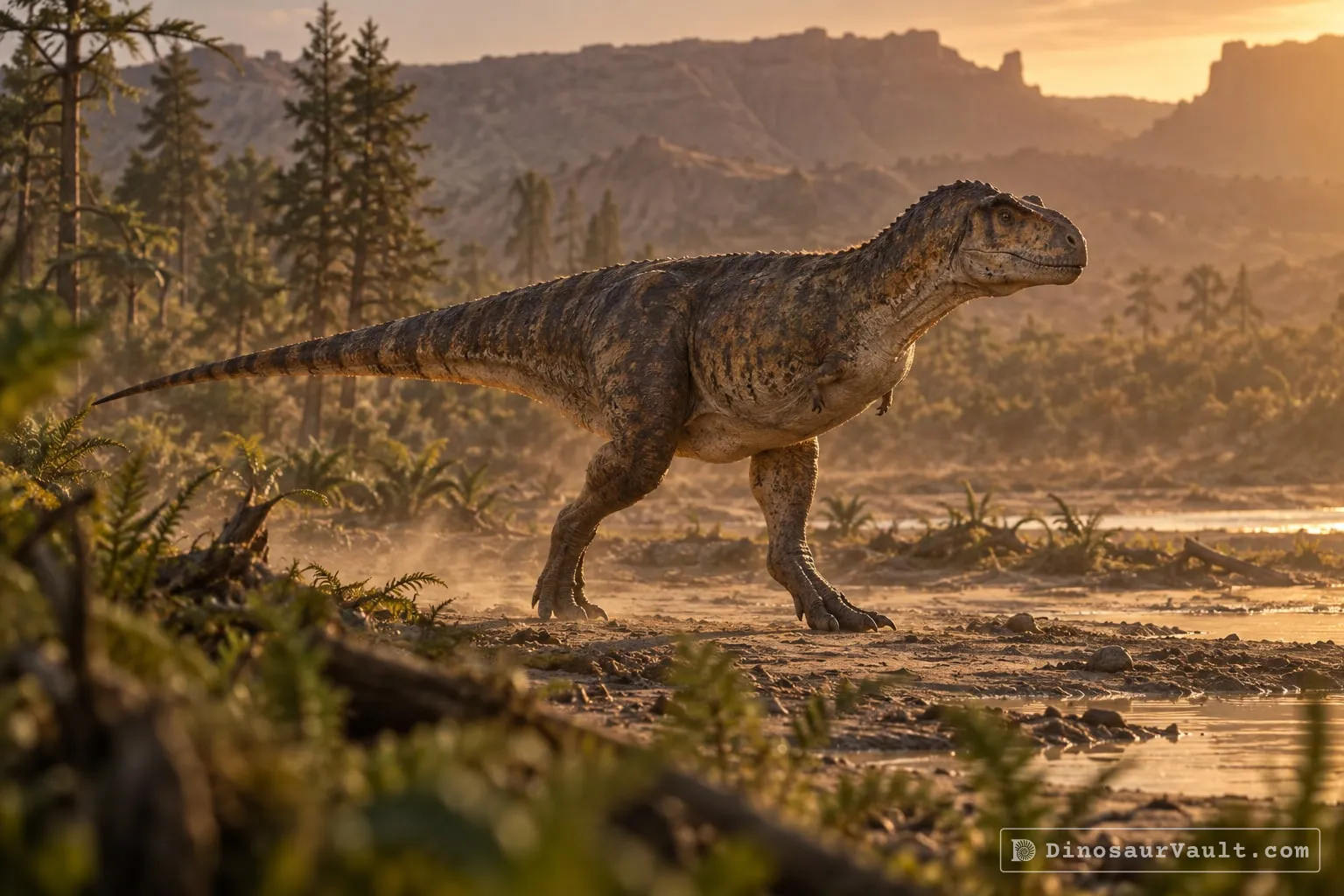
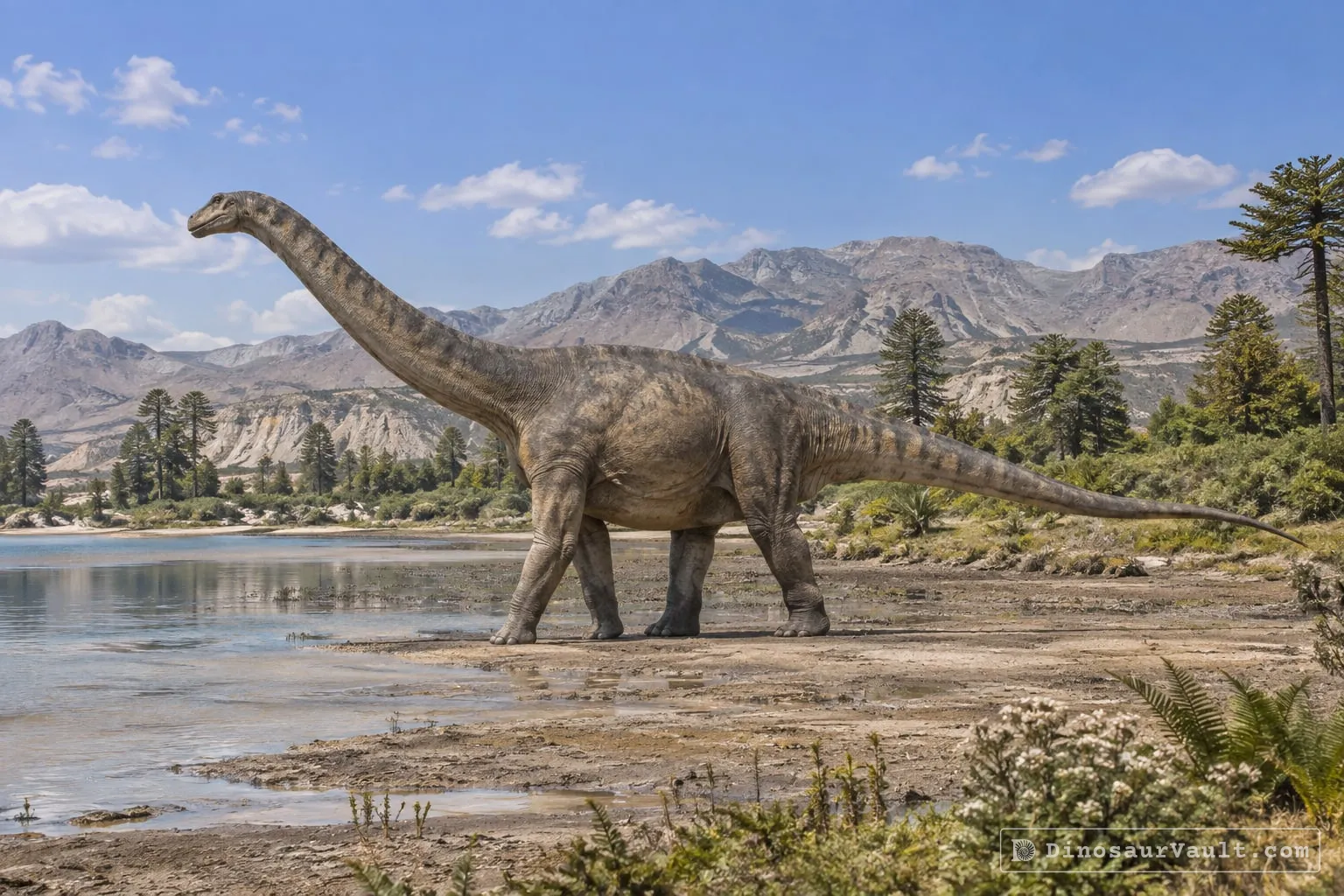
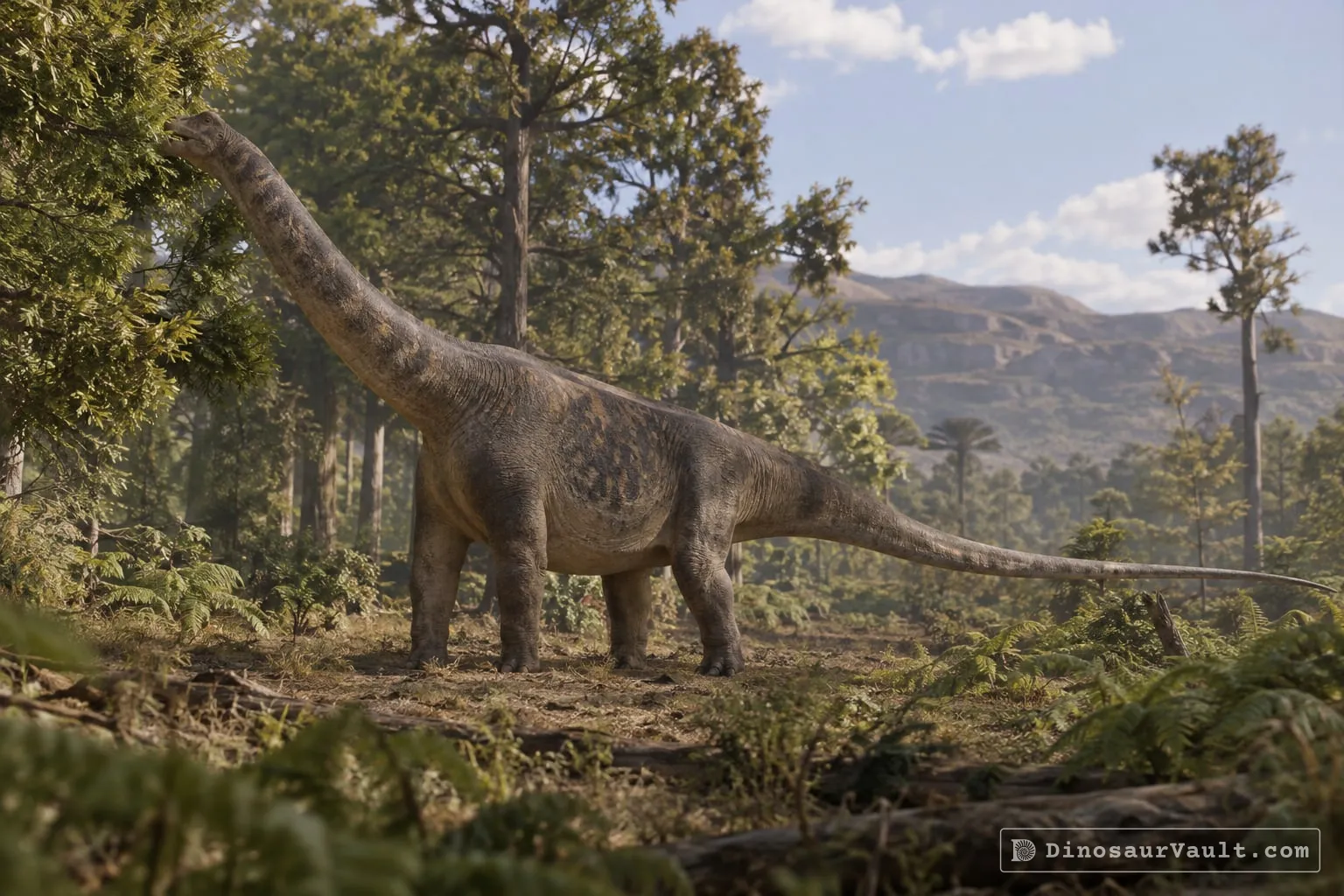
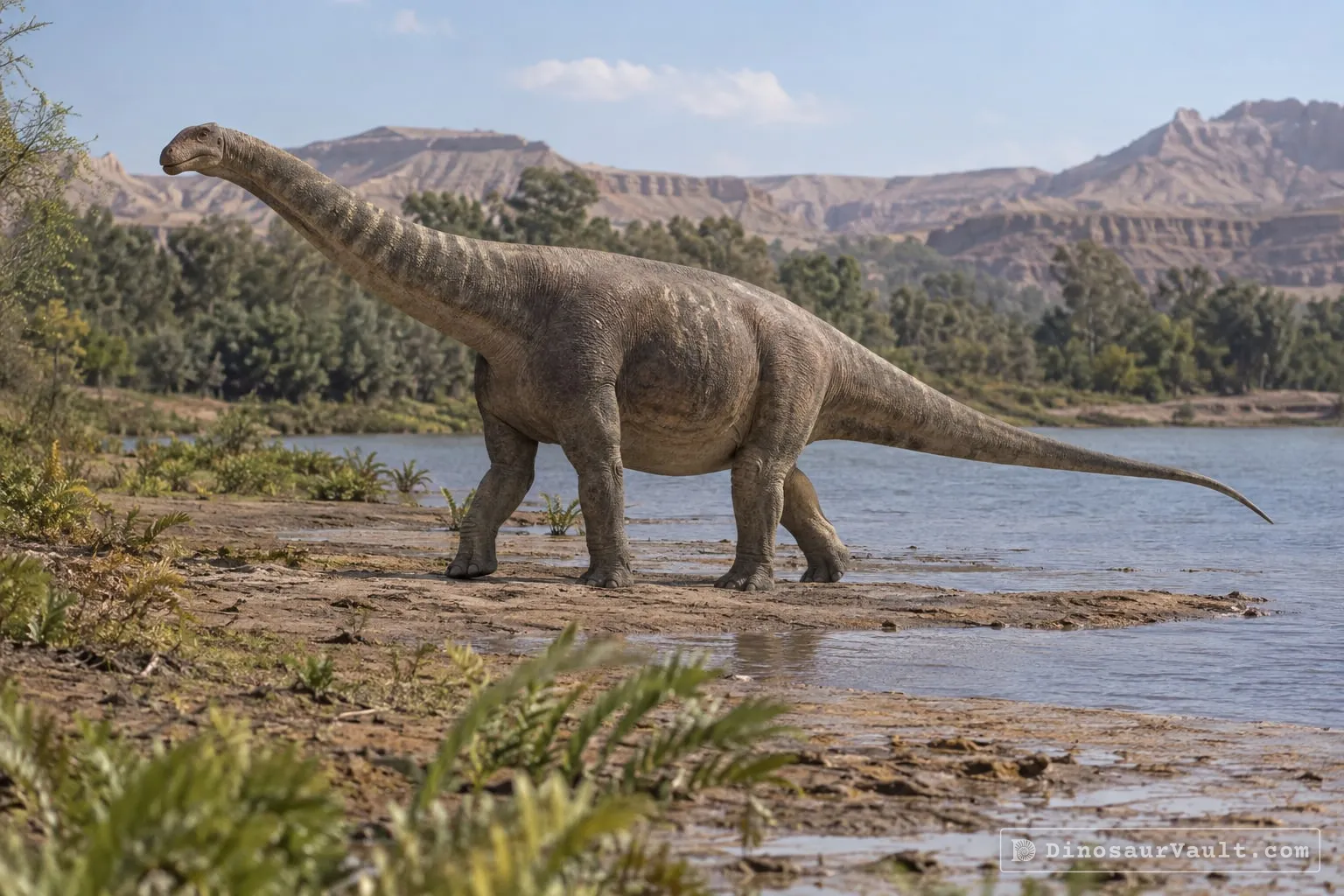
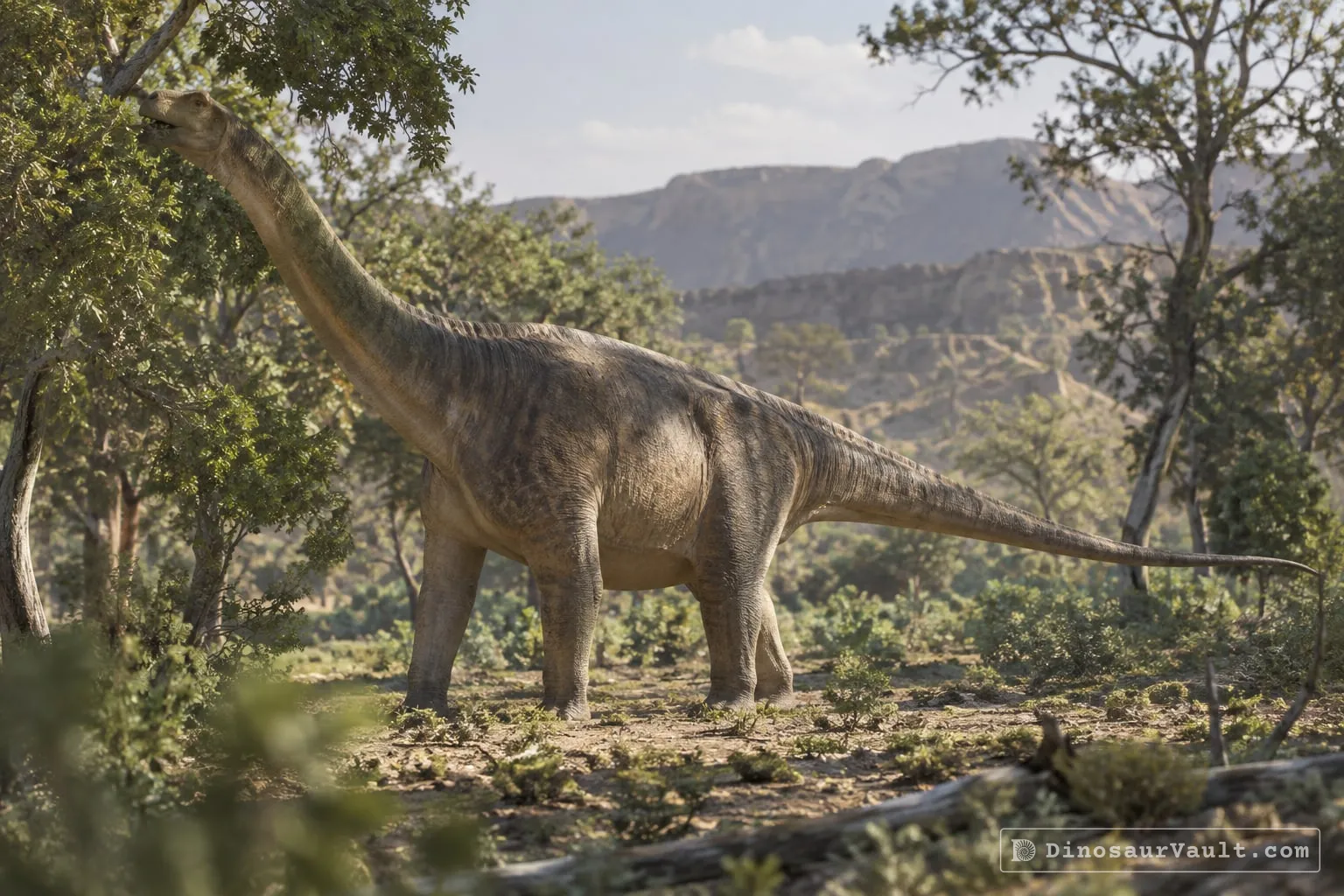


A rock formation can hold fossils laid down millions of years apart, so not every animal here met Vitakridrinda.
The evidence
The science behind Vitakridrinda
Which parts of the picture come from its own bones, and which come from its relatives.
From its own fossils
- Teeth, back vertebrae and parts of thigh bones picked up from the ground surface at one site make up most of the material assigned to it, along with small skull fragments.
- The back vertebrae have tall bodies that widen toward the bottom.
- The thigh bones have thick walls around a hollow center and are stouter than those of Vitakrisaurus from the same rocks.
Borrowed from relatives
- The neck, chest, hips and legs are compared with Majungasaurus, an abelisaurid known from much of its skeleton.
- The missing snout and jaws are compared with those of Ceratosaurus.
Still unknown
- Which of the scattered bones belong to the same animal. The thigh bones lay some distance from the teeth, and several pieces first listed as teeth were later described as claws and other bones.
- Whether some bones assigned to it, such as a shoulder blade and a bony scute, belong instead to a crocodile relative from the same rocks.
- Its exact place among abelisauroids, and the shape of its complete skull and body.
Discovery timeline
- 2004Named itMalkani
- 2010Full descriptionSadiq Malkani
- 2020RedescriptionMalkani
- 2021RedescriptionMalkani
- 2025RedescriptionMalkani
Key papers
The research behind what we know of Vitakridrinda
Named it
Introduced Vitakridrinda as a meat-eating dinosaur from fragmentary fossils in Pakistan.
Saurischian dinosaurs from Late Cretaceous of Pakistan. In S. S. Hussain & H. D. Akbar (eds.), 5th Pakistan Geological Congress, Islamabad. National Geological Society of Pakistan, Pakistan Museum of Natural History (Pakistan Science Foundation).
No link available
Full description
Described material assigned to Vitakridrinda, including a snout that was later reassigned to a crocodile.
Vitakridrinda (Vitakrisauridae, Theropoda) from the latest Cretaceous of Pakistan. Journal of Earth Science 21: 204-212
Read the paper : Vitakridrinda (Vitakrisauridae, Theropoda) from the latest Cretaceous of Pakistan (opens in a new tab)Redescription
Illustrated teeth and bones assigned to Vitakridrinda and transferred the previously described snout to a crocodile.
Theropods, Mesoeucrocodiles and Pterosaurs Found from the Latest Maastrichtian Vitakri Formation of Balochistan, Pakistan; Description with Large Photographs and Comparison with Coeval Taxa from Indo-Pakistan Subcontinent. Open Journal of Geology 10: 510-551
Read the paper : Theropods, Mesoeucrocodiles and Pterosaurs Found from the Latest Maastrichtian Vitakri Formation of Balochistan, Pakistan; Description with Large Photographs and Comparison with Coeval Taxa from Indo-Pakistan Subcontinent (opens in a new tab)Redescription
Gave a formal diagnosis based on its teeth, back vertebrae and thigh bones, all collected at one site.
Jurassic-Cretaceous and Cretaceous-Paleogene Transitions and Mesozoic Vertebrates from Pakistan. Open Journal of Geology 11: 275-318
Read the paper : Jurassic-Cretaceous and Cretaceous-Paleogene Transitions and Mesozoic Vertebrates from Pakistan (opens in a new tab)Redescription
Expanded the diagnosis and identified several pieces once listed as teeth as toe claws and other bones.
Theropods, Ornithischians and Pterosaurs from South Asia-Review with New Taxa: A Look at Paleontology, Stratigraphy and Mineral Potential of Pakistan. Open Journal of Geology 15: 22-68
Read the paper : Theropods, Ornithischians and Pterosaurs from South Asia-Review with New Taxa: A Look at Paleontology, Stratigraphy and Mineral Potential of Pakistan (opens in a new tab)
Close relatives
Other members of Vitakrisauridae
Sources: Wikidata