Sulaimanisaurus
- Lived
- 72 to 66 million years ago, Late Cretaceous
- Diet
- Herbivore
- Group
- Sauropods, Pakisauridae
- Found in
- Pakistan
- Named by
- Malkani 2004
Where its fossils were found
The evidence
Today

70 million years ago
Habitat
Meandering rivers and muddy floodplains covered this part of what is now Pakistan. Pakisaurus, Balochisaurus and Vitakrisaurus are also reported from the Vitakri Formation.
Field notes
About Sulaimanisaurus
What it was like
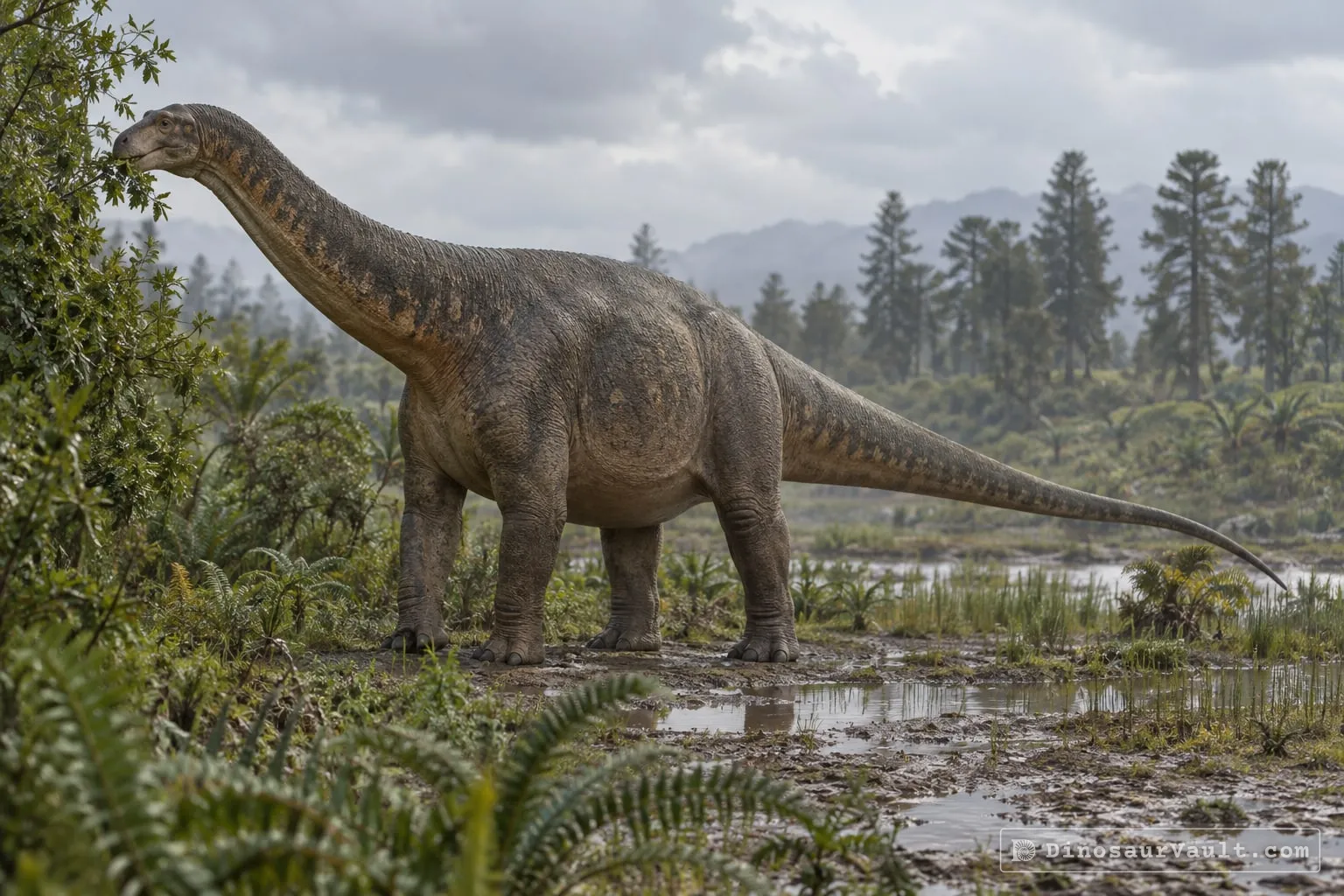
Sulaimanisaurus was named as a titanosaur, a long-necked plant eater, from tail bones.
Its world
It lived about 72 to 66 million years ago, at the end of the Late Cretaceous, in what is now Pakistan. Its bones come from the Vitakri Formation.
How it was found
Malkani named it in 2004. Its bones are fragmentary, and many scientists doubt that it can be told apart from other titanosaurs of the region.
Field gallery
More views of Sulaimanisaurus
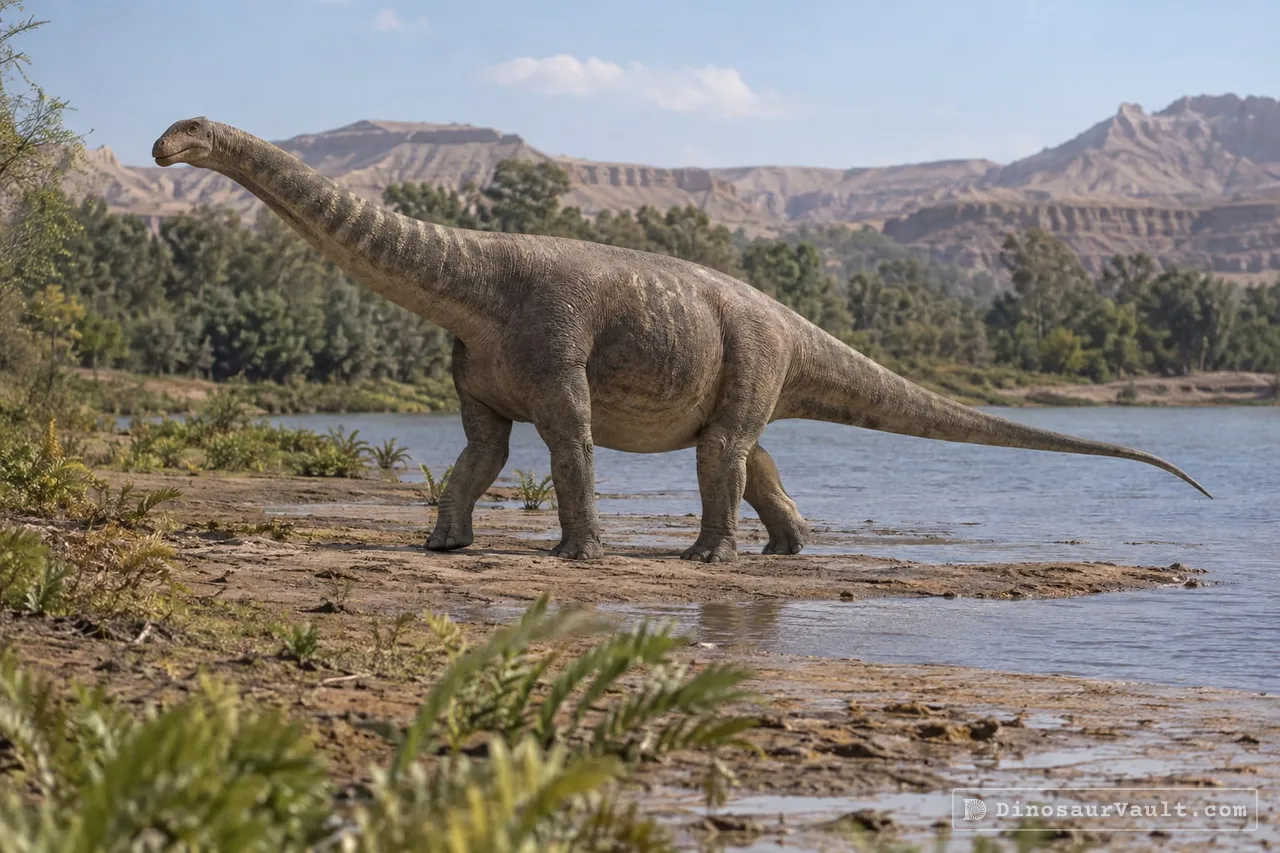
Scenes reconstructed from the available fossil evidence.
Lived alongside
Found in the same rock formations
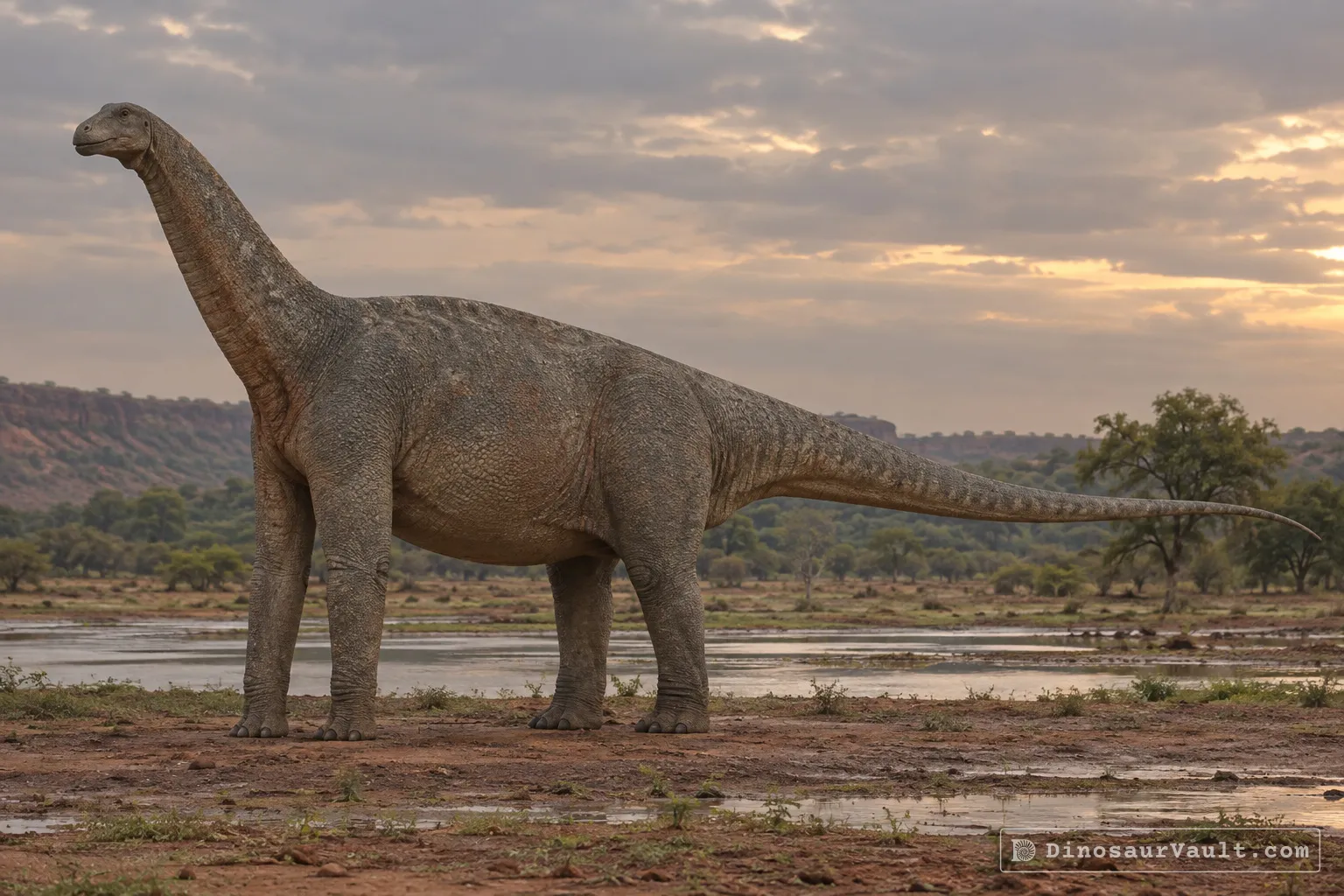
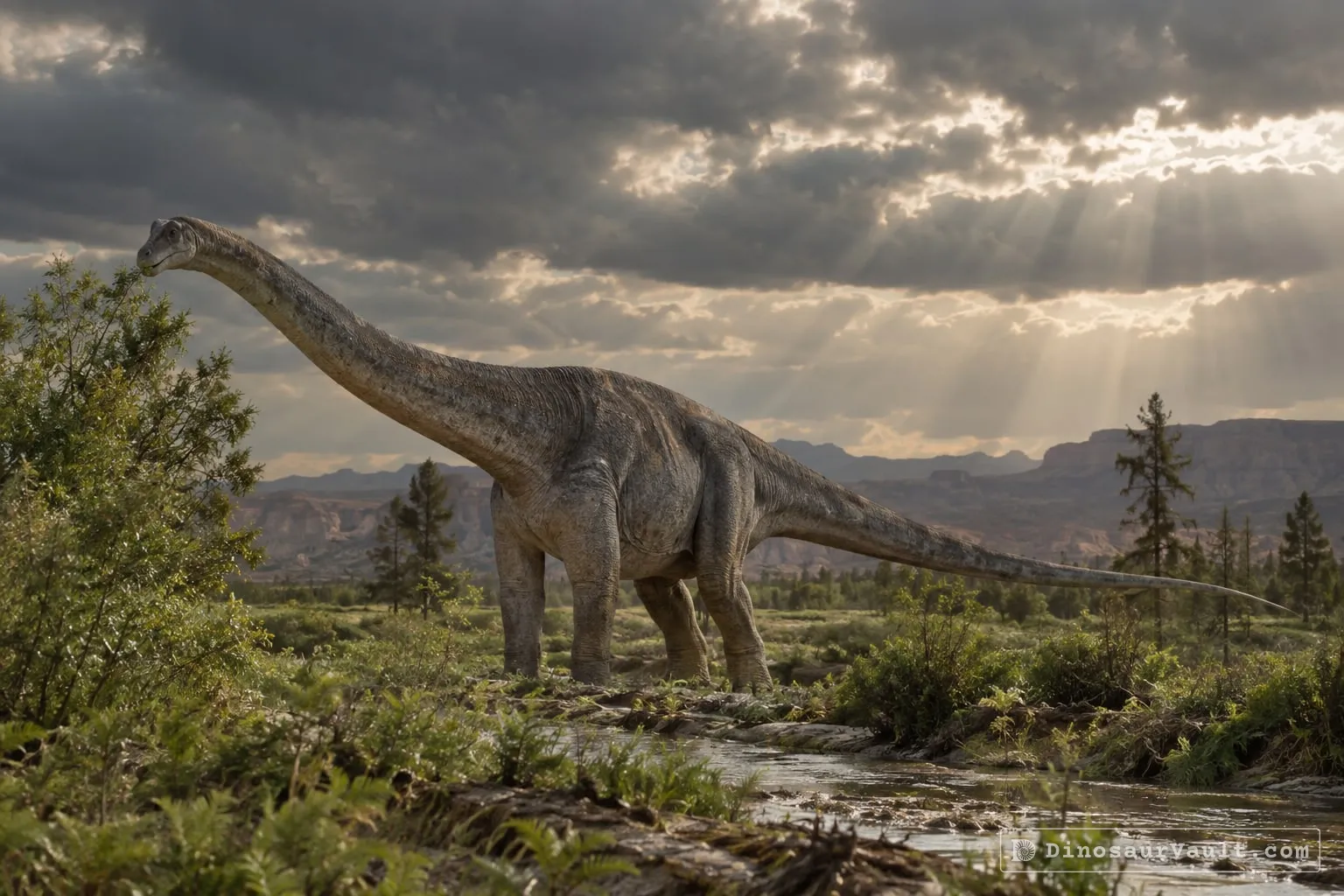
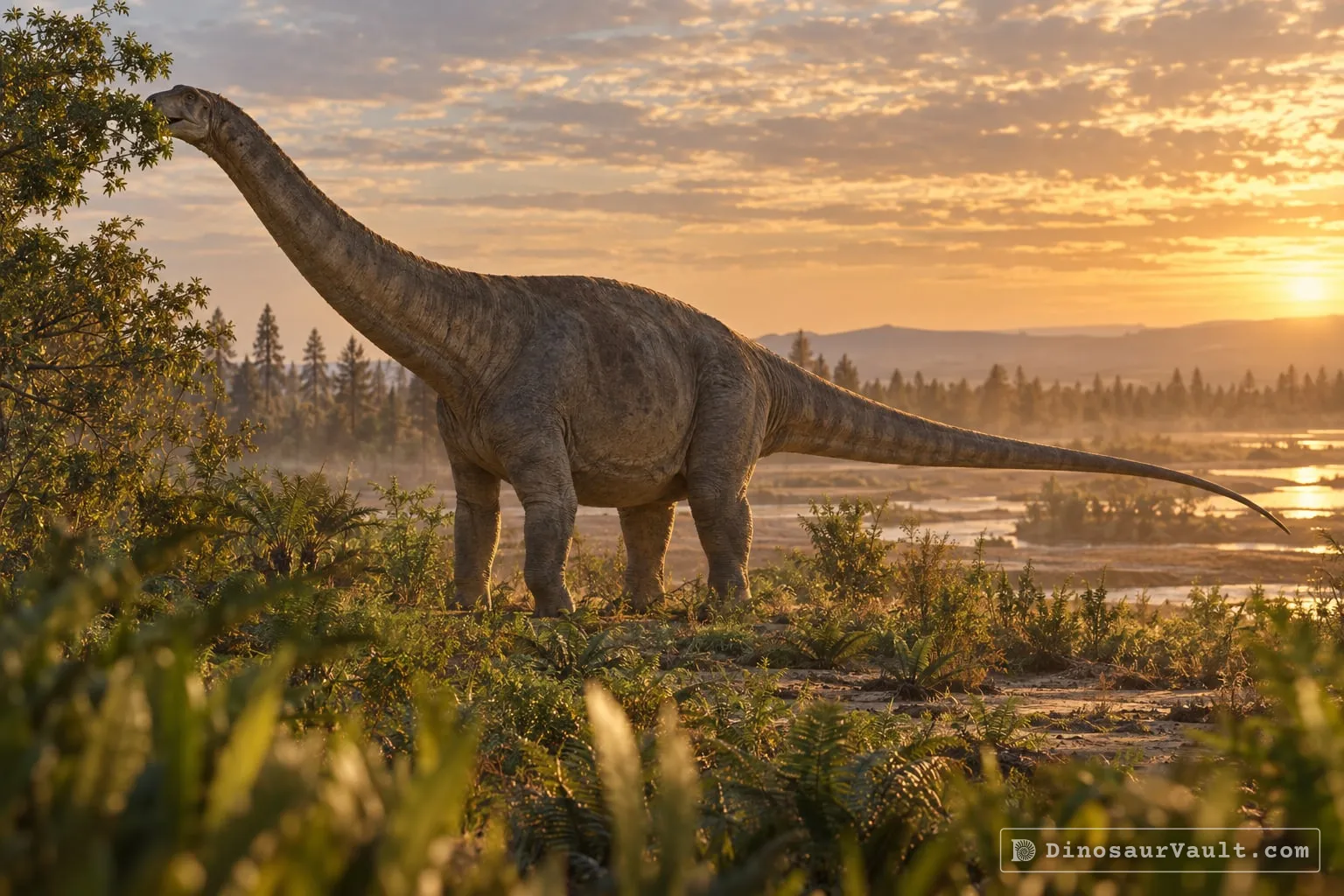
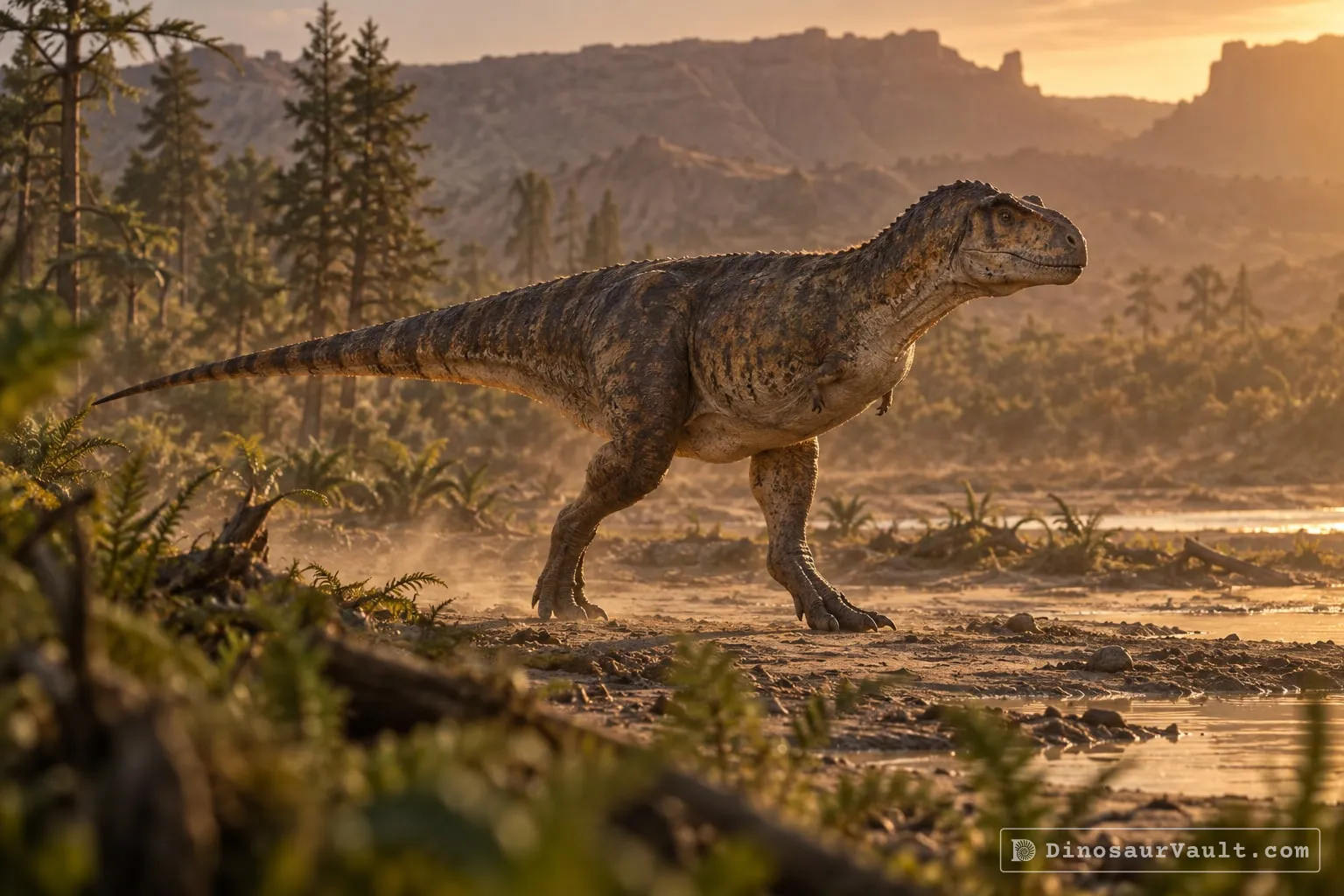
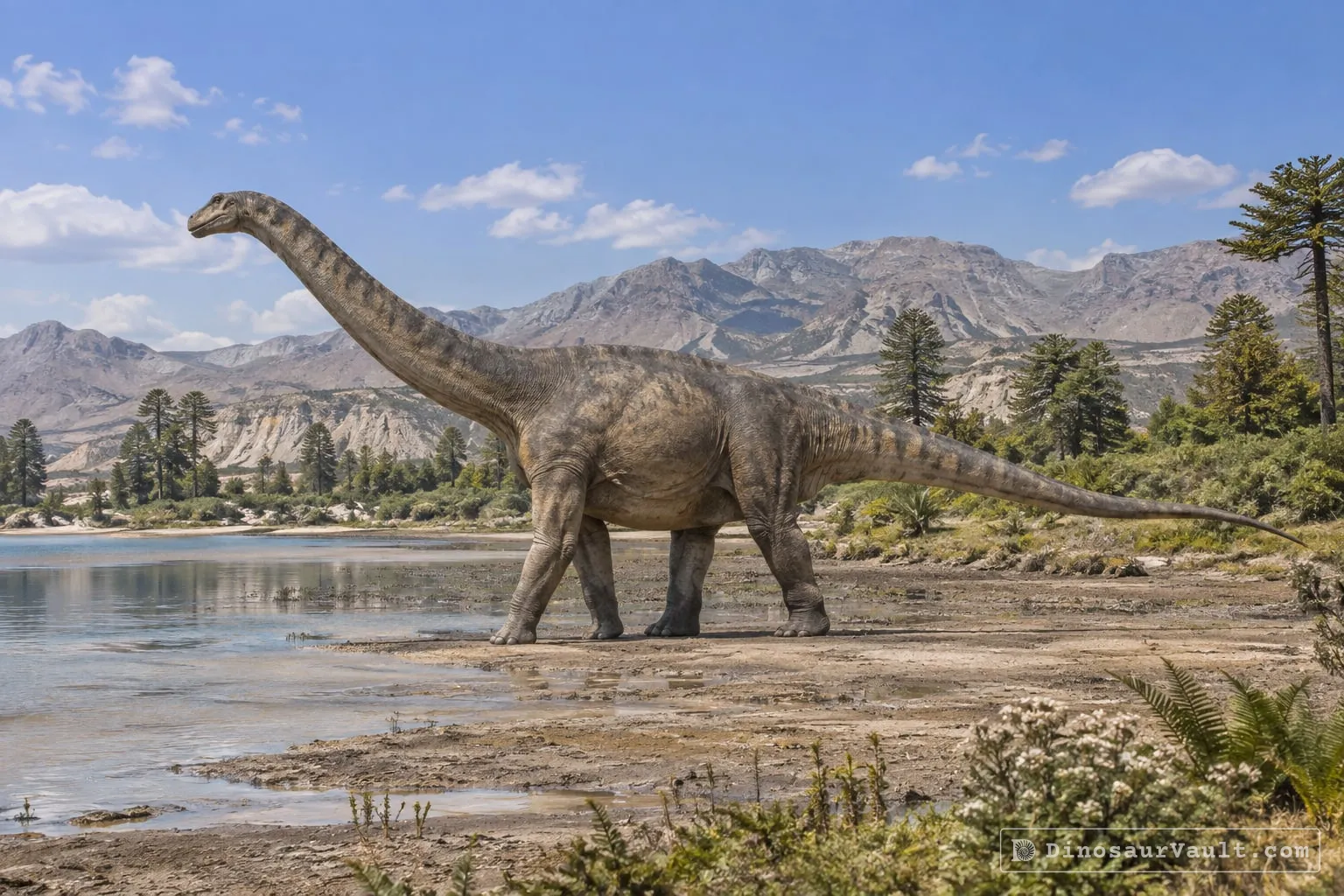
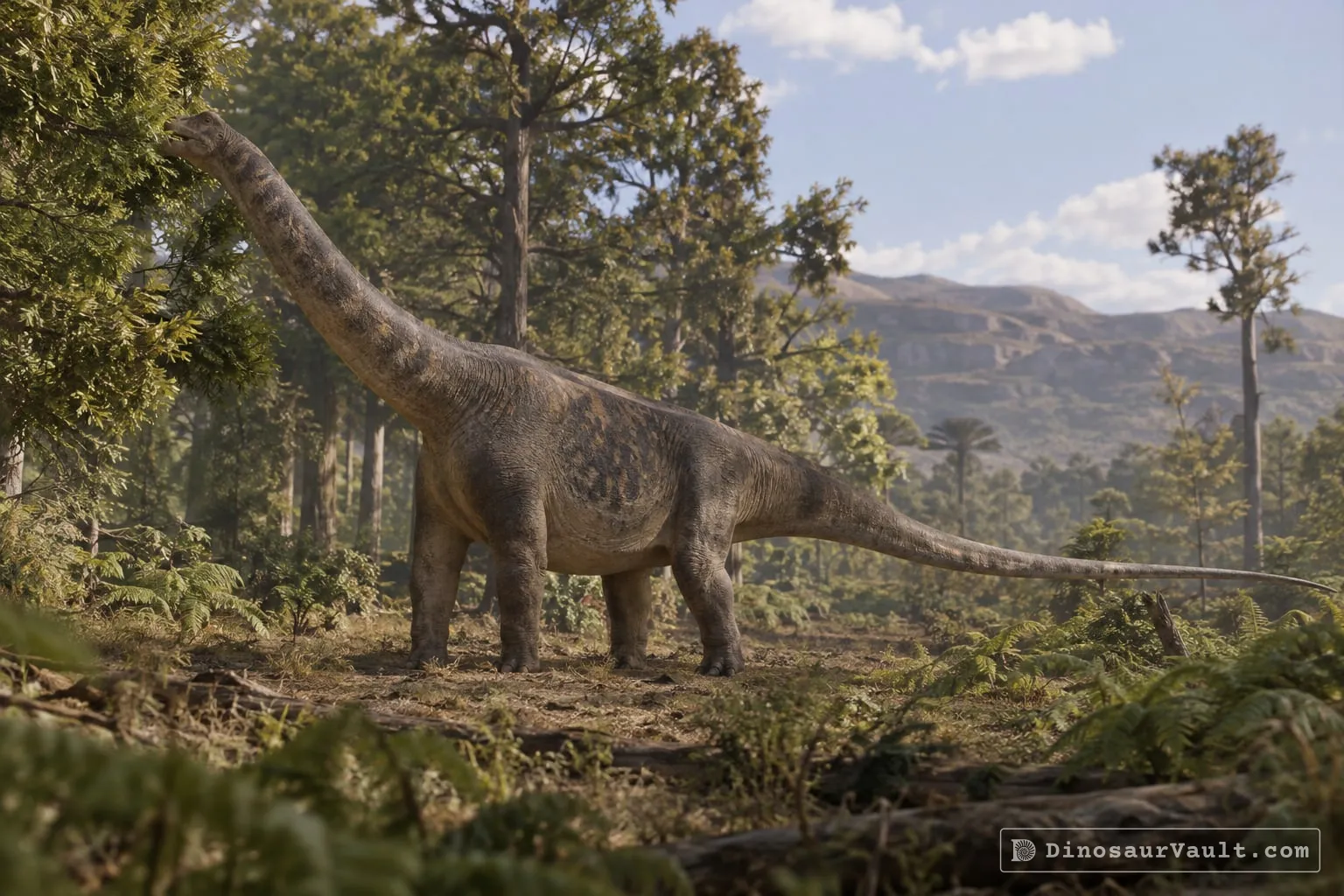
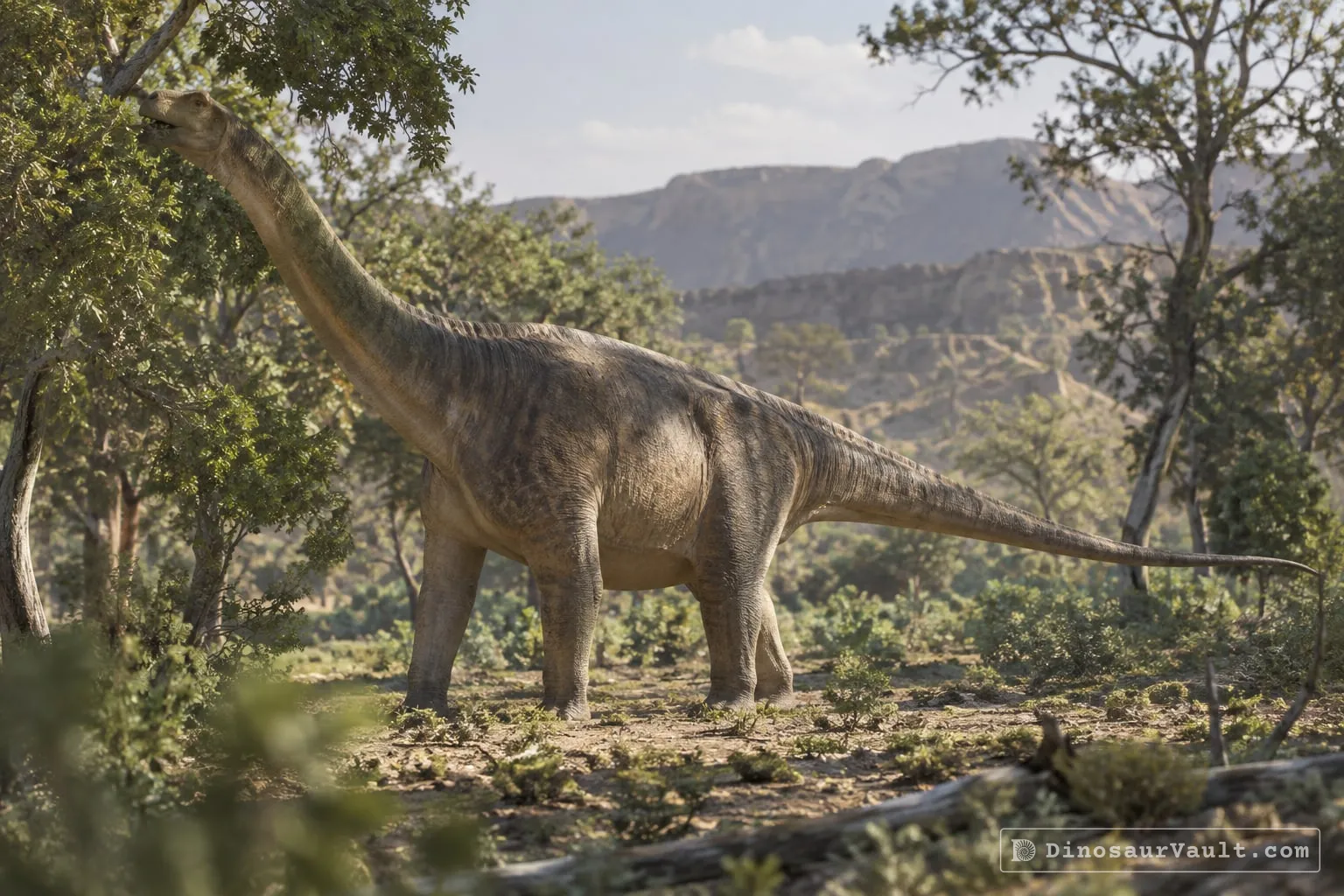


A rock formation can hold fossils laid down millions of years apart, so not every animal here met Sulaimanisaurus.
The evidence
The science behind Sulaimanisaurus
Which parts of the picture come from its own bones, and which come from its relatives.
From its own fossils
- The type specimen is a series of seven tail vertebrae from one site in the Vitakri Formation.
- The main bodies of these tail vertebrae are roughly square when viewed from the end, with little narrowing underneath.
- Malkani later referred further vertebrae and leg and arm bones from other sites to Sulaimanisaurus. One upper arm bone was assigned only tentatively, and he described features of the referred arm bones as like those of Isisaurus.
Borrowed from relatives
- The missing head is restored by comparison with titanosaurs whose skulls are known, such as Sarmientosaurus and Tapuiasaurus.
Still unknown
- Whether it is a separate animal. Malkani himself once placed its tail vertebrae in Isisaurus, then treated Sulaimanisaurus as its own genus again a year later.
- Whether the bones referred from other sites belong to this genus.
- Its head shape, skin and color.
Discovery timeline
- 2004Named itMalkani
- 2020Family treeMalkani
- 2021Full descriptionMalkani
- 2022RedescriptionMalkani
Key papers
The research behind what we know of Sulaimanisaurus
Named it
Introduced Sulaimanisaurus as a titanosaur based on tail vertebrae from Pakistan.
Saurischian dinosaurs from Late Cretaceous of Pakistan. In S. S. Hussain & H. D. Akbar (eds.), 5th Pakistan Geological Congress, Islamabad. National Geological Society of Pakistan, Pakistan Museum of Natural History (Pakistan Science Foundation).
No link available
Family tree
Placed the tail vertebrae of Sulaimanisaurus, and limb bones referred to it, in Isisaurus, based on their similarity.
<i>Pakisaurus balochistani</i> (Poripuchia, Slender Titanosauria, Sauropoda) Associated Skeletons Found from the Latest Maastrichtian Vitakri Formation of Pakistan and Referred Fossils from India; Filling of Important Missing Links of <i>Isisaurus colberti</i> Titanosaur Found from Pakistan. Open Journal of Geology 10: 408-447
Read the paper : <i>Pakisaurus balochistani</i> (Poripuchia, Slender Titanosauria, Sauropoda) Associated Skeletons Found from the Latest Maastrichtian Vitakri Formation of Pakistan and Referred Fossils from India; Filling of Important Missing Links of <i>Isisaurus colberti</i> Titanosaur Found from Pakistan (opens in a new tab)Full description
Treated Sulaimanisaurus as a separate genus again, described its square-ended tail vertebrae and referred leg and arm bones from other fossil sites.
Jurassic-Cretaceous and Cretaceous-Paleogene Transitions and Mesozoic Vertebrates from Pakistan. Open Journal of Geology 11: 275-318
Read the paper : Jurassic-Cretaceous and Cretaceous-Paleogene Transitions and Mesozoic Vertebrates from Pakistan (opens in a new tab)Redescription
Updated the assigned bones and compared proposed limb material with Isisaurus and other titanosaurs.
Plates Boundary and Structural Geology of Balochistan and Indus Basins through Field Observations on Chaman Transform Fault and Western Indus Suture (Pakistan): Dinosaurs from Pakistan with Attributed Bones and Key Features: Titanosaurs from India with Updated Assessment on <i>Jainosaurus</i>. Open Journal of Geology 12: 1032-1079
Read the paper : Plates Boundary and Structural Geology of Balochistan and Indus Basins through Field Observations on Chaman Transform Fault and Western Indus Suture (Pakistan): Dinosaurs from Pakistan with Attributed Bones and Key Features: Titanosaurs from India with Updated Assessment on <i>Jainosaurus</i> (opens in a new tab)
Close relatives
Other members of Pakisauridae


Sources: Wikidata