Microdontosaurus
"small tooth lizard"
Type species Microdontosaurus dayensis
- Lived
- 175 to 162 million years ago, Middle Jurassic
- Diet
- Herbivore
- Group
- Sauropods
- Found in
- China
- Named by
- Zhao 1983
Where its fossils were found
The evidence
Today

170 million years ago
Habitat
It lived in what is now China during the Middle Jurassic.
Field notes
About Microdontosaurus
What it was like
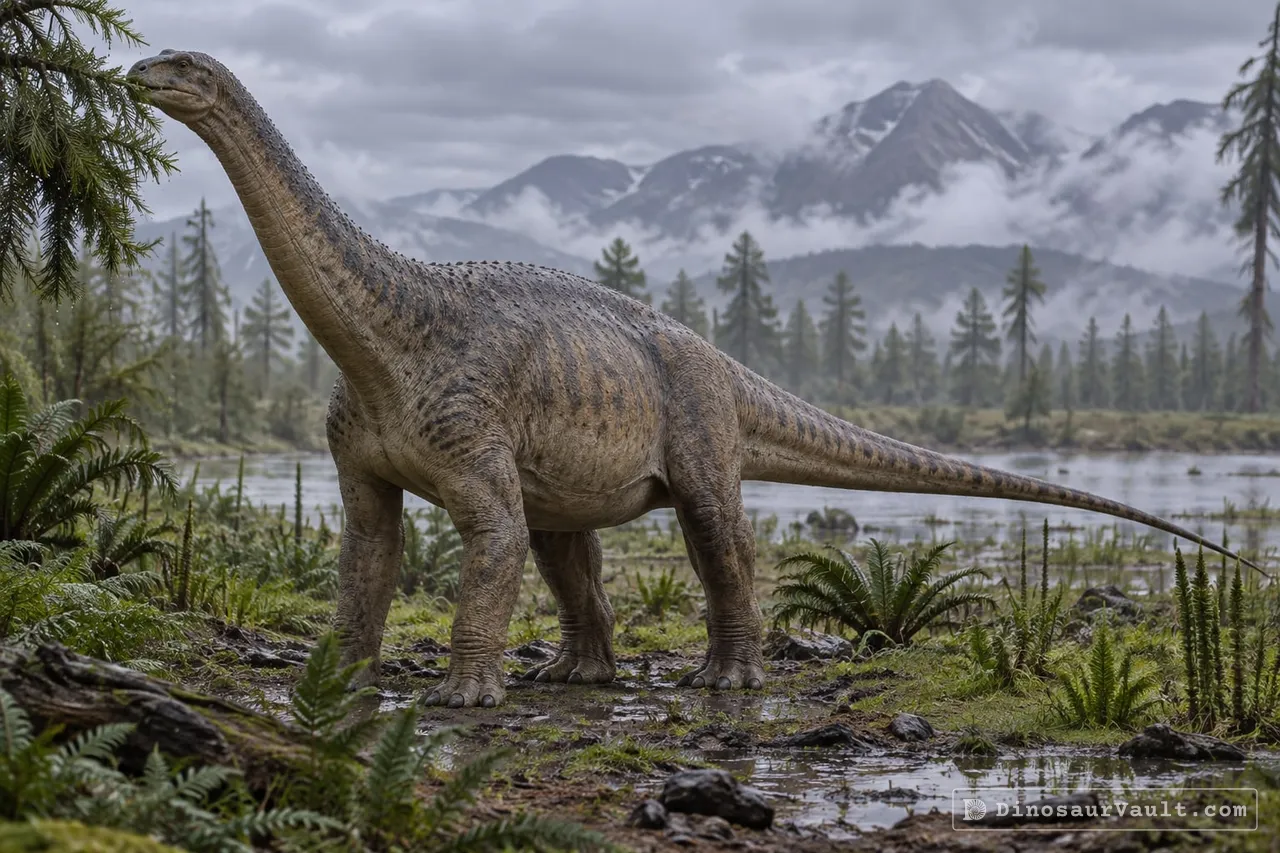
Microdontosaurus was a sauropod, a long-necked plant eater. It is known from very little and was never fully described.
Its world
It lived in the Middle Jurassic, in what is now China.
How it was found
Zhao named Microdontosaurus in 1983. The type species is Microdontosaurus dayensis. Because it was never properly described, most scientists treat the name as doubtful.
Field gallery
More views of Microdontosaurus
Scenes reconstructed from the available fossil evidence.
The evidence
The science behind Microdontosaurus
Which parts of the picture come from its own bones, and which come from its relatives.
From its own fossils
- Fossils assigned to Microdontosaurus come from Middle Jurassic rocks in China.
Borrowed from relatives
- A long neck and a body supported on four legs follow the general sauropod build, illustrated by better-described relatives such as Pulanesaura.
Still unknown
- Which bones can securely be assigned to Microdontosaurus.
- Its head shape and body proportions.
- Its exact place among sauropods.
Discovery timeline
- 1983Named it
- 2007Close relativeUPCHURCH et al.
- 2017Family treeMcPhee & Choiniere
Key papers
The research behind what we know of Microdontosaurus
Close relative
Described a jaw of Chinshakiangosaurus, showing how early sauropod jaws combined older and newer feeding features.
A re-evaluation of Chinshakiangosaurus chunghoensis Ye vide Dong 1992 (Dinosauria, Sauropodomorpha): implications for cranial evolution in basal sauropod dinosaurs. Geological Magazine 144: 247-262
Read the paper : A re-evaluation of Chinshakiangosaurus chunghoensis Ye vide Dong 1992 (Dinosauria, Sauropodomorpha): implications for cranial evolution in basal sauropod dinosaurs (opens in a new tab)Family tree
Described Pulanesaura and examined the backbone and forelimb changes near the origin of sauropods, providing comparisons for poorly known members.
The osteology of Pulanesaura eocollum: implications for the inclusivity of Sauropoda (Dinosauria). Zoological Journal of the Linnean Society 182: 830-861
Read the paper : The osteology of Pulanesaura eocollum: implications for the inclusivity of Sauropoda (Dinosauria) (opens in a new tab)
Close relatives
Other members of Sauropoda


Sources: Wikidata