Jaklapallisaurus
"Jaklapalli lizard"
- Lived
- 227 to 201 million years ago, Late Triassic
- Group
- Early sauropodomorphs, Unaysauridae
- Found in
- India
- Named by
- Novas et al. 2011
Where its fossils were found
The evidence
Today

210 million years ago
Habitat
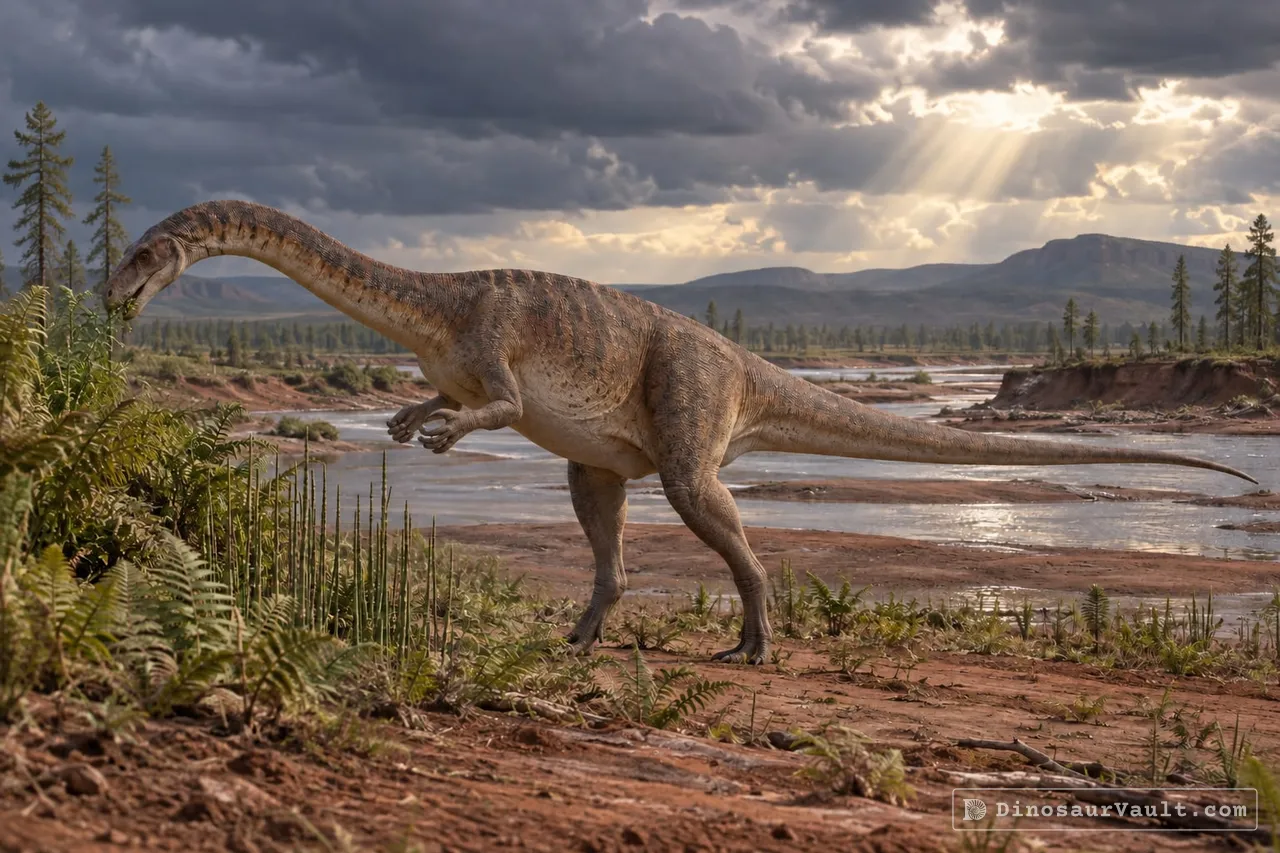
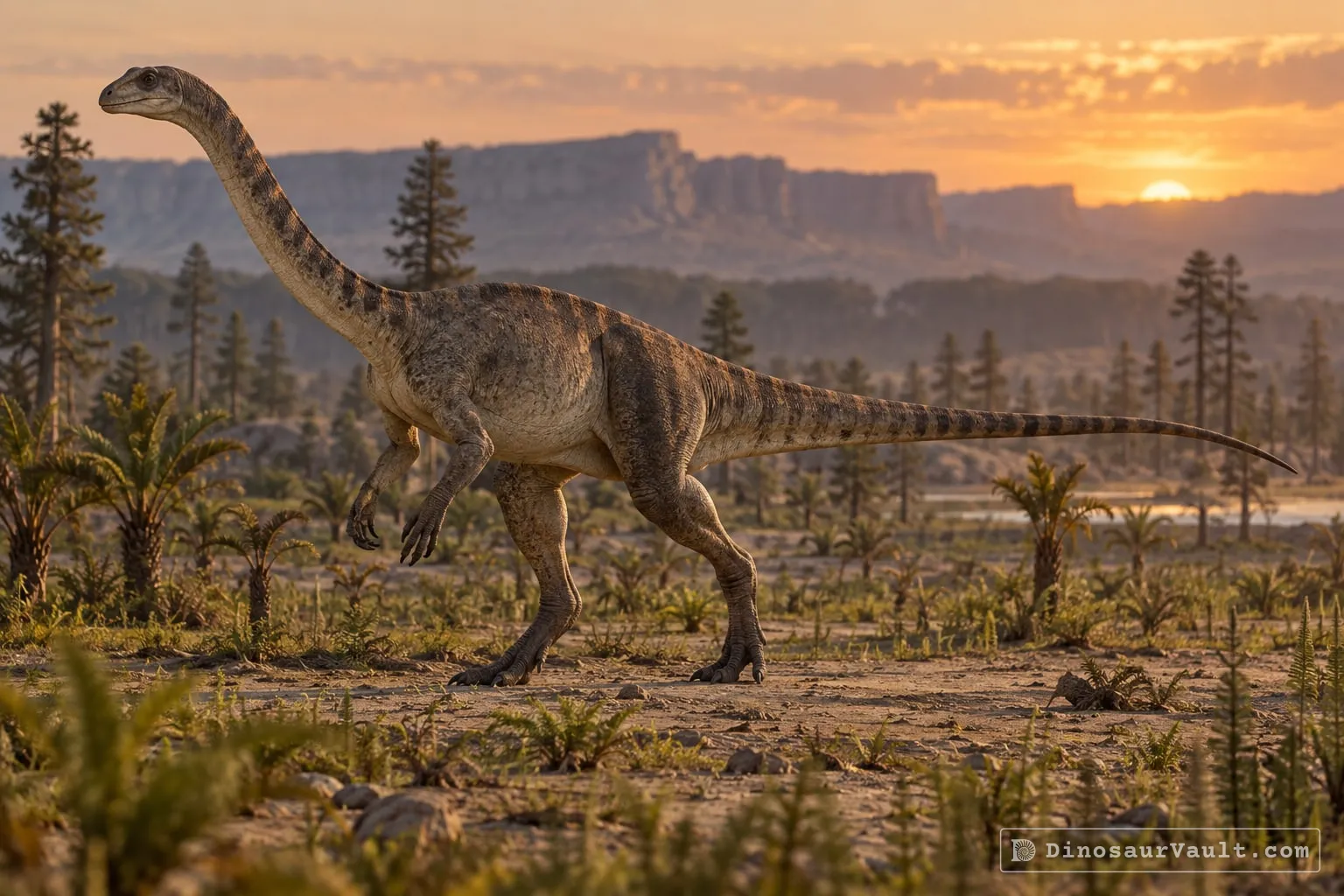
An inland landscape in Late Triassic India. Other dinosaurs from the Maleri rocks include Nambalia and Alwalkeria.
Field notes
About Jaklapallisaurus
What it was like
Jaklapallisaurus was a plant eater from the long-necked line that later produced the giant sauropods. It is known from part of a hip, leg and backbone.
Its world
It lived in the Late Triassic in what is now central India. Its bones come from the Maleri and Dharmaram formations.
How it was found
Novas and colleagues named Jaklapallisaurus in 2011. It was a relative of Macrocollum from Brazil.
Field gallery
More views of Jaklapallisaurus
Scenes reconstructed from the available fossil evidence.
1 of 3
Lived alongside
Found in the same rock formations
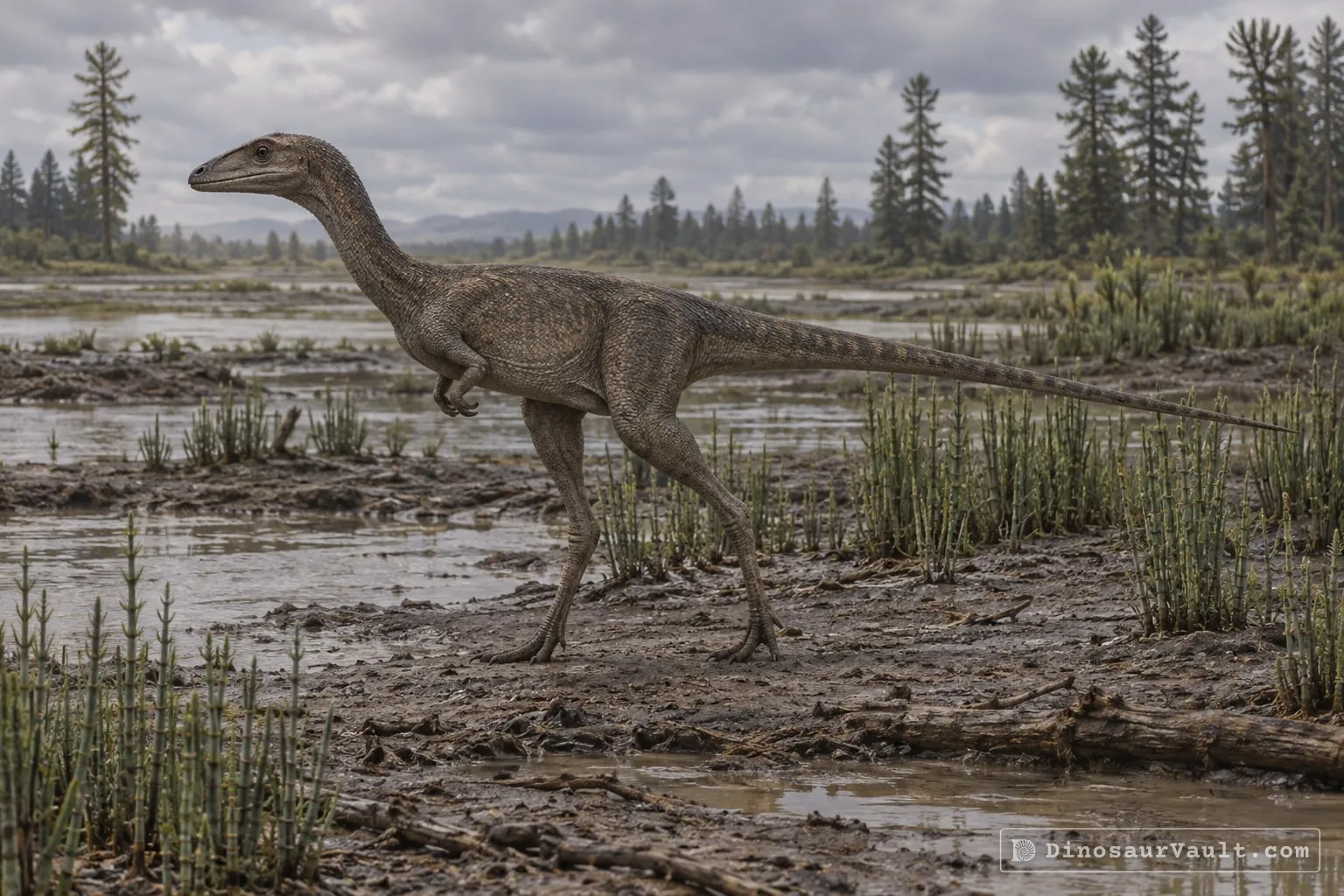
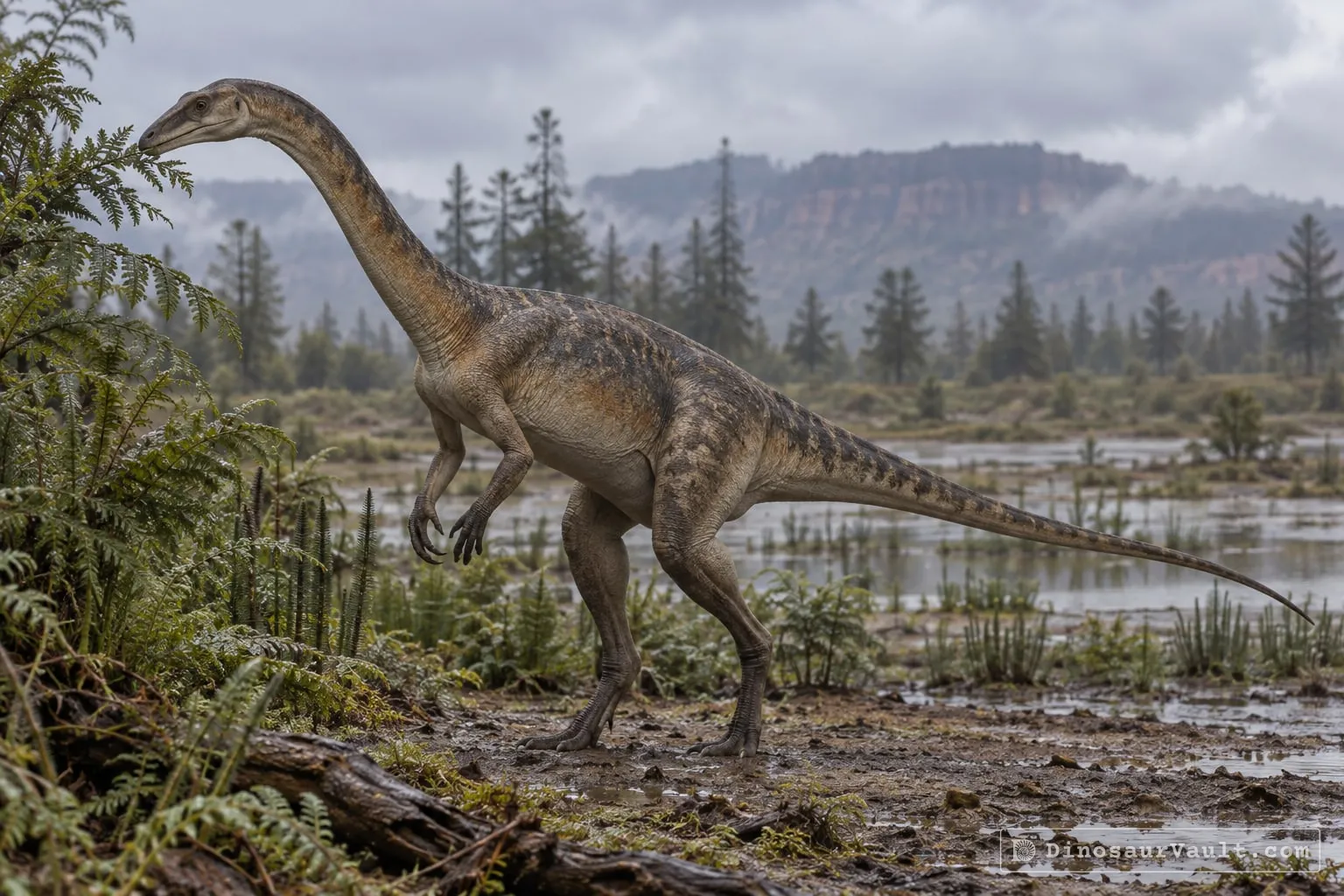
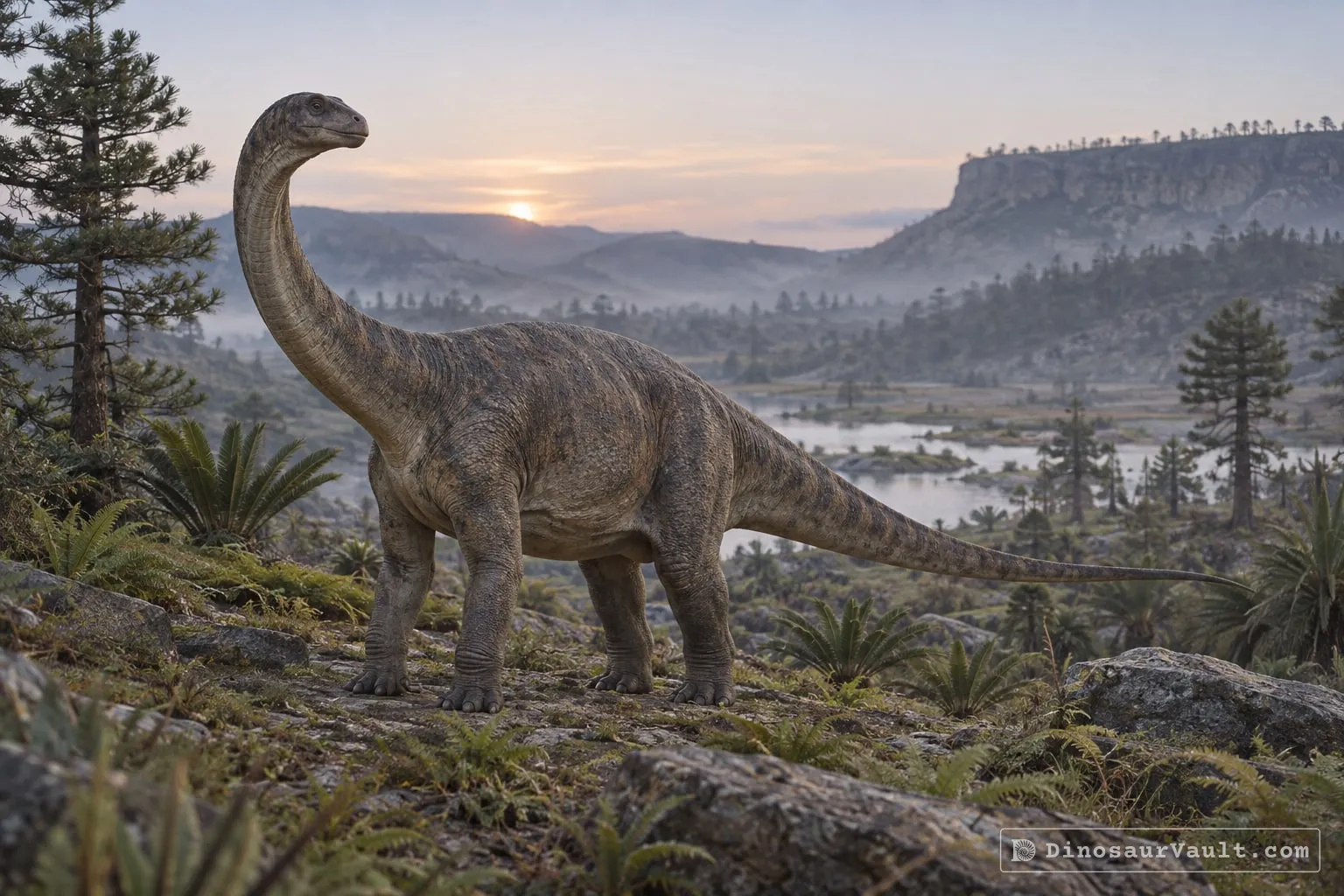


A rock formation can hold fossils laid down millions of years apart, so not every animal here met Jaklapallisaurus.
The evidence
The science behind Jaklapallisaurus
Which parts of the picture come from its own bones, and which come from its relatives.
From its own fossils
- The original specimen preserves parts of the backbone and a hind leg, including the shin, ankle and foot.
- Its ankle bone is strongly uneven in shape, with the inner side extending farther forward than the outer side.
- The inner toe has a slender first segment, while the next toe has a stouter segment of similar length.
Borrowed from relatives
- Macrocollum supplies comparisons for its missing head, neck and forelimbs; Unaysaurus for the shape of its outer toe tips.
- One study found it closest to Macrocollum, though support for the wider family grouping is low.
Still unknown
- Its head shape, neck length and toe claws. Whether a separate thigh bone assigned to it belongs to this genus.
- Its skin covering and color.
- Whether it lived in groups. Its precise place among early sauropodomorphs is unsettled.
Discovery timeline
- 2011Named itNovas et al.
- 2018Family treeMüller, Langer & Dias-da-Silva
- 2023Full descriptionEzcurra et al.
Key papers
The research behind what we know of Jaklapallisaurus
Named it
Named Jaklapallisaurus and Nambalia from partial skeletons, expanding the known variety of early dinosaurs in India.
New dinosaur species from the Upper Triassic Upper Maleri and Lower Dharmaram formations of Central India. Earth and Environmental Science Transactions of the Royal Society of Edinburgh 101: 333-349
Read the paper : New dinosaur species from the Upper Triassic Upper Maleri and Lower Dharmaram formations of Central India (opens in a new tab)Family tree
Described complete Macrocollum skeletons with a small head, long neck and free forelimbs, used to fill in missing parts of Jaklapallisaurus.
An exceptionally preserved association of complete dinosaur skeletons reveals the oldest long-necked sauropodomorphs. Biology Letters 14: 20180633
Read the paper : An exceptionally preserved association of complete dinosaur skeletons reveals the oldest long-necked sauropodomorphs (opens in a new tab)Full description
Restudied the bones and found Jaklapallisaurus closest to Macrocollum, with weak support for the wider family grouping.
Osteology of the sauropodomorph dinosaur Jaklapallisaurus asymmetricus from the Late Triassic of central India. The Anatomical Record 307: 1093-1112
Read the paper : Osteology of the sauropodomorph dinosaur Jaklapallisaurus asymmetricus from the Late Triassic of central India (opens in a new tab)
Close relatives
Other members of Unaysauridae

Sources: Wikidata